Pakistan’s diplomatic role in the Middle East has once again gained global attention as recent developments suggest that the ongoing Pakistan US-Iran mediation efforts are gradually moving toward a positive outcome. Senior Pakistani officials have expressed optimism that continued dialogue and regional engagement could help reduce tensions and support long-term stability.
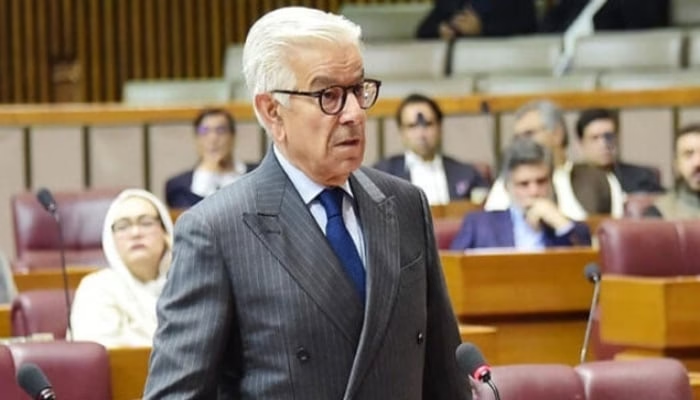
Speaking in Sialkot, Khawaja Asif stated that Pakistan had moved “closer to a positive result” in the mediation process between the United States and Iran. His remarks came during a critical period of regional diplomacy following months of conflict and political uncertainty in the Middle East.
The growing focus on Pakistan US-Iran mediation reflects Islamabad’s increasing involvement in efforts aimed at preventing a wider regional crisis. Pakistan has been actively engaged in diplomatic communication between Tehran and Washington since hostilities escalated earlier this year.
According to reports, Asim Munir recently visited Tehran as part of Islamabad’s broader diplomatic initiative. During the visit, he reportedly met several senior Iranian leaders, including Masoud Pezeshkian, Abbas Araghchi, and Mohammad Bagher Ghalibaf.
The discussions focused on regional de-escalation, ongoing negotiations, and efforts to move closer to a peaceful understanding between Iran and the United States. Interior Minister Mohsin Naqvi was also present in Tehran during the diplomatic engagements.
The importance of the Pakistan US-Iran mediation process has increased because of the serious consequences the regional conflict created for global security and economic stability. The conflict escalated after military confrontations involving Iran, the United States, and Israel triggered broader tensions across the Middle East.
According to reports, the war intensified after coordinated strikes were launched on Iranian targets, prompting Tehran to respond with retaliatory actions against US-linked facilities in the region. The situation further worsened due to concerns surrounding the Strait of Hormuz, a key global oil shipping route.
Pakistan reportedly played a significant role in facilitating a temporary ceasefire earlier this year. The ceasefire created an opportunity for direct discussions between US and Iranian officials, though those talks initially ended without a permanent agreement.
Despite the difficulties, Islamabad continued pushing for dialogue through ongoing diplomatic engagement and backchannel communication. The latest comments from Pakistani officials suggest that these mediation efforts may now be producing encouraging signs.
The discussion around Pakistan US-Iran mediation also highlights Pakistan’s growing diplomatic influence in regional affairs. Analysts believe Islamabad’s balanced relationships with various countries allow it to play a constructive role during periods of political and military tension.
Pakistan has consistently called for peaceful dialogue and regional stability rather than military escalation. Officials in Islamabad have repeatedly stressed that diplomacy remains the most effective way to prevent further conflict and protect civilian lives across the region.
Defence Minister Khawaja Asif emphasized that Pakistan was attempting to prevent a much larger international crisis through its mediation efforts. He expressed hope that diplomatic negotiations would ultimately succeed and contribute to peace not only in the Middle East but globally.
The evolving Pakistan US-Iran mediation efforts are also important from an economic perspective. Regional instability in the Middle East directly affects global energy prices, trade routes, and financial markets. Countries dependent on imported fuel, including Pakistan, often face economic pressure during periods of prolonged conflict.
Khawaja Asif acknowledged these challenges during his remarks, noting that inflation and economic difficulties were already affecting ordinary Pakistanis. He stated that the regional war had negatively impacted Pakistan’s economic recovery process and increased pressure on the country’s financial situation.
Analysts believe a peaceful resolution between Iran and the United States could help stabilize international oil markets and reduce uncertainty across the region. Any diplomatic breakthrough may also improve investor confidence and ease global concerns regarding supply disruptions.
The role of Pakistan in the Pakistan US-Iran mediation process demonstrates Islamabad’s effort to project itself as a responsible regional actor focused on diplomacy and stability. In recent years, Pakistan has increasingly emphasized regional connectivity, peaceful engagement, and conflict resolution in its foreign policy narrative.
Observers also note that military diplomacy has become an important part of international relations, especially in regions experiencing security tensions. High-level meetings involving defense and political leadership can often help open communication channels and build confidence between opposing sides.
As negotiations continue, regional and international observers remain cautiously optimistic about the possibility of further progress. While many complex issues still need resolution, the recent diplomatic momentum suggests that efforts toward peace are continuing.
For Pakistan, successful mediation would strengthen its international image as a country capable of contributing positively to regional peace and diplomatic engagement. The coming weeks are likely to remain crucial as discussions between the involved parties move forward.