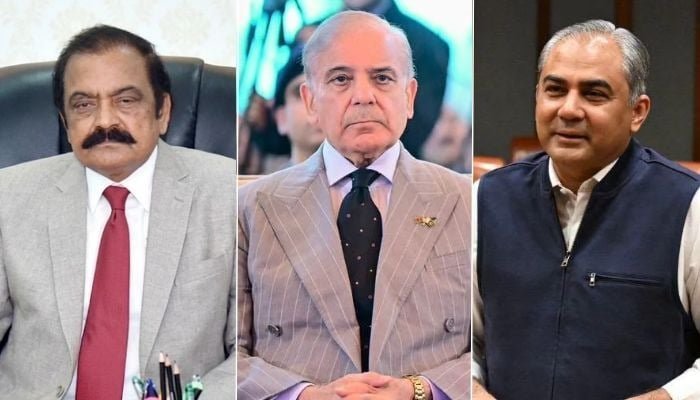
Prime Minister Shehbaz Sharif has issued a clear warning to members of his federal cabinet, directing them to stop making political statements against one another amid growing tensions over proposals to create new provinces in Pakistan. The Shehbaz Sharif cabinet directive calls on ministers to resolve disagreements through mutual understanding and keep their attention on public welfare, economic progress and political stability.
In a statement issued by the Prime Minister’s Office (PMO) on Tuesday, the premier said the federal government’s priority was to deliver development projects and improve the lives of citizens. He stressed that public disagreements among cabinet members created a negative impression and distracted from the government’s development agenda.
Shehbaz also urged representatives of provincial governments to avoid unnecessary political exchanges and contribute to a more positive political environment.
Prime Minister Calls for Cabinet Unity
The prime minister said the federal government was focused on moving Pakistan from economic stability towards sustainable growth.
He also highlighted what he described as important achievements by the country on international and diplomatic fronts, saying the government had consistently promoted development and progress.
According to the PMO statement, Shehbaz believes ministers should concentrate on their responsibilities rather than publicly criticising their colleagues.
He said members of the federal cabinet were performing well and should continue working towards public service and national development.
The prime minister emphasised that disagreements within the cabinet should be addressed through discussion and consensus. He maintained that public criticism between government representatives could damage the government’s image and shift attention away from important national priorities.
The Shehbaz Sharif cabinet directive also included an appeal for collective responsibility, with the premier saying every political representative had a role to play in maintaining stability.
New Provinces Debate Creates Tensions Within Coalition
The prime minister’s intervention comes amid an increasingly heated debate over proposals to create new provinces in Pakistan.
The issue has triggered disagreements among federal ministers and leaders of the Pakistan Peoples Party (PPP), particularly over proposals involving Sindh.
The controversy intensified after PPP Chairman Bilawal Bhutto-Zardari warned that any forced attempt to divide Sindh would lead to bloodshed. His remarks drew strong reactions from several federal ministers, who argued that smaller provinces could improve governance and administrative efficiency.
The debate has exposed differences within the ruling coalition over how Pakistan’s provincial structure should evolve and what role public opinion should play in such decisions.
While some political leaders support creating additional provinces for better administration, others have expressed concerns about the political and constitutional implications of dividing existing provinces.
Mohsin Naqvi and Rana Sanaullah Exchange Criticism
Recent remarks by Interior Minister Mohsin Naqvi and Adviser to the Prime Minister on Political Affairs Rana Sanaullah added to the controversy.
A day before the prime minister’s statement, Sanaullah criticised Naqvi over what he described as the handling of the debate surrounding new provinces.
The interior minister had also issued a warning to an unnamed minister over repeated criticism.
Their exchange contributed to the impression of growing disagreements among members of the federal government, prompting Shehbaz to intervene and ask cabinet members to avoid public confrontations.
The prime minister’s message appeared aimed at preventing further escalation and ensuring that political disagreements did not interfere with government business.
Ministers Defend the Creation of Smaller Provinces
Several federal ministers have publicly supported discussions about creating smaller provinces, arguing that administrative changes could improve governance and service delivery.
Defence Minister Khawaja Asif said no political system could be changed without public support. His remarks highlighted the importance of citizens’ approval in decisions involving major constitutional and administrative changes.
Federal Minister for Health Mustafa Kamal described the creation of smaller provinces as inevitable, arguing that Pakistan could not function effectively without considering administrative reforms.
Other ministers, including Talal Chaudhry, also questioned Bilawal’s position. They pointed to the PPP’s stance on proposals concerning the division of Punjab and argued that democratic principles should prioritise effective governance and public opinion.
These statements further widened the public debate, turning the proposal into a point of disagreement among political allies.
Bilawal Responds to Federal Ministers’ Criticism
Bilawal Bhutto-Zardari also responded to the criticism directed at him by members of the federal government.
Speaking on Wednesday night, the PPP chairman said federal ministers appeared to have decided to pick a fight with him because he had spoken what he considered the truth.
His response showed that disagreements over the provinces issue remained unresolved despite the prime minister’s call for restraint.
The debate has become particularly sensitive because it involves provincial identity, political interests, administrative efficiency and constitutional considerations.
Shehbaz Urges Political Stability and Public Service
Through his latest Shehbaz Sharif cabinet directive, the prime minister has sought to bring the focus back to governance and development rather than public political disputes.
His message was directed not only at federal ministers but also at provincial government representatives, urging them to promote constructive dialogue.
The coming days will show whether the intervention can reduce tensions within the ruling coalition. For now, the disagreement over new provinces remains an important political issue, with different leaders continuing to express competing views.
Shehbaz has made it clear that cabinet members should settle their differences through consultation and avoid statements that could weaken political stability or distract from the government’s responsibilities towards the public.