The restoration of KP gas supply has brought relief to residents and businesses in Khyber Pakhtunkhwa after successful negotiations between the federal and provincial governments. The agreement ended days of uncertainty surrounding the closure of CNG stations and growing concerns about energy shortages across the province.
The breakthrough came after high-level discussions between senior officials from both governments, leading to the approval of 35 million cubic feet per day (mmcfd) of gas supply for Khyber Pakhtunkhwa. The decision was widely welcomed by political leaders, business owners, and the public, who had been facing difficulties due to the suspension of gas to the CNG sector.
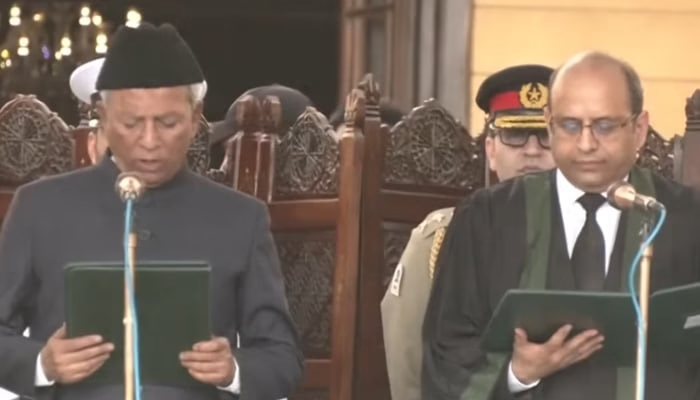
Khyber Pakhtunkhwa Governor Faisal Karim Kundi confirmed the positive development and thanked Prime Minister Shehbaz Sharif for taking direct interest in resolving the issue. In a statement shared on social media, the governor described the restoration of gas as an important step toward addressing the province’s energy concerns.
The issue of KP gas supply had recently created unusual political unity within the province. Both the government and opposition leaders joined together in demanding immediate restoration of gas to the CNG sector. Officials argued that the suspension was creating economic pressure on transport operators, businesses, and ordinary citizens.
According to KP Finance Adviser Muzzammil Aslam, the federal government agreed to restore gas after continuous engagement with provincial authorities. He also acknowledged the role of Governor Kundi and opposition figures for standing together on what he described as a sensitive provincial issue.
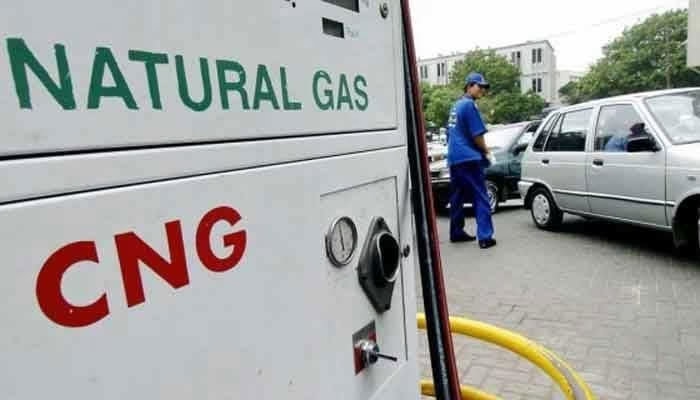
Sources within the provincial government confirmed that CNG stations across Khyber Pakhtunkhwa would now operate from 6am to 6pm following the restoration of supply. The reopening of stations is expected to provide immediate relief to the transport sector, which heavily depends on CNG as a lower-cost fuel option.
The recent KP gas supply crisis had raised serious concerns about rising transportation costs and public frustration. Many transporters warned that the closure of CNG stations could force them to shift to more expensive fuels, leading to increased fares for commuters already affected by inflation.
The agreement was reportedly reached during a high-level meeting attended by several senior federal and provincial officials. Participants included Federal Minister Ali Pervaiz Malik, Rana Sanaullah, Governor Kundi, provincial advisers, and officials from Sui Northern Gas Pipelines Limited (SNGPL).
Alongside the gas issue, the federal government also addressed concerns regarding the transportation of wheat and flour to Khyber Pakhtunkhwa. Provincial authorities had raised complaints about obstacles affecting the movement of food supplies from Punjab, which contributed to rising flour prices in the province.
Officials stated that the Ministry of National Food Security directed Punjab authorities to immediately remove any barriers to wheat and flour transportation. The federal government also introduced a complaint system allowing dealers to report difficulties through WhatsApp by sharing photos and videos of any restrictions they encounter.
The discussion surrounding KP gas supply also highlighted broader concerns about provincial rights and resource distribution. Leaders in Khyber Pakhtunkhwa argued that the province should receive fair access to energy resources, especially considering its contribution to national gas production.
During the meetings, KP officials stressed that constitutional principles support free movement of goods between provinces. They also pointed out that flour prices in Khyber Pakhtunkhwa had become higher than in some neighboring areas despite the province’s closer geographical connection to Punjab.
The federal government reportedly assured provincial representatives that uninterrupted transportation of wheat and flour would resume once the remaining logistical issues were addressed. This assurance was welcomed by local traders and citizens concerned about food affordability.
The restoration of KP gas supply has also demonstrated the importance of cooperation between federal and provincial institutions during times of crisis. Political observers noted that the issue was resolved more quickly because both government and opposition leaders within the province presented a united stance.
Energy shortages and rising living costs remain major concerns for many citizens across Pakistan. As a result, decisions regarding gas supply, fuel pricing, and food transportation often carry significant political and economic consequences.
For residents of Khyber Pakhtunkhwa, the reopening of CNG stations and improved food supply arrangements are expected to reduce some immediate economic pressure. Transporters, small businesses, and consumers are likely to benefit from greater market stability in the coming weeks.
The resolution of the KP gas supply dispute may also help ease tensions between provincial and federal authorities, at least temporarily. However, experts believe long-term solutions will require better coordination, fair resource distribution, and consistent policy implementation to prevent similar crises in the future.