Pakistan’s proposed EV GST policy has become a major topic of discussion after the Ministry of Industries opposed the International Monetary Fund’s recommendation to impose an 18 percent General Sales Tax on electric vehicles. Instead, the ministry has proposed a much lower concessional rate of 1 percent to encourage the growth of the country’s electric vehicle industry.
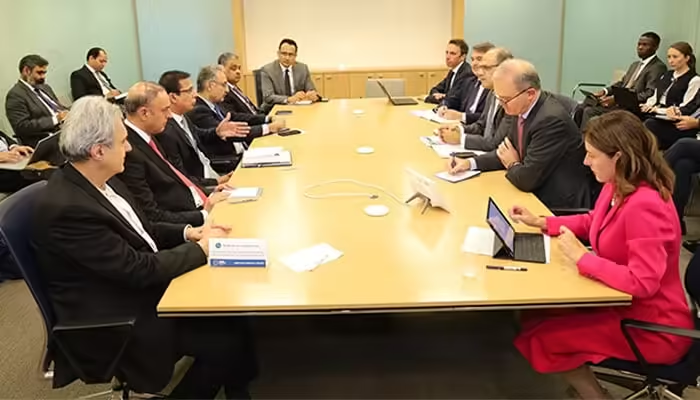
The issue was discussed during recent talks between Pakistani officials and an IMF delegation regarding the country’s upcoming auto policy. Government representatives argued that electric vehicles should receive stronger tax incentives if Pakistan wants to accelerate the transition toward cleaner and more energy-efficient transportation.
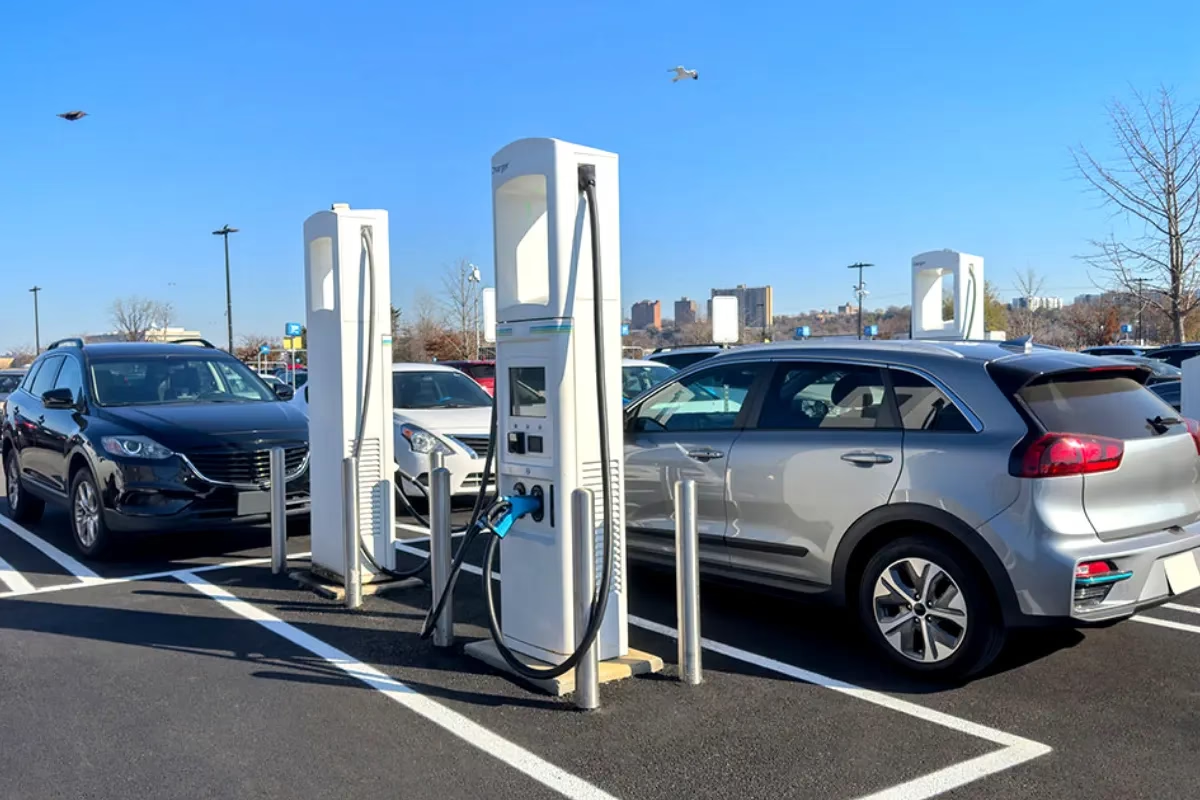
Under the proposed EV GST policy, the 1 percent tax would apply to all New Energy Vehicles. This category includes electric cars, buses, motorcycles, trucks, tractors, pickups, three-wheelers, and commercial vehicles. Officials believe the reduced tax rate could make EVs more affordable for consumers while supporting local manufacturers and investors.
Pakistan has been gradually shifting its focus toward sustainable transportation as fuel prices continue to rise and environmental concerns become more serious. Electric vehicles are increasingly viewed as an important part of the country’s long-term economic and environmental strategy.
Government officials also highlighted that hybrid vehicles already benefit from a reduced GST rate of 8.5 percent. They questioned why fully electric vehicles, which produce lower emissions and rely less on fossil fuels, should face higher taxation than hybrid alternatives.
The debate over the EV GST policy also exposed concerns regarding Pakistan’s current tax structure for electric vehicle parts and manufacturing. According to officials, imported EV components currently face only a 1 percent GST, while locally produced parts are taxed at 18 percent.
Industry representatives argue that this imbalance discourages local manufacturing and gives imported products an unfair advantage. To address the issue, the Ministry of Industries has recommended applying a uniform 1 percent GST across the entire EV supply chain, including both imported and locally manufactured components.
Supporters of the lower GST proposal believe that affordable electric vehicles could help reduce Pakistan’s fuel import bill and improve air quality in major cities. With rising petrol prices and increasing environmental challenges, many experts see EV adoption as a practical long-term solution.
The proposed EV GST policy is also connected to Pakistan’s broader tariff reform commitments under the National Tariff Policy. The government has promised the IMF that it will gradually reduce average import tariffs from 10.6 percent in fiscal year 2025 to 7.4 percent by 2030.
For the auto industry specifically, Pakistan aims to reduce average tariffs below 6 percent by the end of the decade. However, officials from the Ministry of Industries expressed concerns about the pace of these reforms and their potential impact on the domestic automotive sector.
According to ministry officials, countries such as India and Bangladesh continue to maintain high import duties between 70 and 80 percent to protect local car manufacturers. They argued that Pakistan should adopt a similar strategy to support its own automotive industry rather than opening the market too quickly to foreign competition.
The discussion surrounding the EV GST policy reflects the broader challenge of balancing economic reforms with industrial protection. On one hand, Pakistan is under pressure to implement IMF-backed reforms aimed at improving economic efficiency and increasing revenue. On the other hand, local industries are seeking stronger government support to remain competitive.
The upcoming auto policy, which is currently in its final stages, is expected to include several reforms related to taxation, tariffs, and environmental standards. Officials plan to present the final framework to the IMF before forwarding it to the federal cabinet for approval.
In addition to tax reforms, the government is also moving forward with the proposed Motor Vehicle Development Act. The legislation has already been submitted to Parliament and would grant the Engineering Development Board greater authority to enforce safety and environmental regulations for both imported and locally manufactured vehicles.
Many experts believe the future success of Pakistan’s EV industry will depend heavily on supportive government policies, charging infrastructure development, and public awareness. Without strong incentives, electric vehicles may remain too expensive for average consumers.
The growing focus on the EV GST policy shows that Pakistan is beginning to take electric mobility more seriously as part of its future economic planning. Lower taxes on EVs could encourage investment, support local assembly operations, and make environmentally friendly transportation more accessible to the public.
At the same time, policymakers must carefully manage the transition to ensure that local manufacturers are not negatively affected by rapid tariff reductions or inconsistent tax structures. Balancing economic reforms, industrial growth, and environmental goals will remain one of the biggest challenges for Pakistan’s automotive sector in the coming years.
As the government finalizes its new auto policy, the debate over the EV GST policy is expected to continue among industry experts, policymakers, investors, and consumers alike.