The latest Punjab Education Reforms announced by Chief Minister Maryam Nawaz aim to transform the province’s education system by introducing modern schools, expanding student support programs, and improving learning facilities. The government has unveiled several initiatives, including the establishment of Nawaz Sharif Schools of Eminence in every tehsil, the distribution of 100,000 free electric bikes and laptops, scholarships for talented students, and the development of advanced AI and technology labs. These measures are designed to provide equal educational opportunities and prepare students for a technology-driven future.
Modern Schools Across Punjab
One of the most significant announcements under the Punjab Education Reforms is the plan to establish Nawaz Sharif Schools of Eminence in every tehsil. These schools are intended to provide high-quality education with modern classrooms, qualified teachers, and advanced learning resources.
According to the chief minister, the goal is to ensure that students studying in government schools receive the same educational standards and facilities available in leading private institutions. This initiative reflects the government’s commitment to reducing educational inequality and improving access to quality education throughout Punjab.
The overwhelming response to admissions at existing Schools of Eminence also highlights the growing demand for quality public education. Thousands of students competed for limited seats, demonstrating the confidence families have in these institutions.
Investment in School Infrastructure
Improving infrastructure remains a major part of the government’s education strategy.
The Punjab government has allocated approximately Rs40 billion to upgrade government schools across the province. These funds will be used to construct new classrooms, provide modern furniture, improve sanitation facilities, ensure access to clean drinking water, install fans, and address other essential infrastructure needs.
Better learning environments can significantly improve both student attendance and academic performance. By modernizing school buildings, the government hopes to create safer and more comfortable spaces for children.
Focus on Technology and Innovation
A key highlight of the Punjab Education Reforms is the emphasis on technology-based learning.
The provincial government plans to establish science laboratories, computer labs, information technology centers, and, for the first time, dedicated artificial intelligence laboratories in government schools.
These facilities are expected to introduce students to emerging technologies such as artificial intelligence, machine learning, robotics, and digital innovation from an early stage.
The chief minister encouraged students to develop skills in these rapidly growing fields, noting that future careers will increasingly depend on technological knowledge and digital literacy.
Preparing students for modern industries can help improve employment opportunities and strengthen Punjab’s future workforce.
Student Support Programs
Beyond improving schools, the government has also announced several programs aimed directly at supporting students.
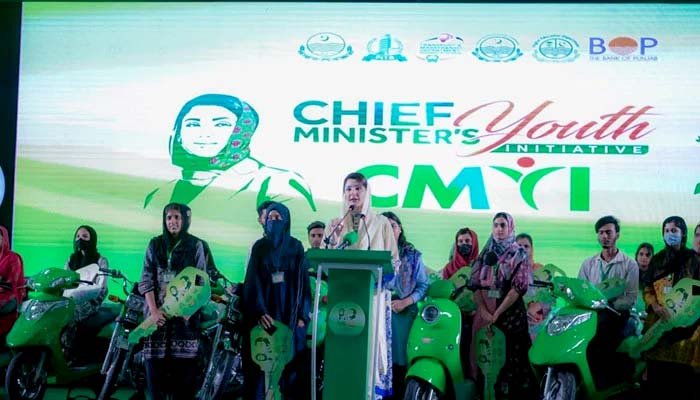
Among the most notable initiatives is the distribution of 100,000 free electric bikes to students. The program is intended to improve transportation, especially for students who travel long distances to attend educational institutions.
Additionally, the government plans to provide 100,000 laptops to deserving students, enabling them to access digital learning resources, conduct research, and improve their academic performance.
Another 50,000 merit-based scholarships will also be awarded to talented students, helping reduce financial barriers to higher education.
These initiatives aim to ensure that deserving students have the resources needed to continue their education successfully.
Equal Opportunities for Every Student
One of the central themes of the Punjab Education Reforms is educational equality.
The chief minister emphasized that government schools should offer opportunities comparable to those available in expensive private schools. She encouraged students to take pride in studying at public institutions, expressing confidence that ongoing reforms would significantly improve educational standards.
Equal access to quality education plays an essential role in reducing social inequality and promoting inclusive economic growth.
By investing in public education, the government hopes to create opportunities for students regardless of their financial background.
Student Safety Remains a Priority
Alongside educational improvements, the chief minister also highlighted the importance of student safety.
She urged parents to remain cautious during the rainy season and avoid sending children to unsafe locations. Her remarks followed recent tragic incidents involving the collapse of unsafe structures that resulted in the loss of young lives.
The government reaffirmed its responsibility to ensure both quality education and the safety of millions of students across Punjab.
Safe school environments remain a critical component of successful education policies.
Expanding Transport Facilities
Transportation continues to be another area receiving government attention.
The expansion of environmentally friendly electric buses is expected to improve daily travel for students who currently lack reliable transportation.
Safe, affordable, and comfortable transport can reduce absenteeism while making education more accessible for children living in remote or underserved areas.
These initiatives also align with broader efforts to encourage sustainable public transportation across the province.
The Punjab Education Reforms represent an ambitious effort to modernize public education while creating equal opportunities for students throughout the province. Investments in school infrastructure, advanced technology labs, scholarships, laptops, transportation, and modern institutions demonstrate a comprehensive approach to improving educational standards.
The government’s long-term vision includes establishing 300 modern schools across Punjab, further expanding access to quality education. If successfully implemented, these reforms have the potential to strengthen academic performance, encourage technological innovation, and prepare students for the evolving demands of the global economy.
By focusing on educational quality, digital skills, infrastructure, and student welfare, Punjab is taking important steps toward building a stronger and more inclusive education system that can benefit future generations.