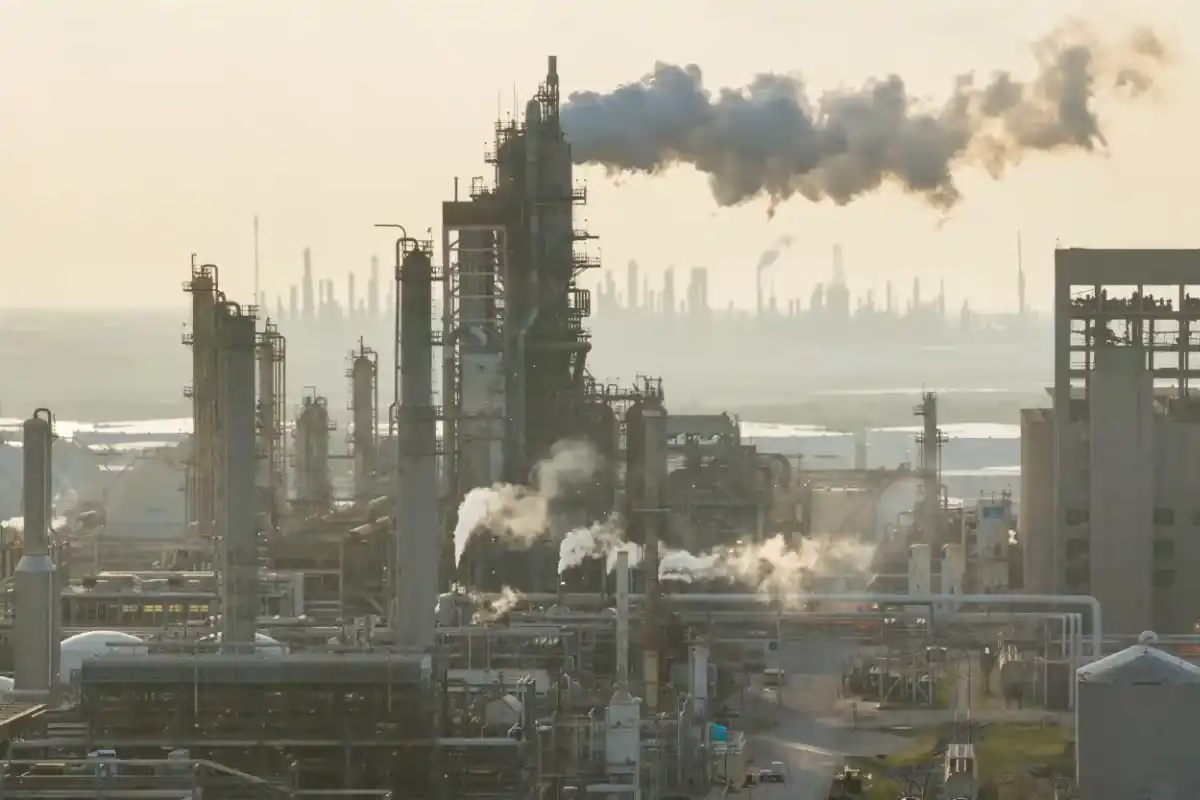
The recent oil price surge in global markets has once again highlighted how geopolitical tensions in the Middle East can rapidly affect economies worldwide. Following fresh US military actions involving Iran and rising uncertainty around the Strait of Hormuz, crude oil prices climbed sharply while Asian stock markets moved lower amid growing investor concerns.
The latest oil price surge is creating fears of higher inflation, increased energy costs, and further economic instability as global markets react cautiously to the evolving situation.
Rising Tensions Push Oil Prices Higher
Global crude oil prices jumped after reports of renewed conflict involving the United States and Iran. According to international media reports, investors became increasingly nervous after fresh US actions in the region intensified fears about oil supply disruptions.
Brent crude oil rose by 1.8 percent to reach $95.95 per barrel, while US West Texas Intermediate (WTI) crude increased by 1.7 percent to $90.17 per barrel.
This sudden oil price surge reflects how sensitive energy markets remain to developments in the Middle East, particularly around major shipping routes like the Strait of Hormuz.
Strait of Hormuz Remains a Key Concern
One of the biggest reasons behind the rising oil prices is uncertainty surrounding the Strait of Hormuz. This narrow waterway is considered one of the most important global oil transit routes, carrying a significant portion of the world’s energy supply.
Iranian state media reported that Iranian forces fired at four ships near the strait, while Kuwait reportedly activated its air defense systems due to missile and drone threats in the region.
Experts believe that any disruption in the Strait of Hormuz can immediately trigger an oil price surge because global markets depend heavily on uninterrupted oil shipments from the Gulf.
Asian Stock Markets React Negatively
While oil prices moved higher, stock markets across Asia faced sharp declines. Investors shifted toward safer assets due to fears of broader regional instability and possible economic fallout.
Hong Kong’s Hang Seng Index reportedly fell more than 1.5 percent, while stock markets in South Korea, Shanghai, and other regional economies also recorded losses.
The recent oil price surge has added pressure on investors already worried about inflation, interest rates, and slowing global growth.
Inflation Fears Return
Economists warn that higher oil prices could increase inflation worldwide because energy costs directly affect transportation, manufacturing, and food prices. When fuel becomes more expensive, businesses often pass those costs on to consumers.
As a result, central banks may be forced to keep interest rates higher for a longer period to control inflation.
The current oil price surge is therefore not only affecting energy markets but also increasing pressure on global economic recovery efforts.
Investor Uncertainty Continues
Another major factor contributing to market volatility is the uncertainty surrounding possible negotiations between the United States and Iran. Conflicting reports about a potential agreement between both countries have created confusion among investors.
Some reports suggest diplomatic discussions may still continue, while others indicate that tensions remain high and no immediate breakthrough is expected.
This uncertainty keeps fueling the oil price surge, as traders struggle to predict whether the situation will improve or escalate further.
Impact on Import-Dependent Countries
Countries that rely heavily on imported oil, including Pakistan and many Asian economies, could face additional economic pressure if crude prices continue rising.
Higher oil prices often lead to increased fuel costs, rising electricity prices, and higher transportation expenses. These changes directly affect ordinary citizens through inflation and increased living costs.
The ongoing oil price surge could therefore have serious consequences for developing economies already dealing with economic challenges.
Global Energy Markets Under Pressure
Energy analysts say global oil markets remain highly vulnerable due to ongoing geopolitical instability. Any military escalation, shipping disruption, or supply cut in the Middle East can rapidly affect prices worldwide.
The Strait of Hormuz remains especially important because nearly one-fifth of global oil shipments pass through the route. Even minor disruptions can create panic in energy markets.
The latest oil price surge demonstrates how global energy security remains closely tied to political stability in the Gulf region.
Possibility of Continued Volatility
Market analysts believe oil prices may remain volatile in the coming weeks as investors closely monitor diplomatic developments and military activity.
If tensions ease and negotiations progress, prices could stabilize. However, if further attacks or disruptions occur, crude oil prices may continue rising sharply.
The ongoing oil price surge shows that global markets remain extremely sensitive to uncertainty surrounding Iran, the United States, and the broader Middle East conflict.
The recent rise in oil prices reflects growing concerns over regional instability and fears about global energy supply disruptions. As tensions between the United States and Iran continue to dominate headlines, financial markets are responding with caution and volatility.
The current oil price surge is not only affecting energy markets but also raising concerns about inflation, economic growth, and global financial stability. For countries dependent on imported energy, the coming weeks may prove especially challenging if geopolitical tensions continue to escalate.