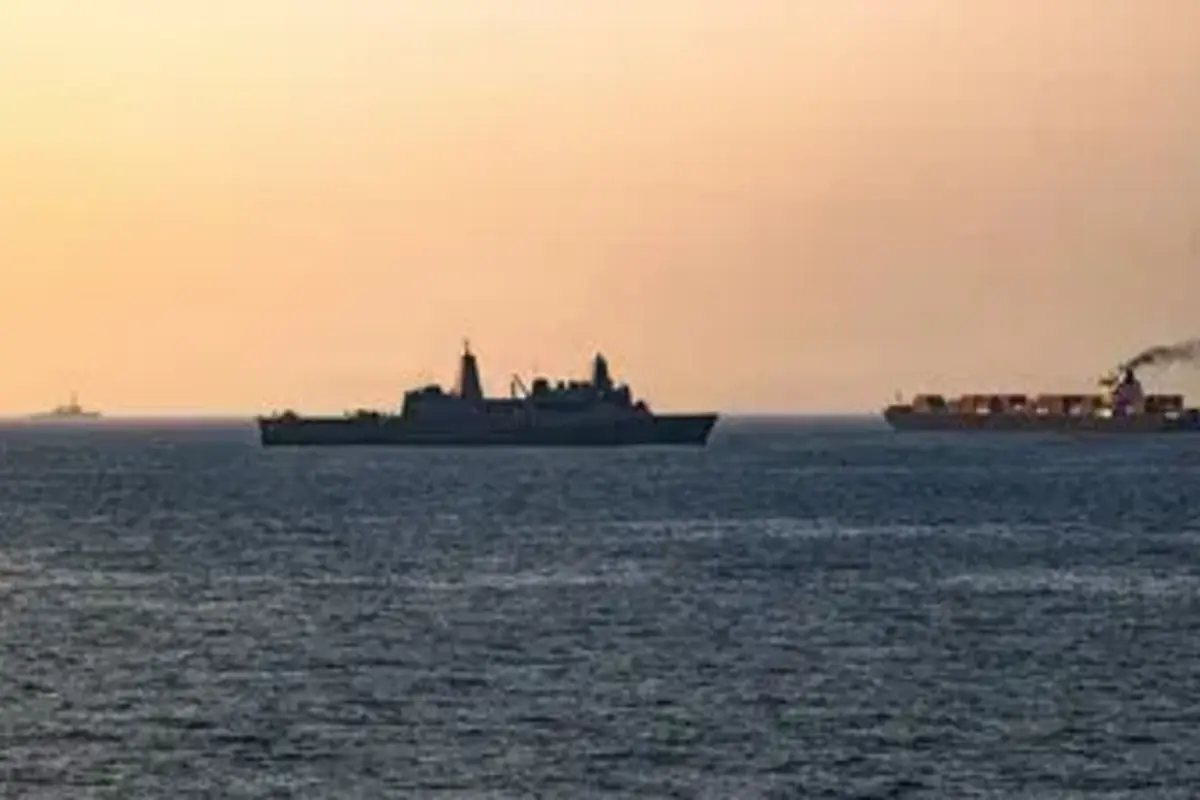
Iran-US Maritime Tensions have escalated following fresh accusations from Iran’s Khatam al-Anbia Central Headquarters, which claimed that the United States has threatened Iranian commercial vessels, oil tankers, and merchant ships operating in the country’s coastal and territorial waters. The statement warned that any hostile action against Iranian maritime traffic would be viewed as a serious escalation of the regional conflict and could trigger an appropriate response.
The latest developments have once again drawn international attention to the security of Gulf shipping routes, one of the world’s most strategically important maritime regions. As tensions continue to rise, governments, shipping companies, and global markets are closely monitoring the situation.
Iran Raises Concerns Over Maritime Security
Iranian military officials stated that the alleged threats occurred over the past three days following what they described as an “illegal naval blockade” targeting the country.
According to the statement, commercial vessels, tankers, and merchant ships operating in Iranian waters have faced increasing pressure. Iranian authorities argued that any attempt to interfere with civilian maritime traffic would represent a dangerous escalation with consequences for regional stability.
While the claims have intensified political rhetoric, they also highlight the growing importance of maritime security in the Gulf.
Strategic Importance of Gulf Shipping Routes
The Gulf remains one of the busiest energy transportation corridors in the world.
Every day, millions of barrels of oil and other commercial goods pass through regional waterways, making uninterrupted shipping essential for global trade. Any increase in Iran-US Maritime Tensions raises concerns among shipping companies, insurers, and energy markets.
Disruptions in these routes can influence international oil prices, increase transportation costs, and create uncertainty for businesses that rely on stable maritime trade.
Because of the region’s economic significance, even political statements often attract worldwide attention.
Iran Warns Against Escalation
In its latest statement, Iran emphasized that any hostile action directed at its commercial vessels would be interpreted as an expansion of the ongoing regional confrontation.
Military officials said Iran’s armed forces have already demonstrated their readiness to respond to perceived threats and would continue protecting the country’s maritime interests.
The statement reflects Iran’s broader position that safeguarding commercial shipping is an important element of national security.
Such warnings also underline the sensitive security environment currently surrounding Gulf waters.
Regional Stability Remains a Priority
The increase in Iran-US Maritime Tensions comes at a time when regional stability remains a major concern for neighboring countries.
Several governments have repeatedly called for restraint, dialogue, and diplomatic engagement to prevent misunderstandings that could further increase tensions.
Maritime security is closely linked to economic stability because uninterrupted shipping supports international trade, energy exports, and supply chains across multiple continents.
As a result, developments in Gulf waters are closely followed by governments, international organizations, and financial institutions.
Impact on Global Energy Markets
Although no major disruption to commercial shipping has been confirmed, markets often react quickly to geopolitical developments involving major energy-producing regions.
Oil traders monitor Gulf security closely because uncertainty surrounding shipping routes can influence global crude prices.
Any prolonged increase in regional tensions may also affect insurance premiums for commercial vessels and increase transportation expenses.
Investors generally view geopolitical stability as an important factor when evaluating global energy markets.
For this reason, developments involving maritime security frequently receive significant international attention.
Importance of Diplomatic Engagement
Despite the rising rhetoric, diplomatic solutions remain the preferred path for reducing regional tensions.
International observers continue to encourage dialogue between all parties to prevent accidental escalation and maintain freedom of navigation.
Constructive communication can help reduce misunderstandings while supporting confidence-building measures that improve regional security.
Diplomatic engagement also plays a vital role in protecting commercial shipping and ensuring that international trade continues without interruption.
Many analysts believe sustained negotiations remain essential for long-term stability.
Commercial Shipping Under Close Watch
Shipping companies operating in the Gulf routinely monitor political developments that could affect maritime operations.
Risk assessments, route planning, and vessel security procedures often become more important during periods of heightened geopolitical uncertainty.
Although commercial shipping continues across the region, operators remain alert to changing security conditions and official guidance from relevant maritime authorities.
Maintaining safe navigation remains a shared priority for both regional governments and the international shipping industry.
The latest Iran-US Maritime Tensions highlight the ongoing challenges surrounding security in one of the world’s most strategically significant waterways. Iran’s latest accusations against the United States have added to existing concerns over maritime safety, commercial shipping, and regional stability.
While political statements have become increasingly firm, many countries continue to support diplomatic efforts aimed at preventing further escalation. Stable shipping routes remain essential for global trade, energy supplies, and economic confidence.
As developments continue, the international community will closely monitor events in Gulf waters. Whether the situation moves toward greater dialogue or increased confrontation will depend on future diplomatic engagement and the actions taken by all parties involved.
The latest Iran-US Maritime Tensions serve as another reminder of how closely regional security, maritime commerce, and the global economy remain interconnected. Protecting commercial navigation while encouraging peaceful dialogue will remain critical to maintaining stability in the Gulf and beyond.