The latest Iran military warning has once again raised concerns about growing tensions in the Middle East. Iranian military officials have warned that any new aggression by the United States or Israel would trigger a far stronger response than previous confrontations. The statement reflects Tehran’s increasingly aggressive tone as geopolitical uncertainty continues to affect regional stability and global security discussions.
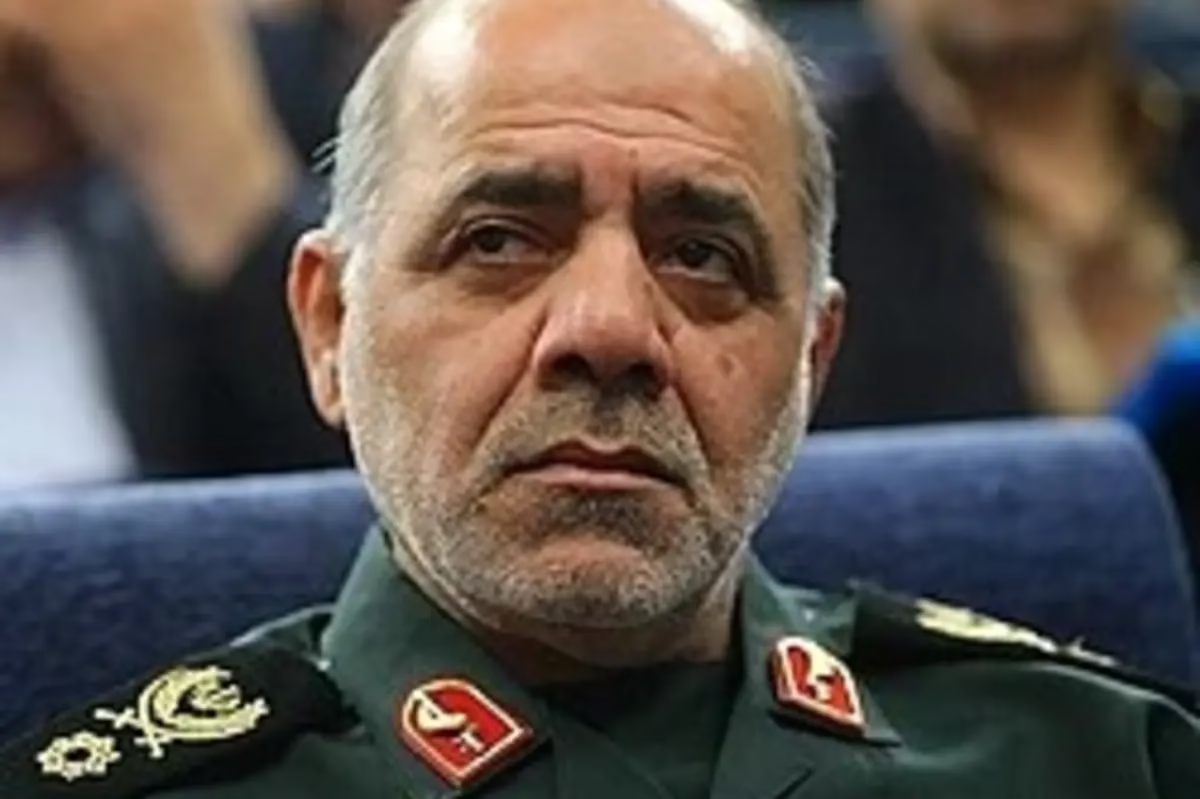
Brigadier General Abolfazl Shekarchi, a senior spokesperson for Iran’s Armed Forces, said in a media interview that Iran has updated its military target bank and prepared new strategies for potential future conflicts. According to him, any future retaliation would involve heavier attacks, stronger operations, and tactics that enemies have not previously experienced.
The recent Iran military warning comes at a time when diplomatic efforts in the region remain fragile. Although several countries continue to push for dialogue and de-escalation, military rhetoric from all sides has intensified in recent months.
Iran Signals Readiness for Future Conflict
Iranian officials have repeatedly emphasized that the country is fully prepared to respond to military threats. Brigadier General Shekarchi stated that Iran’s armed forces are operating at a high level of readiness and have adopted new combat strategies designed for modern warfare.
According to the Iranian military spokesperson, future attacks would not resemble previous responses. He warned that Iran’s military operations could extend beyond regional borders if another major conflict begins in the Middle East.
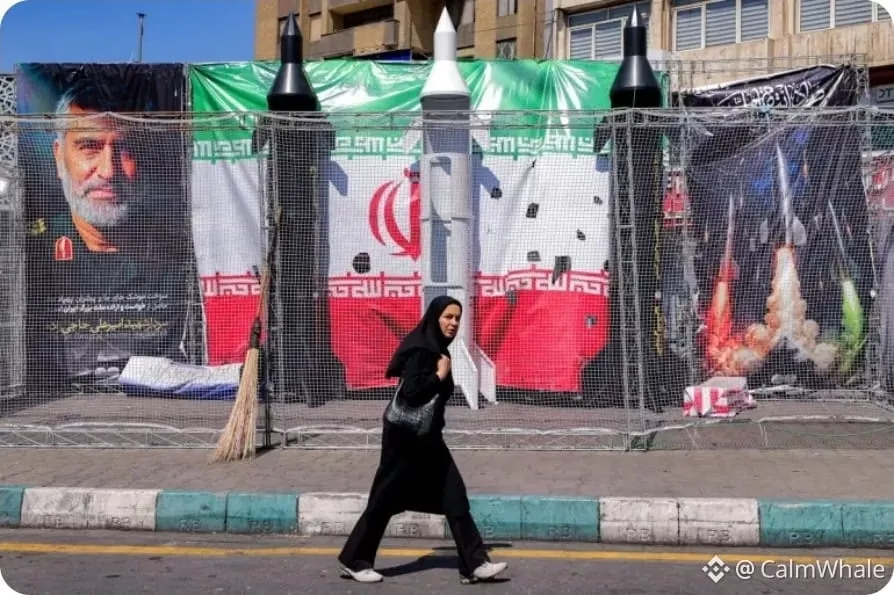
This latest Iran military warning highlights how seriously Tehran views the possibility of future confrontations. Iranian authorities continue to argue that military preparedness is necessary to deter external threats and protect national sovereignty.
Security analysts believe such statements are intended not only for regional rivals but also for international powers closely involved in Middle Eastern affairs.
Rising Tensions in the Middle East
The Middle East remains one of the most politically sensitive regions in the world. Ongoing disputes involving Iran, Israel, and the United States continue to create uncertainty across diplomatic, military, and economic sectors.
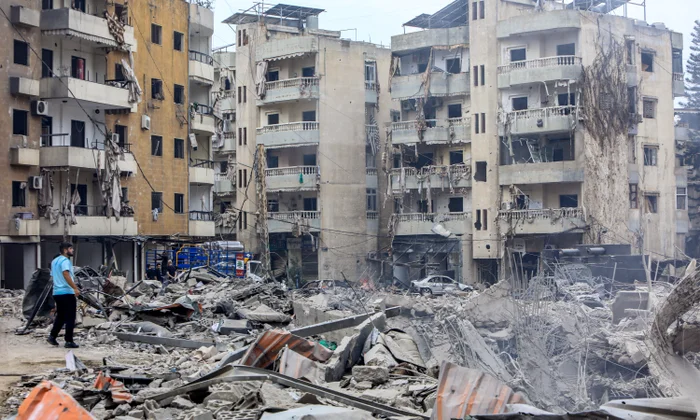
Recent conflicts and military exchanges have already placed heavy pressure on regional security. As a result, many governments fear that even a limited escalation could quickly grow into a broader crisis.
The new Iran military warning has therefore attracted international attention because of its potential implications for global stability. Countries dependent on Middle Eastern energy supplies are particularly concerned about the possibility of disruptions in oil transportation routes.
The Strait of Hormuz remains one of the world’s most important shipping lanes, and any military escalation in the area could affect global oil prices and international trade.
Military Strategy and Psychological Messaging
Experts say that public military warnings often serve multiple purposes. While they demonstrate military readiness, they also act as psychological signals directed at opponents.
Iranian officials frequently use strong language to project confidence and discourage potential military action against the country. By publicly discussing “surprises” and “new tactics,” Iran appears to be reinforcing its deterrence strategy.
The latest Iran military warning also reflects Tehran’s effort to show domestic audiences that the country remains capable of defending itself despite economic sanctions and external pressure.
Military analysts note that modern conflicts increasingly involve cyber operations, drone warfare, missile systems, and information campaigns. Iran has invested heavily in these areas over the past decade, making its military posture more technologically advanced than before.
Diplomatic Efforts Continue Alongside Threats
Despite the harsh rhetoric, diplomatic channels between regional and international actors have not completely closed. Several countries continue to encourage dialogue in hopes of preventing another large-scale conflict.
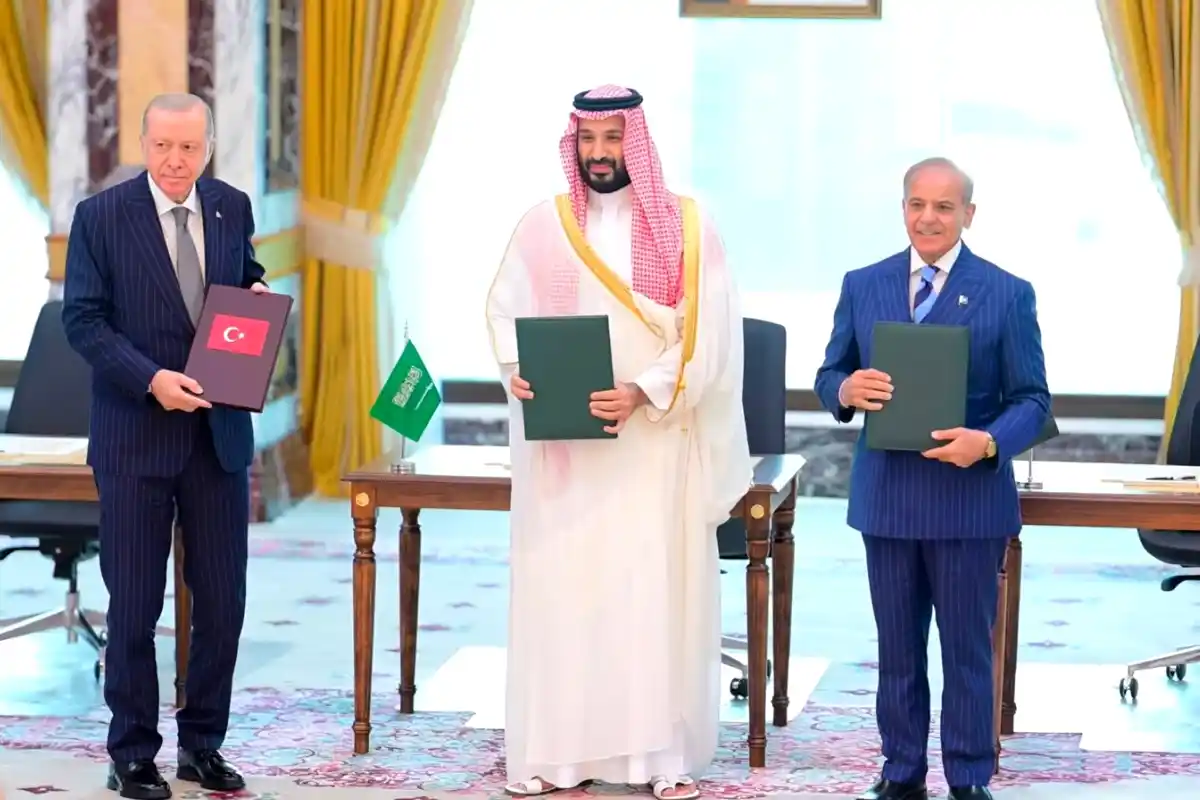
Pakistan, Qatar, and other regional players have recently been involved in mediation efforts aimed at reducing tensions between Iran and Western powers. However, strong military statements from all sides show that mistrust remains deeply rooted.
The ongoing Iran military warning demonstrates the difficult balance between diplomacy and military preparedness in today’s geopolitical environment. While negotiations continue behind closed doors, public messaging often remains confrontational.
Observers believe both sides are trying to strengthen their negotiating positions while avoiding direct large-scale war. Still, the possibility of miscalculation or accidental escalation cannot be ignored.
Global Markets Watching Closely
Financial markets closely monitor developments involving Iran because military tensions in the region often affect energy prices and investor confidence.
Oil markets have historically reacted sharply to military threats involving the Persian Gulf. Even statements alone can influence crude oil prices due to fears about supply disruptions.
The current Iran military warning has once again reminded investors how sensitive global markets remain to geopolitical instability in the Middle East. Countries heavily dependent on imported energy are especially vulnerable to sudden price increases.
At the same time, defense and security discussions have intensified internationally as governments assess the potential impact of future regional conflicts.
Uncertain Path Ahead
The future direction of Middle Eastern politics remains difficult to predict. While diplomacy continues in some areas, military rhetoric and strategic warnings continue to dominate headlines.
Iran’s latest warning suggests the country wants to project strength and readiness while signaling that future confrontations could become more destructive than previous conflicts.
As international powers continue diplomatic and security discussions, the world will closely watch how regional tensions evolve in the coming weeks and months.
The latest Iran military warning serves as another reminder that peace and stability in the Middle East remain fragile, with global consequences tied closely to every major development in the region.