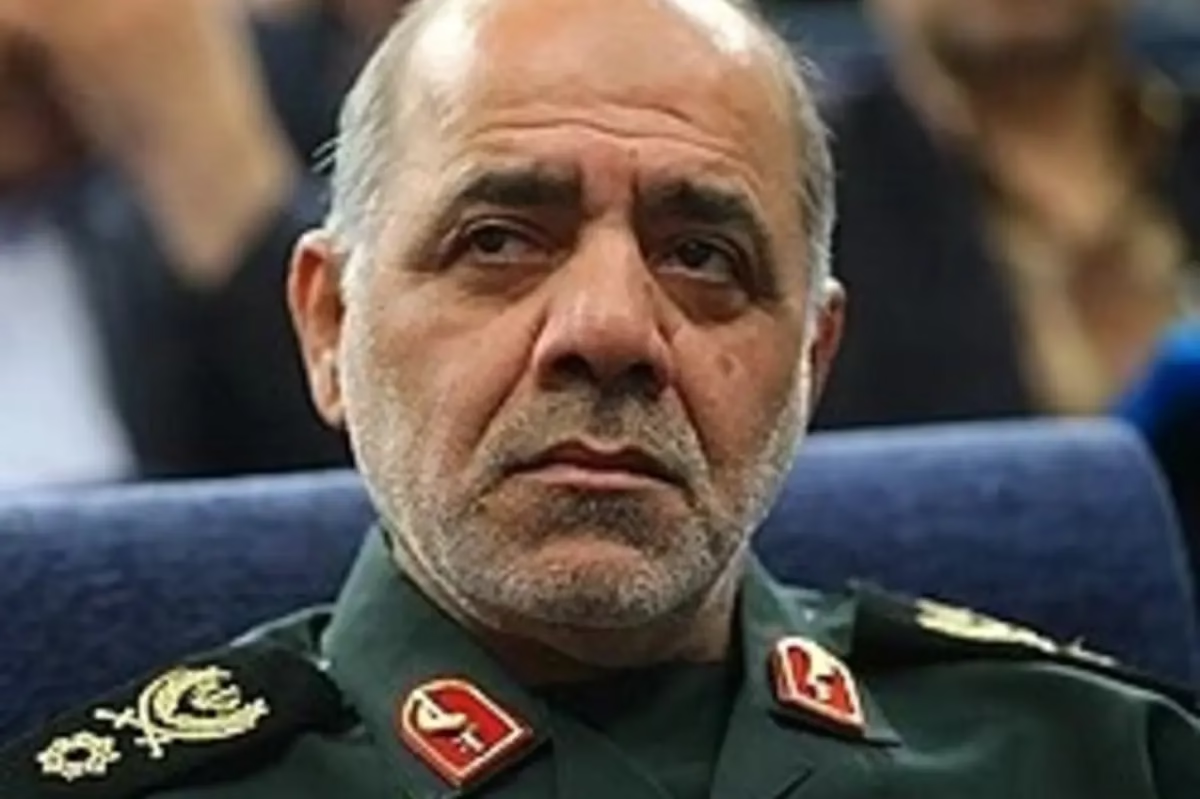
The Iran regional strategy has once again become a major topic of discussion after a senior Iranian military commander stated that foreign powers will have “no place” in the future of the region. The remarks were made by Major General Ali Abdollahi, commander of Iran’s Khatam al-Anbiya Central Headquarters, during a ceremony honoring those killed in the recent conflict involving Iran, the United States, and Israel.
According to the commander, Iran’s future plans are based on the strategies developed by Supreme Leader Ayatollah Seyyed Mojtaba Khamenei. He emphasized that Iran aims to shape a new regional and international order centered around what he described as a “strong Iran.” The statement also highlighted Iran’s focus on the Persian Gulf and the Strait of Hormuz, two areas considered strategically vital for global trade and energy supply.
The latest comments reflect the growing importance of the Iran regional strategy in shaping political and security developments across the Middle East.
Iran’s Vision for Regional Leadership
Iran has long viewed itself as a key power in the Middle East. Over the years, Tehran has expanded its political, military, and economic influence through regional partnerships, strategic alliances, and military capabilities.
The recent statement by Major General Abdollahi reinforces Iran’s belief that regional countries should manage their own affairs without outside military influence. Iranian officials frequently criticize the presence of Western military forces in the Gulf region, arguing that foreign involvement creates instability rather than peace.
Supporters of the Iran regional strategy believe regional cooperation among neighboring states could reduce tensions and encourage long-term stability. However, critics argue that Iran’s growing influence has also increased competition with rival powers in the region.
Importance of the Strait of Hormuz
One of the most significant parts of the commander’s statement was the mention of the Strait of Hormuz. This narrow waterway is among the most important shipping routes in the world because a large portion of global oil exports pass through it daily.
Iran has repeatedly emphasized its strategic position near the strait and often highlights its ability to secure the region. The Iran regional strategy places strong focus on protecting national interests in the Gulf while countering what Tehran sees as foreign interference.
Security experts note that any instability in the Strait of Hormuz can quickly affect international energy markets. Because of this, global powers closely monitor developments related to Iran’s military policies and regional activities.
Rising Regional Tensions
The Middle East has remained tense due to ongoing conflicts, political rivalries, and military confrontations. Relations between Iran, the United States, and Israel have particularly worsened in recent years.
Iranian leaders often accuse Western countries and Israel of attempting to weaken the country through sanctions, military pressure, and political isolation. In response, Tehran has increased investments in defense technology, missile systems, naval capabilities, and cyber operations.
The recent remarks by Iranian officials suggest that the Iran regional strategy is becoming more assertive. Tehran appears determined to strengthen its regional position while reducing foreign influence in neighboring areas.
Analysts believe such statements are also intended to demonstrate strength to domestic audiences by presenting Iran as capable of defending itself against international pressure.
A “Strong Iran” Narrative
The phrase “strong Iran” has become a central part of Iranian political messaging. Government officials regularly use it to promote national unity, military preparedness, and economic resilience despite international sanctions.
The latest comments from Major General Abdollahi suggest that the Iran regional strategy is closely connected with this broader vision. Iranian leaders argue that a stronger Iran will create a more independent and secure region free from external control.
This narrative also resonates with many supporters inside Iran who believe the country should rely on its own capabilities rather than outside powers. Military achievements, technological progress, and regional alliances are often presented as evidence of Iran’s growing influence.
Regional and Global Reactions
Statements about removing foreign influence from the Middle East are likely to attract strong reactions internationally. Western countries maintain military bases and strategic partnerships across the Gulf region, particularly to protect shipping routes and energy supplies.
For regional allies of the United States, the Iran regional strategy raises concerns about security balance and future geopolitical competition. Some countries fear that increasing Iranian influence could further intensify regional rivalries.
At the same time, diplomatic observers continue to stress the need for dialogue and peaceful engagement. Many experts believe that stability in the Middle East will require cooperation between regional powers rather than continued escalation.
Iran’s Military Messaging
Iranian military statements often serve multiple purposes. They are designed not only to warn rivals but also to project confidence and strengthen deterrence. By emphasizing readiness and strategic planning, Tehran seeks to discourage any potential military action against the country.
The recent ceremony honoring those killed in the latest conflict also carried symbolic importance. It allowed Iranian leaders to connect military sacrifice with national resistance and regional ambitions.
The Iran regional strategy therefore combines political messaging, military preparedness, and diplomatic positioning as part of a broader effort to shape the future balance of power in the Middle East.
The latest remarks from Iran’s military leadership highlight the country’s growing focus on regional influence and strategic independence. The Iran regional strategy emphasizes reducing foreign involvement, strengthening national defense, and securing critical waterways such as the Strait of Hormuz.
As tensions continue across the Middle East, Iran’s evolving role will remain closely watched by governments, analysts, and international markets. Whether these developments lead to greater regional cooperation or increased geopolitical competition will depend largely on future diplomatic and security decisions made by all sides involved.