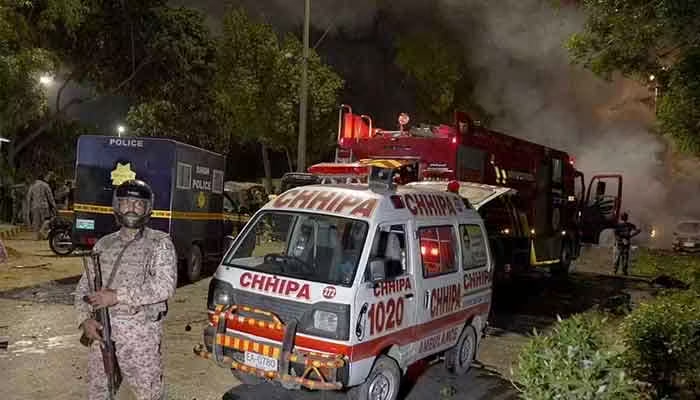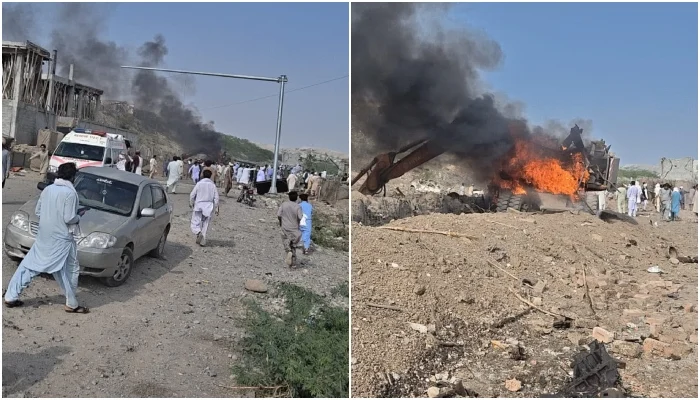
At least 12 people, including two women and a two-year-old child, were killed in a DI Khan suicide attack at an anti-smuggling check post in the Darazanda area of Dera Ismail Khan on Saturday. The attack took place on the DI Khan-Quetta Road when an explosives-laden vehicle was driven into the Aman Mela Police Checkpoint, causing heavy casualties among security personnel and civilians.
According to police officials, six police personnel and one Customs official were among those martyred in the explosion. More than 35 people were injured, with several reportedly in critical condition. Twenty-five of the injured were referred to the District Headquarters Hospital for medical treatment.
Suicide Attack Targets Checkpoint
Sources said the vehicle carrying explosives was deliberately rammed into the check post, resulting in a powerful blast. The explosion caused significant damage at the site and injured people present in and around the checkpoint.
Regional Police Officer Ghulam Mubashir confirmed the deaths of several police and Customs officials, while rescue teams and security personnel responded to the scene. With a large number of people wounded, authorities warned that the death toll could rise depending on the condition of those receiving treatment.
The DI Khan suicide attack also led to another deadly incident when militants opened fire on an ambulance carrying victims of the blast. According to security sources, two rescue officials were martyred when the ambulance came under attack while transporting injured people.
Security forces subsequently launched an operation against the militants in the surrounding area. The incident added another layer of danger for emergency workers who were already responding to the initial attack.
Government Condemns Attack
Prime Minister Shehbaz Sharif strongly condemned the attack and expressed grief over the loss of lives. He extended condolences to the families of those killed and prayed for the speedy recovery of the injured.
The prime minister said the government remained determined to eliminate terrorism and would not allow the sacrifices of security personnel and other citizens to go in vain.
Interior Minister Mohsin Naqvi also condemned the bombing and expressed sympathy with the families affected by the incident. He said Khyber Pakhtunkhwa remained on the frontline in the country’s fight against terrorism and highlighted the sacrifices made by people from different sections of society.
The DI Khan suicide attack has once again drawn attention to the security challenges facing Khyber Pakhtunkhwa, where police, security forces and civilians have repeatedly been targeted by militant violence.
Rising Security Concerns in KP
The latest attack comes only a week after a deadly assault at a mosque inside the Kohat Police Lines. That incident left 22 people dead, including 16 police officials, while 103 others were injured.
According to officials, the Kohat attack began when an explosives-laden vehicle struck the gate of the old Police Lines before exploding. Gunfire followed the blast, and another suicide explosion occurred at the Special Branch building during clashes between militants and security personnel.
Police and security forces later conducted an overnight clearance operation inside the compound. Elite Force commandos, Counter Terrorism Department teams and other personnel participated in the operation. Eight militants were ultimately killed, according to the Central Police Office.
The Kohat incident highlighted the continued risks faced by police personnel working in areas vulnerable to militant attacks. The latest DI Khan suicide attack has further intensified concerns about security arrangements along important roads and checkpoints in the province.
Investigation and Security Operation
Following Saturday’s bombing, security forces continued operations in the area to locate those responsible and prevent further attacks. Authorities are expected to investigate how the attackers managed to reach the checkpoint and whether any militant network was involved in planning and executing the assault.
The use of an explosives-filled vehicle against a security checkpoint demonstrates the challenges faced by law-enforcement agencies in protecting strategic locations. The subsequent attack on an ambulance also underscores the risks faced by rescue workers during emergencies.
Pakistan has experienced increased militant violence in recent years, particularly in Khyber Pakhtunkhwa and Balochistan. Officials have repeatedly called for stronger security measures and continued counterterrorism operations.
For the families of those killed in the DI Khan suicide attack, the immediate priority remains mourning their loved ones and supporting those injured. Authorities, meanwhile, face the task of providing security, assisting victims and pursuing those responsible for the violence. As investigations continue, the attack has renewed calls for stronger protection of both security personnel and civilians in high-risk areas.