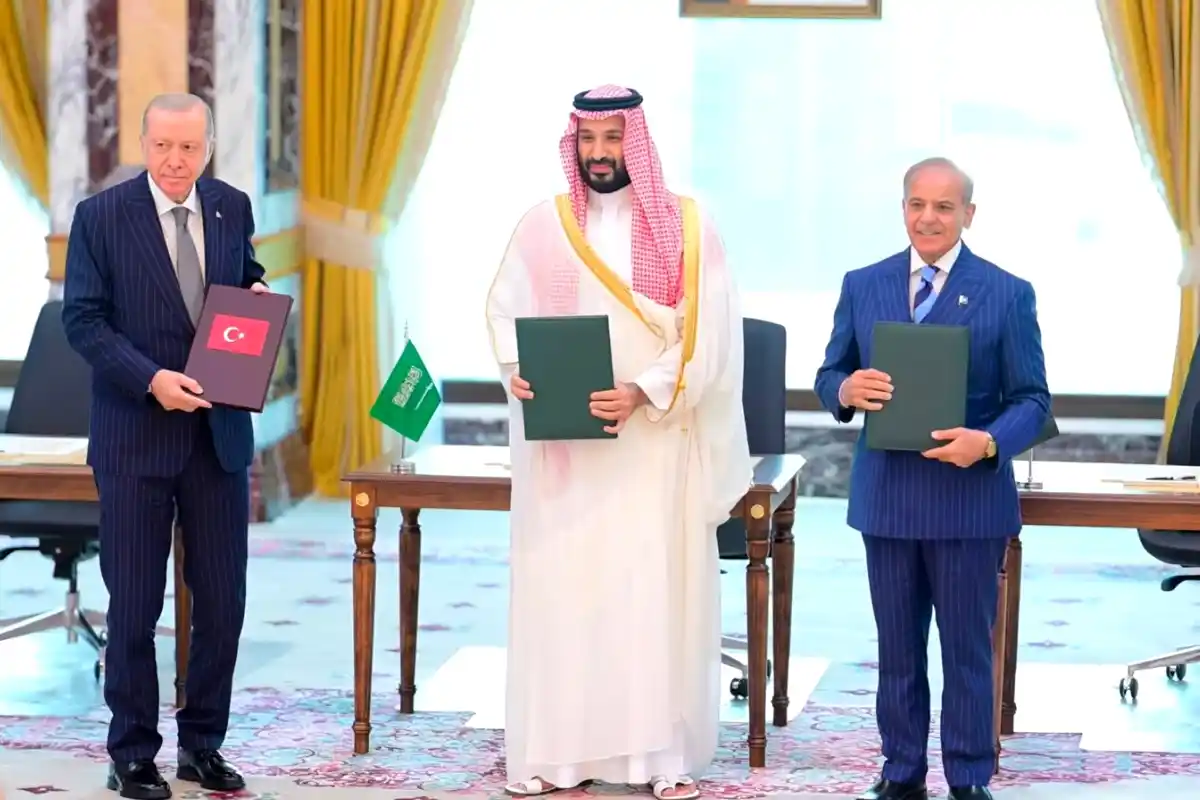
The Makkah Defense Pact is emerging as a new framework for regional cooperation, with Türkiye stressing the importance of collective efforts to promote peace, security and stability. Turkish Foreign Minister Hakan Fidan said the first meeting of the Strategic Political and Defence Committee under the pact is expected to produce meaningful results as participating countries work together to address common regional challenges.
Fidan Highlights Regional Cooperation
Speaking about the upcoming meeting, Hakan Fidan said regional countries should take joint measures to strengthen peace and stability. He emphasized that cooperation among countries in the region could help address security concerns while supporting diplomatic efforts to resolve disputes.
Fidan also clarified that the Makkah Defense Pact is not aimed at any specific country. According to him, the alliance is intended to provide a platform for brotherly states to cooperate on matters affecting regional security.
He said the doors of the alliance remain open to other friendly countries, suggesting that its membership could potentially expand as regional states assess the benefits of closer defence and political cooperation.
The Turkish foreign minister expressed hope that the initiative would develop into a strong alliance capable of responding effectively to challenges facing the region.
A Focus on Peace and Stability
The formation of the Makkah Defense Pact comes at a time when the Middle East and surrounding regions are facing multiple security and political challenges. Conflicts, tensions between regional powers and concerns about the wider impact of instability have increased the importance of dialogue and cooperation.
Rather than focusing exclusively on military capabilities, regional alliances can also play a role in improving communication between governments and creating mechanisms for consultation during crises.
Fidan’s comments indicate that the alliance is being presented as a cooperative framework rather than an arrangement designed to confront a particular state. This distinction could be important in encouraging wider participation and reducing concerns among countries that may otherwise view a new defence alliance with suspicion.
The first meeting of the Strategic Political and Defence Committee will therefore be closely watched for indications about the alliance’s future direction, priorities and practical mechanisms.
Shehbaz Sharif Meets Iranian President
Meanwhile, Pakistan’s regional diplomatic engagement continued in Bishkek, where Prime Minister Shehbaz Sharif met Iranian President Masoud Pezeshkian on the sidelines of the Shanghai Cooperation Organisation summit.
The meeting carried particular significance because Pakistan and Iran share a border and have important economic, political and security interests. The two leaders discussed bilateral relations, regional developments and issues affecting peace and stability.
President Pezeshkian personally received Prime Minister Shehbaz Sharif outside the building when the Pakistani premier arrived for the meeting. The gesture highlighted the importance both sides attach to their bilateral relationship.
Their discussions covered matters of mutual interest as well as the wider regional situation. Maintaining communication between Pakistan and Iran is particularly important as developments in neighbouring regions continue to influence security, trade and diplomatic relations.
Pakistan’s Regional Diplomatic Role
Pakistan has traditionally sought to maintain constructive relationships with countries across the region while supporting diplomatic solutions to conflicts. Its participation in discussions surrounding regional security could become increasingly important as countries explore new approaches to collective stability.
The Makkah Defense Pact could provide another platform through which participating states coordinate their positions on shared security concerns. However, the effectiveness of any alliance will depend on how clearly its members define their objectives and how successfully they balance defence cooperation with diplomacy.
For Pakistan, maintaining strong relations with Türkiye, Iran and other regional partners can provide opportunities for greater political coordination. Economic cooperation, border security, counterterrorism efforts and regional connectivity are among the areas where closer engagement could produce practical benefits.
At the same time, regional alliances face challenges when participating countries have different foreign-policy priorities. Building consensus will therefore require sustained diplomatic engagement and confidence among members.
The first Strategic Political and Defence Committee meeting will be an important test for the Makkah Defense Pact. Statements from participating governments suggest that the alliance is intended to strengthen cooperation rather than create another source of regional confrontation.
Its long-term success will depend on whether the participating states can translate political commitments into practical cooperation. Regular consultations, coordinated security policies and mechanisms for managing disagreements could help the alliance establish credibility.
Türkiye’s emphasis on keeping the alliance open to other brotherly states may also help broaden its regional reach. If additional countries join or cooperate with the initiative, the pact could eventually become a more significant platform for regional dialogue and security coordination.
For Pakistan, the developments surrounding the Makkah Defense Pact and Prime Minister Shehbaz Sharif’s meeting with President Pezeshkian underline the country’s continuing engagement with regional partners. As geopolitical tensions evolve, maintaining dialogue with neighbouring and friendly states will remain important.
The coming months will show whether the new defence framework can move beyond political declarations and deliver practical results. Its ability to promote cooperation, support stability and encourage diplomatic solutions could determine how influential the Makkah Defense Pact becomes in the region.