Pakistan’s diplomatic role in the Middle East has gained international attention as recent Pakistan Iran peace talks reportedly showed encouraging progress toward a broader regional understanding. The latest developments came after Asim Munir concluded an official visit to Iran, where he met the country’s top political and military leadership.
According to the Inter-Services Public Relations, the meetings focused on promoting de-escalation, encouraging dialogue, and advancing ongoing mediation efforts between Iran and the United States.
The growing importance of the Pakistan Iran peace talks reflects Islamabad’s expanding diplomatic engagement in regional affairs. Pakistan has reportedly been playing a mediatory role since tensions escalated in the Middle East following military confrontations involving Iran, the United States, and Israel earlier this year.
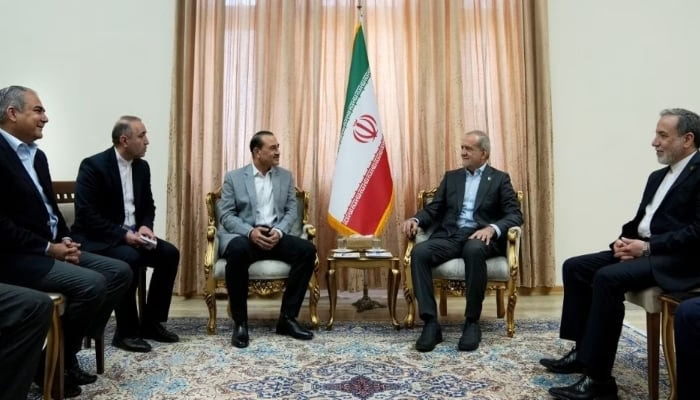
During his visit to Tehran, Field Marshal Asim Munir held discussions with several senior Iranian officials, including Masoud Pezeshkian, Mohammad Bagher Ghalibaf, Abbas Araghchi, and Eskandar Momeni.
According to official statements, the discussions were held in a positive and constructive environment. Both sides reportedly focused on accelerating diplomatic consultations aimed at supporting regional peace and reaching a conclusive agreement.
The recent Pakistan Iran peace talks are being viewed by analysts as an important diplomatic effort to reduce instability in the Middle East. Ongoing tensions in the region have raised concerns globally due to their impact on energy markets, security conditions, and international political relations.
Pakistan’s involvement as a mediator highlights the country’s attempt to maintain balanced relations with regional powers while encouraging peaceful solutions through dialogue rather than confrontation. Islamabad has historically advocated for diplomatic engagement in regional disputes and has repeatedly called for restraint during periods of conflict.
According to reports, Pakistan had previously helped broker a temporary ceasefire between Iran and the United States earlier this year. Since then, Islamabad has continued facilitating communication between the two sides as indirect negotiations remained underway.
The progress in the Pakistan Iran peace talks also received international attention after US Secretary of State Marco Rubio stated that there was a possibility of a breakthrough agreement being reached soon. Speaking to reporters in New Delhi, Rubio suggested that diplomatic efforts were moving in a positive direction.
Iranian officials also indicated that discussions were focused on finalizing a memorandum of understanding through Pakistani-mediated negotiations. Although specific details remain undisclosed, both sides appear interested in reducing tensions and avoiding further escalation.
The role of Pakistan in the Pakistan Iran peace talks demonstrates the country’s growing diplomatic relevance in complex regional issues. Observers note that Pakistan’s geographic position and relationships with multiple regional actors place it in a unique position to facilitate communication during periods of political tension.
The meetings in Tehran also reinforced military-to-military and state-level cooperation between Pakistan and Iran. Both countries share a long border and maintain important economic, security, and strategic ties despite occasional regional challenges.
According to the ISPR statement, Iranian leadership appreciated Pakistan’s “sincere and constructive” role in facilitating dialogue and promoting peaceful solutions to regional disputes. This acknowledgment reflects growing recognition of Pakistan’s diplomatic efforts on the international stage.
The latest Pakistan Iran peace talks come at a time when global attention remains fixed on Middle Eastern stability. Regional conflicts often have direct consequences for international oil prices, trade routes, and geopolitical alliances, making diplomatic engagement increasingly important.
Experts believe successful mediation could help reduce uncertainty in the region while opening the door for broader diplomatic cooperation. However, they also caution that peace negotiations involving major regional and global powers are often complex and require sustained engagement over time.
Field Marshal Asim Munir’s visit to Tehran also carried symbolic importance, signaling Pakistan’s commitment to playing a constructive role in regional peacebuilding efforts. Upon his arrival, he was received by senior Iranian civil and military officials, reflecting the significance of the diplomatic engagement.
The broader significance of the Pakistan Iran peace talks lies in Pakistan’s effort to project itself as a stabilizing force capable of contributing positively to international diplomacy. In recent years, Islamabad has increasingly emphasized regional connectivity, dialogue, and peaceful conflict resolution in its foreign policy approach.
As negotiations continue, regional and international observers will closely watch whether these diplomatic efforts lead to a lasting agreement between Tehran and Washington. While challenges remain, the recent progress reported during the Tehran meetings has created cautious optimism regarding future developments.
For Pakistan, continued involvement in mediation efforts could strengthen its diplomatic standing and reinforce its image as a country committed to regional peace, dialogue, and stability.