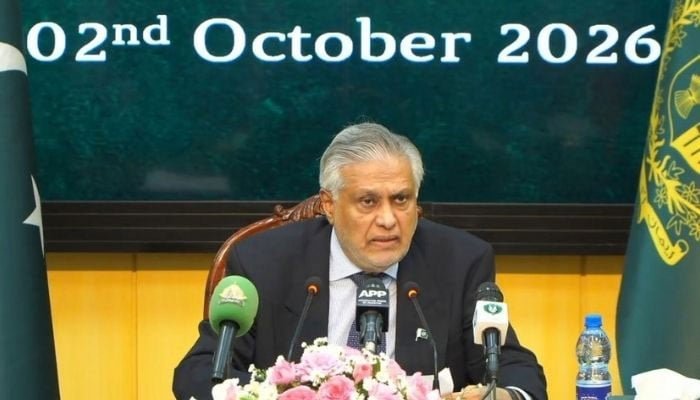
The Makkah Defence Alliance could expand beyond its current three members, with Deputy Prime Minister and Foreign Minister Ishaq Dar saying that at least six countries have expressed interest in joining the agreement. Speaking at a press briefing in Islamabad, Dar said the pact remains defensive in nature and is not designed for offensive military action.
The agreement was signed by Pakistan, Saudi Arabia and Turkiye on August 7. It establishes a collective defence framework under which an armed attack against one member is to be treated as an attack against all three. The arrangement has been compared with the collective-defence principle contained in Article 5 of the NATO treaty.
Six Countries Show Interest
Dar said he would not identify the countries that have expressed interest in joining the Makkah Defence Alliance, but confirmed that at least six countries were keen to become members.
However, potential expansion will not happen immediately. According to Dar, the existing agreement must first become fully operational, a process expected to take at least a year. The pact itself allows other countries to join if they accept the principles agreed upon by the existing members.
The possibility of expansion has been discussed since the agreement was signed. Turkish officials have previously suggested that the framework could eventually involve other Muslim-majority countries, although individual countries have not been formally confirmed as new members.
Pact Focuses on Defence
Dar emphasized that the Makkah Defence Alliance is defensive rather than offensive.
The agreement was created as a framework for collective security and closer coordination between Pakistan, Saudi Arabia and Turkiye. The three countries have also discussed strengthening defence capabilities, improving interoperability between their armed forces and expanding cooperation in defence industries, including joint technology development and production.
The alliance’s first Strategic Political and Defence Committee meeting took place in Istanbul on August 31. The meeting established important institutional arrangements, including plans for a secretariat in Saudi Arabia.
Pakistan was selected to initially head the secretariat for three years, while retired Lieutenant General Nauman Mahmood was appointed as its first secretary general.
Emergency Meeting Planned
The development comes as Saudi Arabia faces heightened security tensions linked to attacks by Yemen’s Houthi movement.
Dar said an emergency meeting of the Makkah Defence Alliance‘s Strategic Political and Defence Committee would take place in Riyadh. The meeting is expected to examine the latest regional situation and developments affecting Saudi Arabia.
The committee consists of the foreign ministers, defence ministers and military chiefs from the three member states. Military chiefs from Pakistan, Saudi Arabia and Turkiye also met in Riyadh on September 25 to discuss defence cooperation and ways of assisting Saudi Arabia within the framework of the agreement.
Pakistan has previously clarified that no immediate military response had been discussed under the pact despite the attacks on Saudi Arabia. Islamabad has also continued to emphasize diplomatic efforts and regional de-escalation.
Strait of Hormuz Remains Important
During his briefing, Dar also discussed the Strait of Hormuz, a strategically important waterway for global energy and maritime trade.
He said there should be no fee or service charge for ships crossing the strait. His comments came amid wider regional tensions that have disrupted shipping and energy markets.
The waterway has become particularly important during the current regional crisis because disruptions there can affect international trade and energy supplies. Pakistan has continued to call for diplomatic efforts aimed at reducing tensions and keeping important maritime routes open.
Pakistan’s Position on Afghanistan
Dar also addressed Pakistan’s relations with Afghanistan during the briefing.
He said Pakistan had “good wishes” for Afghanistan but wanted Kabul to ensure that Afghan territory was not used for attacks against Pakistan.
According to Dar, Pakistan expects action against groups it identifies as security threats, including the Tehrik-e-Taliban Pakistan and the Balochistan Liberation Army. He also referred to Fitna al-Hindustan in outlining Pakistan’s security concerns.
The Pakistan-Afghanistan border has remained closed since October, and Dar acknowledged that the closure has had economic consequences, including damage to crops. His comments underline the continuing challenges surrounding border management, security and trade between the two countries.
A New Regional Security Framework
The emergence of the Makkah Defence Alliance comes at a time of significant security changes across the Middle East and surrounding region.
For Pakistan, Saudi Arabia and Turkiye, the agreement provides a formal mechanism for greater defence coordination while maintaining an emphasis on collective security. The three countries have already begun building the institutional structures required to make the pact operational.
Any future expansion would represent another stage in that process. However, Dar’s comments make clear that interested countries will have to wait until the existing framework is fully established before membership decisions are considered.
The Makkah Defence Alliance remains a three-country agreement involving Pakistan, Saudi Arabia and Turkiye. Its immediate priorities include developing its institutions, improving defence coordination and responding to the changing regional security environment.
The reported interest from at least six additional countries indicates that the alliance is attracting wider attention, but its eventual size and membership will depend on how the existing members develop the agreement and whether potential new members meet its stated principles.