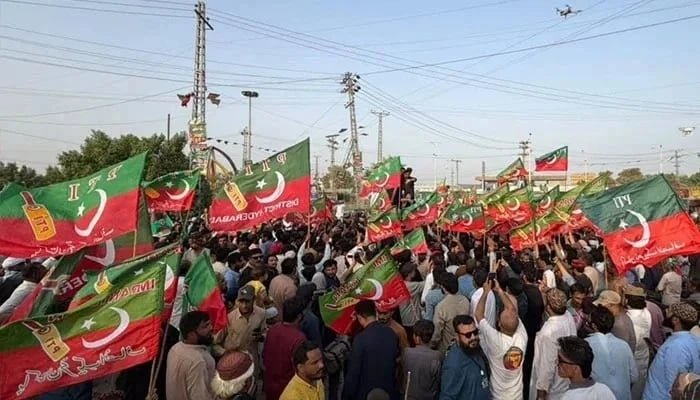
The PTI October 4 march has intensified political tensions between the federal government and the Pakistan Tehreek-e-Insaf-led administration in Khyber Pakhtunkhwa, with federal officials discussing the possibility of governor’s rule or emergency measures in the province. PTI leaders, meanwhile, have maintained that the planned demonstration is intended to remain a political and peaceful protest.
Federal Government Raises Constitutional Options
Prime Minister’s Adviser on Political Affairs Rana Sanaullah said the federal government had been briefed about the situation surrounding the planned protest. Speaking on Geo News programme Capital Talk, he said constitutional options could include governor’s rule or an emergency if circumstances required such action.
Sanaullah also said informal discussions had continued between the two sides. According to him, the purpose of these contacts was to persuade the KP government to distance itself from what the federal side considers an unlawful campaign.
The warnings come amid a widening dispute between Islamabad and the PTI-led provincial government. Federal officials have linked their concerns to security and law-and-order conditions in the province, while PTI leaders have rejected the suggestion that their political mobilisation should lead to federal intervention.
PTI Defends Its Right to Protest
PTI leader Malik Aamir Dogar challenged the government’s position, questioning whether demanding political rights or organising a peaceful march should be treated as a criminal act.
He also rejected allegations that PTI intended to create disorder or bring armed groups toward Islamabad. Dogar said the party should face legal action if it actually violated the Constitution or law, but maintained that the planned protest did not fall into that category.
The PTI has previously said its mobilisation is connected to demands including the release of party founder Imran Khan and what it describes as the restoration of constitutional supremacy.
The party initially planned to begin the march on September 27 but later postponed it to October 4. KP Chief Minister Sohail Afridi has since reiterated that the march will proceed, with protesters expected to begin their journey from the province.
Dispute Over Arrested PTI Members
Dogar also raised concerns about PTI lawmakers and other party members whom he claimed were either detained or missing.
He alleged that seven PTI members of the National Assembly and more than 10 provincial assembly members were in jail or missing. He further claimed that three provincial ministers were also imprisoned or missing.
These figures were presented as claims by the PTI leader and were not independently established in the statements provided.
Separately, KP Assembly Speaker Babar Saleem Swati has sought information from the provincial police chief concerning lawmakers who had allegedly been arrested or detained. The speaker requested details about such incidents and related legal records.
PTI Says It Does Not Want Provincial Government Dissolved
Dogar said PTI did not want to take any step that could lead to the dissolution or removal of the KP government.
The issue has become particularly significant because federal officials have increasingly discussed constitutional intervention while the provincial administration continues to support the planned mobilisation.
On September 29, Dawn reported that federal officials were keeping governor’s rule and emergency among the options under consideration, while Chief Minister Afridi continued to defend the march.
PTI Chairman Barrister Gohar Ali Khan has also said the party wants the PTI October 4 march to remain peaceful and political. He urged the federal government to pursue political engagement rather than impose governor’s rule or emergency measures.
Dialogue Remains Part of the Debate
Despite the increasingly strong language from both sides, dialogue remains one of the options being discussed.
Federal officials have said informal contacts have continued, while KP Chief Minister Afridi has also publicly offered opportunities for negotiations ahead of the march. The political dispute therefore continues alongside efforts to determine whether an agreement can be reached before October 4.
The federal government has also faced calls from within the broader political landscape to consider the constitutional implications of any intervention in KP. The debate has consequently moved beyond the march itself to questions about provincial autonomy, law and order, and the relationship between Islamabad and the KP government.
The PTI October 4 march now stands at the centre of a broader political confrontation between the federal government and the PTI-led KP administration.
For the government, maintaining law and order and responding to security concerns remain key considerations. For PTI, the march is being presented as a political mobilisation connected to its demands concerning Imran Khan and constitutional issues.
With the October 4 date approaching, both sides continue to signal their positions while leaving room for political engagement. Whether dialogue can reduce tensions before the planned mobilisation remains uncertain.
The dispute reflects the wider political tensions between the federal and provincial governments, with the PTI October 4 march serving as the immediate point of disagreement.