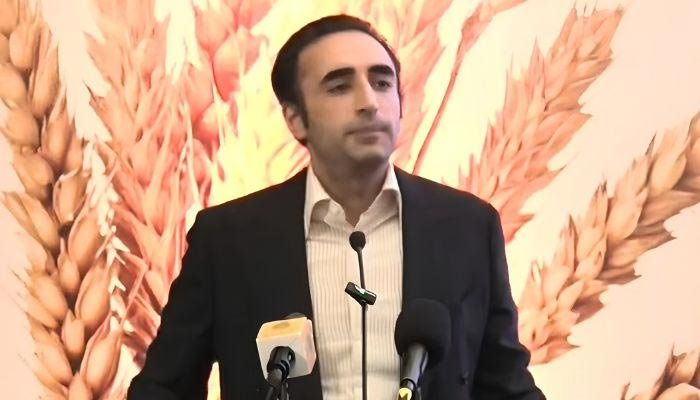
Pakistan Peoples Party (PPP) Chairman Bilawal Bhutto-Zardari has urged Prime Minister Shehbaz Sharif to bring all political parties together and present a joint strategy to tackle the country’s worsening economic situation. Speaking at an event in Karachi, Bilawal said political disagreements and competing agendas were preventing the prime minister from focusing fully on economic challenges. His remarks have brought renewed attention to the Bilawal Economic Crisis Plan, which centres on political consultation, national cooperation and relief for struggling citizens.
Bilawal said Pakistan was facing a difficult economic period amid regional conflict and uncertainty. He noted that ordinary citizens were carrying the financial burden of the situation, while rising prices continued to affect household budgets.I have not seen such a difficult economic time in my life, he said.
He also expressed concern that no peace agreement between the United States and Iran appeared imminent, warning that Pakistan could take considerable time to recover from the economic pressure.
Bilawal Criticises Political Distractions
The PPP chairman said that whenever Prime Minister Shehbaz Sharif developed a plan to address the economic crisis, a minister would come forward with a separate agenda.
He argued that such political distractions were preventing the premier from presenting his economic strategy to all political stakeholders and securing broader support.
Bilawal recalled that the PPP had supported Shehbaz in becoming prime minister twice and had also worked with him in the federal cabinet. He acknowledged the government’s efforts to prevent Pakistan from defaulting and stabilise key economic indicators.
He also praised the prime minister and his team for their efforts to promote peace after the regional conflict began.
However, Bilawal regretted that Shehbaz had not received sufficient political space to focus on the country’s economic difficulties.
“I want to strengthen the prime minister’s hand,” he said, adding that he wanted Shehbaz to become the first prime minister of Pakistan to complete a five-year constitutional term.
PPP Seeks National Consultation on Economic Recovery
A central part of the Bilawal Economic Crisis Plan is the involvement of all major political parties in decisions concerning the economy.
The PPP chairman called on the prime minister to invite political leadership from across the country and explain how the government intended to protect citizens from inflation, unemployment and poverty.
He argued that Pakistan’s challenges could not be resolved by one or two political parties working independently.
Bilawal said national interests should take priority over political rivalries and personal disagreements. He also urged political leaders to avoid pursuing separate agendas until the country had overcome its economic difficulties.
According to him, a shared strategy would help build political consensus and make it easier to implement difficult economic decisions.
He left the final decision to Prime Minister Shehbaz, saying it was up to the premier whether he wanted to accept the PPP’s suggestions.
Bilawal Invites PTI Back to Parliament
Bilawal also called for greater engagement with opposition parties, particularly Pakistan Tehreek-e-Insaf (PTI), which holds the largest number of opposition seats in parliament.
He said political differences should not prevent parties from participating in discussions about national problems.
Referring to opposition leader Maulana Fazlur Rehman, Bilawal noted that regardless of political preferences, he remained part of the opposition benches and had a role in parliamentary affairs.
He said PTI should also be engaged if the country wanted to address its challenges through collective efforts.
“We invite the opposition to return to parliament and play its role,” he said.
The PPP chairman added that PTI founder Imran Khan should also contribute to parliamentary proceedings despite his differences with other political parties.
His remarks reflected an appeal for wider political participation at a time when economic pressures and regional uncertainty are creating additional challenges for Pakistan.
Sindh Government Announces Relief for Farmers
During his address, Bilawal highlighted several initiatives being undertaken by the Sindh government to support vulnerable communities.
He said rising diesel and fertiliser prices were putting additional pressure on farmers, particularly small tenant farmers who had limited financial resources.
To provide assistance, he announced that around 600,000 farmers would receive support through the Sindh government’s Hari Card programme.
Bilawal said the PPP had consistently represented small farmers and sought to protect their livelihoods through targeted assistance.
He also announced relief measures for residents of drought-affected Tharparkar. According to him, an emergency had been declared in the district, and the Sindh government would provide Rs8,000 to deserving residents through the Benazir Income Support Programme (BISP).
Housing, Healthcare and Employment Initiatives
The PPP chairman also discussed his party’s social welfare and development programmes in Sindh.
He said the government was working to build one million houses and provide ownership rights to women, while also creating employment opportunities through economic activity across the province.
Highlighting healthcare services, Bilawal referred to the CyberKnife treatment facility, saying advanced treatment was being provided free of charge in Sindh.
He described access to expensive medical technology without payment as an important part of the party’s public welfare approach and said the PPP had decided to establish a free treatment system.
Political Cooperation Remains Key to Economic Stability
Bilawal’s appeal comes as Pakistan continues to face inflation, unemployment, poverty and uncertainty linked to regional developments.
The Bilawal Economic Crisis Plan emphasises that economic recovery requires more than government policies alone. It also depends on political stability, parliamentary cooperation and agreement among major stakeholders.
His call for dialogue with both coalition partners and opposition parties places responsibility on political leadership to move beyond disagreements and focus on public concerns.
Whether Prime Minister Shehbaz accepts the proposal remains to be seen. However, Bilawal’s message is clear: Pakistan needs a collective economic strategy, with political parties working together to reduce the burden on ordinary citizens and support long-term national stability.