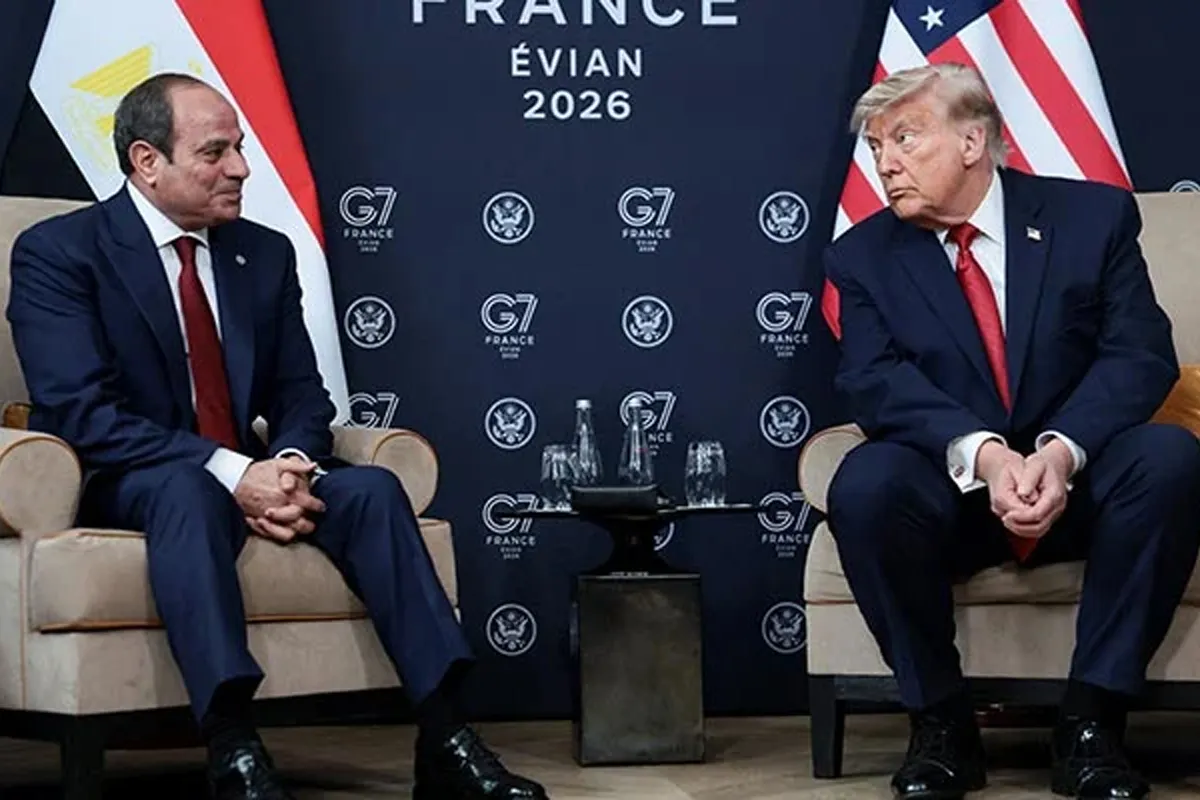
The US-Iran Peace Deal has entered a critical phase after former US President Donald Trump issued a strong warning regarding the future of the agreement. Speaking during the G7 summit in France, Trump made it clear that the current arrangement is not a permanent treaty but a temporary memorandum of understanding that depends entirely on Iran’s compliance with its commitments.
His remarks have sparked international debate about the stability of the agreement and raised important questions about the future of diplomatic relations between Washington and Tehran.
A Temporary Agreement, Not a Final Treaty
One of the most significant aspects of Trump’s comments was his emphasis that the current understanding between the two countries is not a legally binding treaty. Instead, it is a memorandum of understanding, often referred to as an MoU.
This distinction matters because a memorandum does not carry the same legal obligations as a formal treaty. It can be modified, suspended, or even terminated more easily. By describing the arrangement in these terms, Trump signaled that the US-Iran Peace Deal remains conditional and subject to future developments.
For both supporters and critics of the agreement, this creates uncertainty. While the deal may help reduce tensions in the short term, its long-term durability remains unclear.
Trump Issues a Direct Warning
During his remarks, Trump stated that if Iran fails to uphold its commitments or moves in a direction that concerns the United States, military action could resume.
Such language is unusual in the middle of an active diplomatic process. Typically, peace negotiations are accompanied by cautious statements aimed at building trust. However, Trump chose a more direct approach, combining support for diplomacy with a warning about potential consequences.
The statement sends a strong message to Iranian leaders that compliance will be closely monitored. At the same time, it highlights the fragile nature of the US-Iran Peace Deal, which still faces political and security challenges.
No Immediate Economic Relief for Iran
Another important development involves sanctions relief. Earlier reports suggested that Iran could gain access to frozen assets or receive economic benefits shortly after signing an agreement.
However, Trump clarified that no immediate sanctions relief would be provided. Instead, any economic benefits would depend on Iran first demonstrating compliance with the terms of the agreement.
This approach reflects a strategy often described as “performance-based diplomacy.” Under this model, rewards are tied directly to actions rather than promises.
For Iran, this presents a difficult challenge. Economic pressure has been one of the country’s major concerns, and many observers expected financial incentives to be part of the initial phase of the agreement. The absence of immediate relief may complicate domestic political support for the US-Iran Peace Deal.
Financial Markets React Positively
Despite the uncertainty, global financial markets responded positively to news of the agreement. Investors viewed the diplomatic breakthrough as a step toward reducing tensions in one of the world’s most important energy-producing regions.
Oil prices declined following reports of progress between Washington and Tehran. Lower energy prices often signal greater confidence in future stability and reduced risks to global supply chains.
Many analysts believe that if the US-Iran Peace Deal holds, it could contribute to a more stable energy market and help reduce fears of major disruptions in international trade.
However, market optimism remains tied to the successful implementation of the agreement. Any setback could quickly reverse recent gains.
Why the Memorandum Matters
The use of a memorandum rather than a treaty gives both sides flexibility. The United States can adapt its policies quickly if circumstances change, while Iran avoids entering a lengthy and politically sensitive treaty process.
At the same time, this flexibility creates uncertainty. Formal treaties often provide stronger guarantees and clearer enforcement mechanisms. Memorandums rely more heavily on trust, ongoing negotiations, and political will.
This means that the future of the US-Iran Peace Deal will depend less on legal obligations and more on continued cooperation between both governments.
What Happens Next?
The coming weeks are expected to be crucial. Diplomatic teams from both countries will likely continue discussions to clarify implementation procedures, monitoring mechanisms, and future economic arrangements.
Observers around the world will be watching closely to see whether the agreement evolves into a more comprehensive framework or remains a temporary understanding.
The success of the US-Iran Peace Deal could reduce regional tensions, support global economic stability, and open the door for broader diplomatic engagement. Failure, however, could lead to renewed uncertainty and increased geopolitical risks.
The latest developments show that the US-Iran Peace Deal represents both an opportunity and a challenge. While the agreement has generated optimism in global markets and created hopes for regional stability, Trump’s warning underscores that the path forward remains uncertain.
With no immediate sanctions relief and strong conditions attached to compliance, both sides face important decisions in the months ahead. Whether this diplomatic breakthrough becomes a lasting peace arrangement or another temporary pause in a long-running conflict will depend on actions taken by both Washington and Tehran.