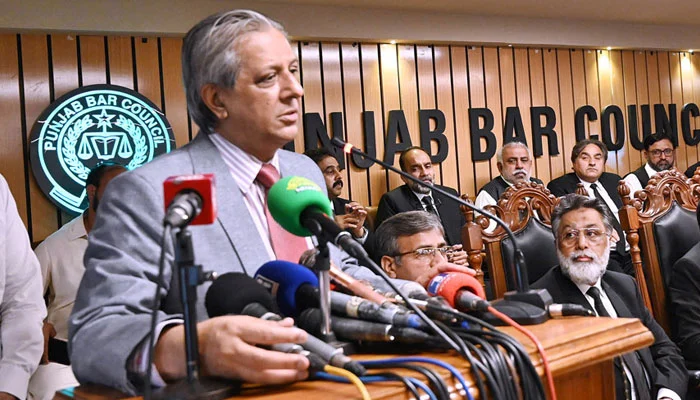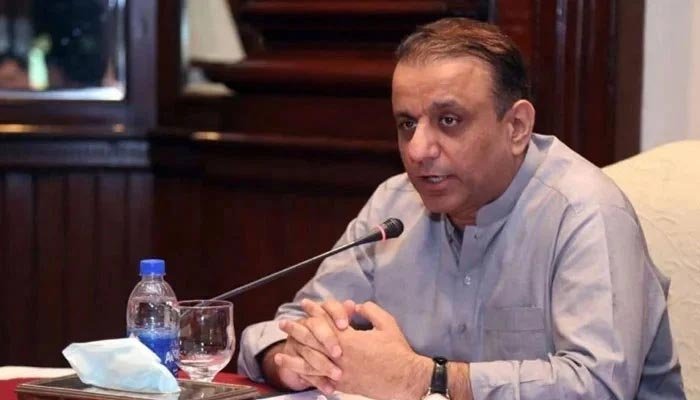
The debate over new provinces in Pakistan has gained fresh momentum after Istehkam-e-Pakistan Party (IPP) President Abdul Aleem Khan backed the creation of additional administrative units across the country. Aleem Khan said people wanted better administrative structures and pledged that his party would continue supporting the demand at political and institutional forums.
Aleem Khan Supports Hazara Province
Aleem Khan, who also serves as federal communications minister, said the demand for a separate Hazara province had existed in Khyber Pakhtunkhwa for years.
He noted that voices in the KP Assembly had been raised in support of the proposal since 2010 and claimed that several major political parties in the province had supported the idea.
“The IPP stands with the demand for the Hazara province,” he said.
Aleem Khan also expressed support for separate provinces for South Punjab and Bahawalpur. He said similar discussions had emerged in other parts of the country and argued that administrative restructuring should be considered as a national issue.
He went further by suggesting that there was nothing inherently wrong with dividing each of Pakistan’s four provinces into four administrative units.
A Call for Administrative Reform
According to Aleem Khan, Pakistan’s existing administrative structure needs a new approach to address the problems faced by citizens.
He urged politicians to focus on public needs instead of protecting political influence in particular regions.
The IPP president argued that the issue should not be sacrificed because of political interests and said his party would continue raising the matter at every relevant forum.
The discussion over new provinces in Pakistan is not new. Various proposals have been presented over the years, particularly concerning Hazara, South Punjab and Bahawalpur. However, political disagreement and constitutional requirements have made the creation of new provinces a difficult process.
Mohsin Naqvi Reopens the Debate
The latest discussion was partly triggered by Interior Minister Mohsin Naqvi, who recently criticized Pakistan’s governance system and called for administrative reforms.
Naqvi said the existing system had deteriorated significantly and suggested that the country needed new administrative units to address its long-standing challenges.
His remarks quickly generated political discussion, although he later clarified that he was not suggesting that the current government would be replaced or that the constitutional system would be abandoned.
Naqvi said the existing government would complete its constitutional five-year term. He also maintained his view that Pakistan’s administrative system had suffered serious problems over many decades.
PTI Also Supports New Provinces
Pakistan Tehreek-e-Insaf Chairman Barrister Gohar Khan has also supported the principle of creating new provinces in Pakistan.
However, Gohar emphasized that such a major constitutional change would require broad political consensus.
He pointed out that the creation of provinces cannot simply be announced by political leaders. Any proposal would need to pass the constitutional process, including the required two-thirds majority in the relevant assemblies.
This highlights one of the biggest challenges facing supporters of administrative restructuring: political agreement.
Government Says No Plan Exists
Despite growing political statements, the federal government has indicated that no formal plan has been prepared.
Prime Minister’s Adviser on Political and Public Affairs Rana Sanaullah questioned whether supporters of new provinces had developed a concrete proposal.
He noted that different political figures were discussing different numbers of provinces, with some suggesting 12, 20 or even 32 administrative units.
Sanaullah argued that provinces cannot be created simply through public statements or political discussions. A detailed plan would need to explain boundaries, financial arrangements, administrative structures and constitutional changes.
He also said that, apart from the Hazara demand, he did not see a broad public movement for additional provinces elsewhere.
Sindh Rejects Division
The proposal has faced strong opposition in Sindh.
Sindh Chief Minister Murad Ali Shah firmly rejected the idea of dividing the province, pointing out that the Constitution already provides a procedure for creating new provinces.
He said a constitutional change would require a two-thirds majority resolution from the relevant provincial assembly.
According to Shah, the Sindh Assembly has repeatedly passed unanimous resolutions against dividing Sindh. He said there was currently no indication that this position would change.
The Pakistan Peoples Party has also rejected the idea of creating additional provinces.
A Complicated Political Question
The debate over new provinces in Pakistan involves more than simply changing administrative boundaries. It also raises questions about resources, representation, taxation, development funds and political influence.
Supporters argue that smaller provinces could bring government closer to citizens and improve the delivery of public services. They believe large administrative regions can sometimes make it difficult for governments to respond effectively to local problems.
Opponents, however, fear that creating new provinces could intensify political disputes over resources and territorial boundaries. They also argue that administrative problems can be addressed through reforms without changing provincial borders.
The discussion remains largely political rather than an established government policy.
Aleem Khan’s support has added momentum to the debate, while PTI has also expressed conditional support. At the same time, the federal government has distanced itself from any immediate plan, and Sindh has firmly opposed provincial division.
The future of new provinces in Pakistan will ultimately depend on political consensus and the constitutional process. Whether the current debate develops into a serious reform initiative remains uncertain, but the renewed discussion shows that questions about governance, representation and administrative efficiency remain important issues in Pakistan’s political landscape.