Pakistan’s move toward sovereign tokenization could mark a major shift in the country’s financial future as the government explores blockchain-based solutions for bonds and investment certificates. Recent discussions between financial authorities highlighted the growing interest in using digital technology to modernize Pakistan’s capital markets and attract global investors.
Finance Minister Muhammad Aurangzeb recently held an important meeting with Bilal Bin Saqib, Chairman of the Pakistan Virtual Assets Regulatory Authority (PVARA), to discuss how blockchain technology can support Pakistan’s evolving financial ecosystem.
The main focus of the meeting was the possible tokenization of sovereign bonds and Naya Pakistan Certificates. Officials explored how digital assets could improve investor participation, increase transparency, and create easier access for overseas Pakistanis and international investors.
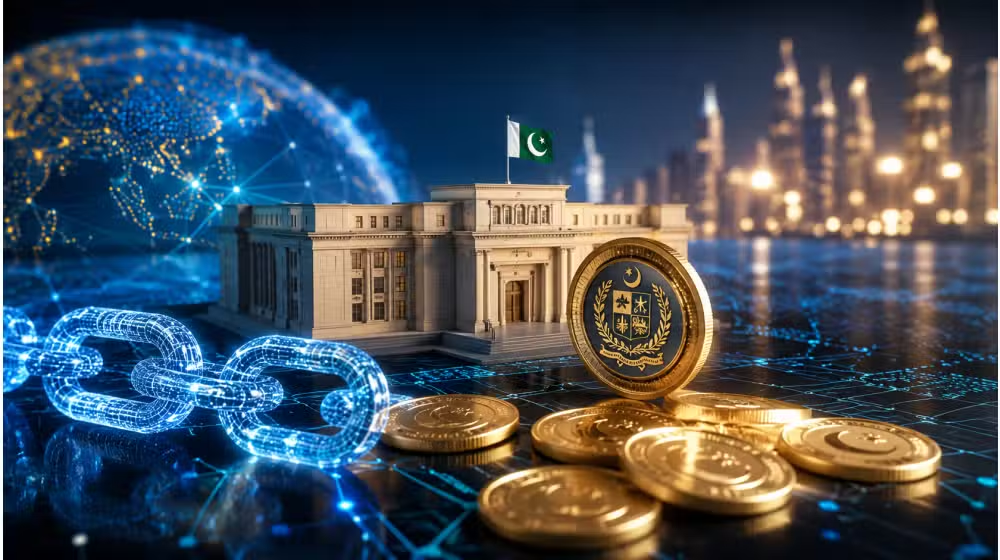
The idea of sovereign tokenization involves converting traditional financial instruments such as government bonds into digital tokens that operate on blockchain networks. Unlike conventional systems, blockchain-based assets can provide faster transactions, greater transparency, and lower operational costs while maintaining regulatory oversight.
According to officials, Pakistan is considering globally recognized “Digitally Native Note” models. Under these systems, sovereign bonds are issued directly on regulated blockchain platforms while remaining connected to traditional international settlement and clearing systems. This approach would allow Pakistan to modernize its financial infrastructure without abandoning the frameworks already used for its Eurobond programs.
Experts believe that sovereign tokenization could help Pakistan diversify its investor base. Traditionally, investment in sovereign bonds has been limited to institutional investors and large financial entities. By introducing digital investment platforms, smaller investors and overseas Pakistanis may also gain easier access to government-backed financial products.
One of the key topics discussed during the meeting was the tokenization of Naya Pakistan Certificates. These certificates were originally introduced to encourage overseas Pakistanis to invest in the country through foreign currency accounts. Officials believe that digitizing these investment products could significantly improve accessibility and convenience for global investors.
Since the launch of Roshan Digital Accounts in 2020, Pakistan has received nearly $13 billion in cumulative inflows. Much of this money has been invested within the country’s economy. Authorities now hope that digital investment channels powered by blockchain technology can further expand participation from overseas Pakistanis.
The government sees sovereign tokenization as more than just a technological upgrade. It is also viewed as an opportunity to strengthen investor confidence and increase efficiency in capital raising. Blockchain-based systems can offer real-time tracking, secure transaction records, and automated settlement processes, which may reduce administrative delays and costs.
Finance Minister Aurangzeb stated that Pakistan remains committed to exploring modern financial technologies that improve accessibility and strengthen the country’s capital markets. He emphasized that innovation in financial systems is becoming increasingly important as economies around the world adopt digital finance solutions.
Bilal Bin Saqib also highlighted the potential benefits of blockchain-based sovereign instruments. According to him, tokenization could help Pakistan raise capital more efficiently while opening investment opportunities to a broader audience. He noted that digital investment products can create greater financial inclusion and strengthen Pakistan’s connection with global digital markets.
However, experts caution that implementing sovereign tokenization will require strong regulatory frameworks and careful planning. Digital financial systems must address cybersecurity concerns, investor protection measures, and compliance with international financial standards. Coordination between financial regulators, the State Bank of Pakistan, and international partners will play a critical role in ensuring the success of these initiatives.
The meeting concluded with an agreement between the Finance Ministry, PVARA, and the State Bank of Pakistan to continue discussions on governance models, regulatory structures, and pilot programs for tokenized sovereign assets. Authorities also plan to study international examples and benchmark Pakistan’s approach against successful global models.
Around the world, several countries and financial institutions are already experimenting with blockchain-based government securities. Pakistan’s interest in these technologies reflects a broader global trend toward digital transformation in the financial sector. If implemented successfully, these initiatives could improve efficiency, attract foreign investment, and strengthen Pakistan’s position in the international financial market.
The growing focus on sovereign tokenization signals that Pakistan is preparing for a future where digital finance and blockchain technology become central to economic growth. While challenges remain, the government’s willingness to explore innovative financial solutions may open new opportunities for investors, overseas Pakistanis, and the country’s overall economic development.