Balochistan witnessed a major security breakthrough after authorities successfully prevented what officials described as a potentially devastating terrorist incident. The recent Balochistan suicide attack foiled operation has once again highlighted the growing security challenges facing Pakistan, particularly in regions affected by militant activity and cross-border terrorism.
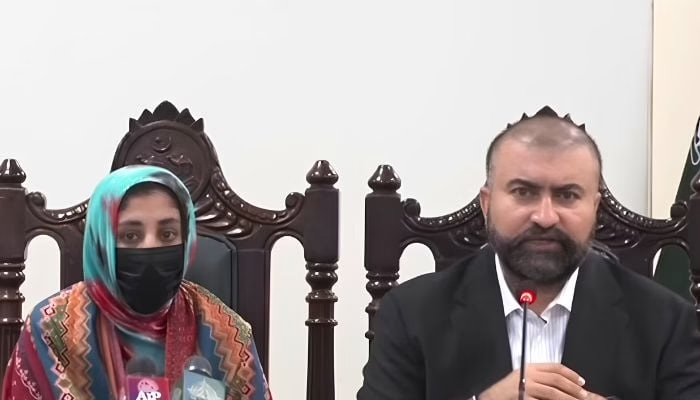
Speaking at a press conference in Quetta, Sarfraz Bugti revealed that intelligence agencies arrested a female suicide bomber who was allegedly preparing to carry out an attack in Islamabad. According to the chief minister, timely intelligence operations prevented a major tragedy and saved countless innocent lives.
The Balochistan suicide attack foiled case has also drawn attention because of the involvement of a young woman allegedly manipulated by extremist networks. Officials stated that the suspect had been forced into the suicide mission through threats and psychological pressure. CM Bugti claimed that militant groups warned the woman that her father would be killed if she refused to participate in the planned attack.
The incident has reopened discussions about how terrorist organizations recruit vulnerable individuals, especially women and young people. Authorities believe extremist groups are increasingly targeting emotionally vulnerable individuals and exploiting family pressure to achieve their objectives. According to the chief minister, such actions have no connection to Baloch traditions or cultural values.
CM Bugti stressed that the government supports education and opportunities for women, while terrorist organizations attempt to misuse young girls for violent activities. He further stated that the arrested woman would be respectfully returned to her family after legal procedures were completed, emphasizing that she herself was also a victim of manipulation and coercion.
The Balochistan suicide attack foiled operation follows another similar case reported in 2024, when authorities arrested a woman identified as Adeela Baloch in Turbat. At that time, the woman publicly stated that she had been brainwashed and manipulated by separatist groups attempting to recruit her for extremist activities. She later warned young people about the dangers of radicalization and militant propaganda.
Security officials believe such incidents demonstrate how extremist organizations are adapting their recruitment strategies. Instead of relying only on armed militants, groups are increasingly using psychological influence, social media, and emotional pressure to attract recruits. Women and teenagers are often targeted because militants believe they can avoid suspicion more easily during operations.
The growing number of terrorism-related incidents in Pakistan has remained a serious concern since the return of the Taliban government in Afghanistan in 2021. Border regions, especially Khyber Pakhtunkhwa and Balochistan, have experienced increased militant activity, cross-border infiltration, and attacks on civilians and security forces.
According to figures shared earlier this year by Inter-Services Public Relations Director General Ahmed Sharif Chaudhry, law enforcement agencies conducted more than 75,000 intelligence-based operations across Pakistan in 2025. A large majority of these operations took place in Balochistan and Khyber Pakhtunkhwa, reflecting the intensity of security threats in those regions.
The Balochistan suicide attack foiled incident highlights the critical role intelligence agencies continue to play in preventing attacks before they occur. Modern counterterrorism efforts rely heavily on surveillance, intelligence sharing, and rapid coordination between civilian and military institutions. Officials say many planned attacks are stopped quietly before reaching the public stage.
At the same time, experts argue that security operations alone are not enough to eliminate extremism permanently. Long-term solutions require investment in education, economic development, and community engagement. Poverty, unemployment, and lack of opportunities can make vulnerable individuals easier targets for radical organizations seeking recruits.
The situation in Balochistan is especially sensitive because the province has faced decades of political unrest, economic challenges, and separatist violence. Militants often attempt to exploit local grievances and frustration to gain support or recruit members. However, many local leaders and citizens have repeatedly rejected extremist violence and called for peaceful political solutions.
The Balochistan suicide attack foiled operation may also strengthen public confidence in Pakistan’s intelligence and law enforcement institutions. Preventing a major attack in the federal capital demonstrates the effectiveness of intelligence coordination and rapid action against emerging threats.
Despite the successful operation, authorities remain cautious about future risks. Security agencies continue monitoring extremist networks and increasing surveillance in vulnerable areas. Officials have warned that terrorist organizations are likely to continue adapting their tactics, making intelligence gathering more important than ever.
The Balochistan suicide attack foiled case serves as both a warning and a reminder of the ongoing security challenges facing Pakistan. While intelligence agencies successfully prevented a potential tragedy, the incident also exposes how extremist groups continue to exploit fear, coercion, and vulnerable individuals to carry out violent agendas. Strengthening education, economic stability, and public awareness may remain essential in preventing radicalization and ensuring long-term peace in the country.