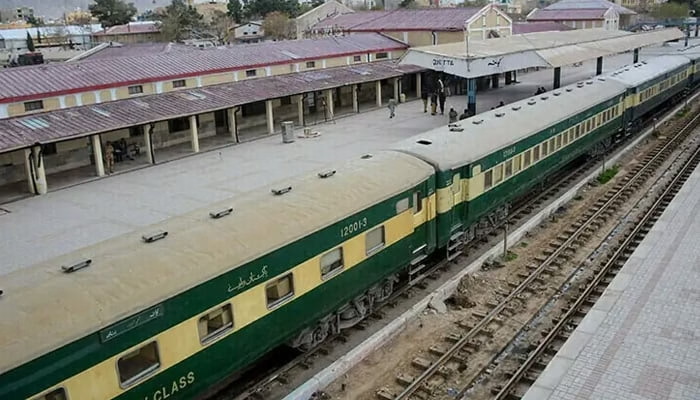
Pakistan Railways Balochistan train services have officially resumed after a three-day suspension, bringing relief to thousands of passengers who depend on rail travel for business, family visits, and daily movement between provinces. The restoration of train operations marks an important step toward normalcy after recent security concerns disrupted railway connectivity in the region.
Railway officials confirmed that the Jaffar Express departed from Quetta to Peshawar according to its regular schedule, while the return service from Peshawar to Quetta also resumed operations. The decision comes after authorities temporarily halted several train routes due to security-related incidents in Balochistan.
Train Operations Return to Normal
The resumption of Pakistan Railways Balochistan train services is being seen as a positive development for travelers and businesses alike. The temporary suspension had created difficulties for passengers across multiple cities, especially those relying on railway transport for affordable long-distance travel.
According to railway authorities, operations are now being restored under the existing timetable. Services including the Jaffar Express, Bolan Mail, and Chaman passenger train had faced disruptions earlier this week due to unavoidable circumstances linked to security conditions in the province.
Passengers traveling from Karachi, Quetta, and Peshawar also experienced delays during the suspension period. At Karachi Cantt Station, frustrated passengers protested after several trains departed many hours behind schedule. The Tezgam and Sukkur Express were among the services affected by operational delays.
Security Concerns Behind the Suspension
The suspension of Pakistan Railways Balochistan train services followed a tragic explosion near a railway track close to Chaman Phatak in Quetta. The blast resulted in the martyrdom of at least 14 people, including Frontier Corps personnel, while several others sustained injuries.
Women and children were also among those affected by the explosion, highlighting the human cost of terrorism and instability in the region. Emergency services responded quickly, transferring injured individuals to nearby hospitals for treatment.
Security officials launched investigations following the incident, while authorities reviewed railway safety measures before deciding to restore operations.
The attack once again raised concerns regarding the security challenges faced by transportation infrastructure in sensitive areas of the country.
Importance of Rail Connectivity in Balochistan
The restoration of Pakistan Railways Balochistan train services is highly important because railway connectivity remains a lifeline for many communities in the province. Balochistan’s vast geography and long travel distances make rail transport an affordable and practical option for thousands of citizens.
Trains connecting Quetta with cities like Karachi, Lahore, and Peshawar play a key role in trade, tourism, and passenger movement. Businesses also depend on railway cargo and passenger operations to maintain economic activity between provinces.
Experts believe uninterrupted railway operations are essential for regional development and national integration. Any long-term disruption can negatively impact local economies and create travel difficulties for ordinary citizens.
Government and Military Response
Following the Quetta blast, Pakistan’s civil and military leadership strongly condemned the attack and reaffirmed their commitment to fighting terrorism.
Chief of Defence Forces and Chief of Army Staff Field Marshal Asim Munir stated that terrorist activities would not weaken the resolve of the Pakistani nation. During his visit to Zhob district in Balochistan, he met frontline troops and praised their dedication to maintaining peace and security along the western borders.
According to official statements, the armed forces, law enforcement agencies, and the people of Balochistan would continue working together against terrorism and violent extremism.
The restoration of Pakistan Railways Balochistan train services is also being viewed as a message that public life and transportation networks will continue despite security challenges.
Passenger Relief and Public Reaction
Passengers welcomed the decision to restart train operations, especially those who had been stranded due to cancellations and delays. Railway travel remains one of the most economical transportation options in Pakistan, particularly for families and laborers traveling long distances.
Many travelers expressed hope that authorities would strengthen railway security to prevent future disruptions. Public confidence in railway operations often depends on both punctuality and passenger safety.
Railway officials have assured passengers that security coordination with local law enforcement agencies has been enhanced to protect travelers and infrastructure.
Challenges Facing Pakistan Railways
While the resumption of services is encouraging, Pakistan Railways continues to face several broader challenges, including aging infrastructure, operational delays, and security risks in sensitive regions.
Experts suggest that modernizing railway systems and improving security technology could help prevent disruptions in the future. Better surveillance systems, emergency response plans, and track monitoring are considered important for ensuring safe operations.
The government has repeatedly emphasized the need to improve transportation infrastructure across the country, including railway modernization projects aimed at increasing efficiency and passenger confidence.
The return of Pakistan Railways Balochistan train services represents more than just the reopening of train routes. It reflects the country’s determination to maintain connectivity, support economic activity, and restore normal life after difficult incidents.
As train operations continue under regular schedules, authorities are expected to remain focused on improving passenger safety and strengthening security measures along key railway routes.
For travelers across Pakistan, especially in Balochistan, the restoration of railway services offers renewed convenience, mobility, and hope for stability in the region.