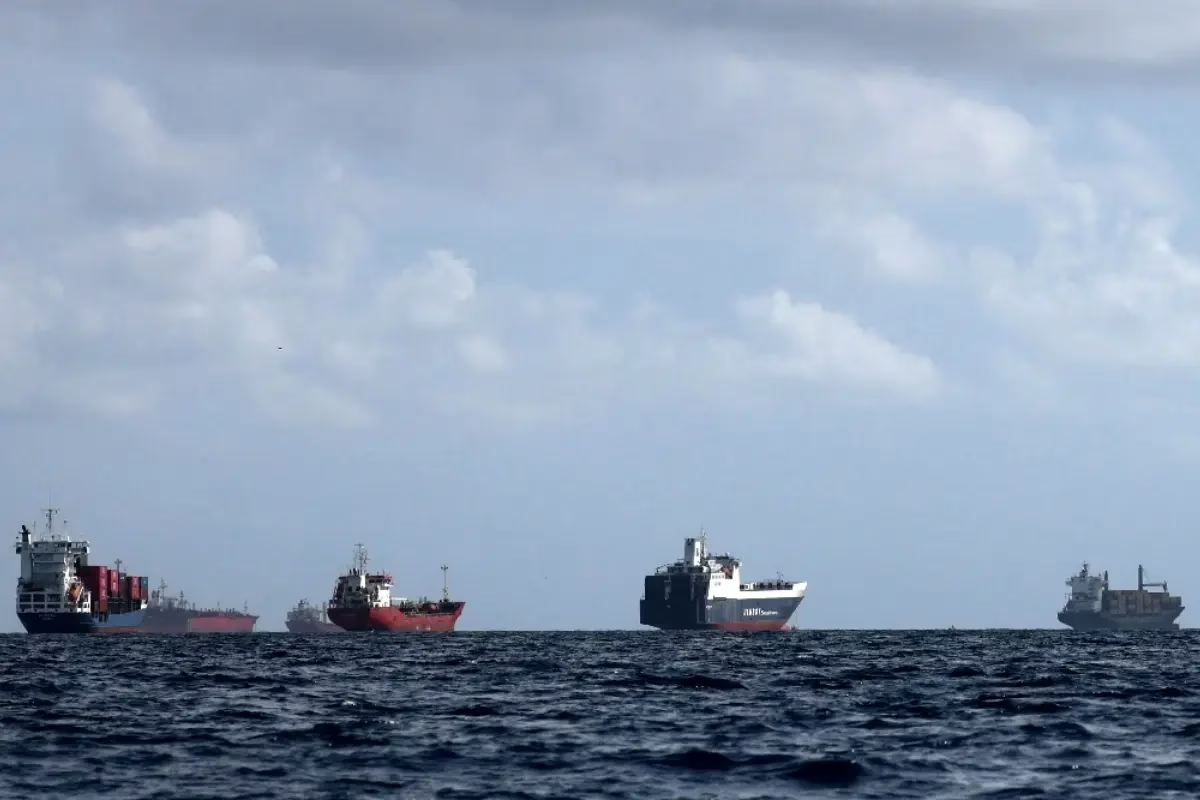
The Strait of Hormuz closure has once again placed the global spotlight on one of the world’s most critical maritime routes. Shortly after a temporary reopening linked to a ceasefire in Lebanon, Iran moved to reassert strict military control over the waterway, escalating tensions in an already fragile region. This latest Strait of Hormuz closure highlights the deep geopolitical complexities surrounding energy security and international trade.
The Strait of Hormuz is a vital corridor through which a significant portion of the world’s oil supply passes. Any disruption in this route has immediate consequences for global markets, making the Strait of Hormuz closure a matter of international concern.
Why Iran Closed the Strait Again
According to Iranian officials, the decision to enforce strict military control was driven by repeated violations of agreements and actions by the United States. Iranian authorities claimed that while limited passage had previously been allowed under certain conditions, those agreements were not honored.
Statements from Iranian military leadership emphasized that the Strait of Hormuz closure was not a symbolic move but a strategic response to what they described as “piracy” and unlawful naval actions. Officials made it clear that any future passage through the waterway would now require direct approval from Iran.
This shift signals a tougher stance and reinforces Iran’s intention to control access to this critical route under evolving regional conditions.
Military Control and Regional Strategy
The Strait of Hormuz closure is not merely about restricting ship movement—it reflects a broader military and political strategy. Iranian defense officials stated that traffic through the strait would now depend on the ongoing ceasefire situation and the behavior of foreign forces in the region.
Brigadier General Reza Talaei-Nik emphasized that the waterway would remain open only under peaceful conditions. He warned that vessels linked to hostile entities, particularly military ships, would not be allowed to pass. This conditional approach adds another layer of uncertainty to the Strait of Hormuz closure, making it dependent on rapidly changing geopolitical developments.
Escalating War of Words
Iranian leaders have also taken a strong rhetorical stance. Mohammad Bagher Ghalibaf publicly stated that continued pressure or blockade attempts would result in the strait remaining closed. His remarks underline the seriousness of the situation and the potential for further escalation.
Similarly, Foreign Ministry spokesperson Esmail Baghaei dismissed claims and statements made by opposing sides, asserting that decisions regarding the Strait of Hormuz closure are based on real-world developments rather than political messaging.
These statements suggest that diplomatic tensions remain high, with both sides unwilling to back down easily.
Global Economic Impact
The Strait of Hormuz closure has far-reaching economic implications. As one of the most important oil transit routes in the world, any disruption can lead to fluctuations in global energy prices. Countries that rely heavily on oil imports are particularly vulnerable to such changes.
Shipping companies may also face increased costs due to rerouting or heightened security measures. Insurance premiums for vessels traveling through the region could rise, further impacting global trade. The Strait of Hormuz closure, therefore, affects not only regional stability but also the broader global economy.
Temporary or Long-Term Crisis?
One of the key questions surrounding the Strait of Hormuz closure is whether it will be temporary or evolve into a prolonged crisis. Iranian officials have indicated that the situation is fluid and depends heavily on developments on the ground, particularly in Lebanon.
If the ceasefire holds and tensions ease, there may be room for negotiations and a gradual reopening. However, any escalation in conflict could lead to stricter enforcement and prolonged restrictions. This uncertainty makes the Strait of Hormuz closure a critical issue to watch in the coming weeks.
Diplomatic Challenges Ahead
The current situation underscores the importance of diplomatic efforts in resolving regional conflicts. While military measures dominate the headlines, long-term stability will depend on dialogue and cooperation between key stakeholders.
The Strait of Hormuz closure serves as a reminder that strategic waterways are not just economic assets but also powerful political tools. Control over such routes can influence negotiations, alliances, and global power dynamics.
The Strait of Hormuz closure represents a significant escalation in regional tensions with global consequences. Iran’s decision to enforce strict military control reflects both security concerns and geopolitical strategy.
As the situation continues to evolve, the world will be closely watching how events unfold. Whether through diplomacy or further confrontation, the future of this vital waterway will play a crucial role in shaping regional stability and global economic trends.