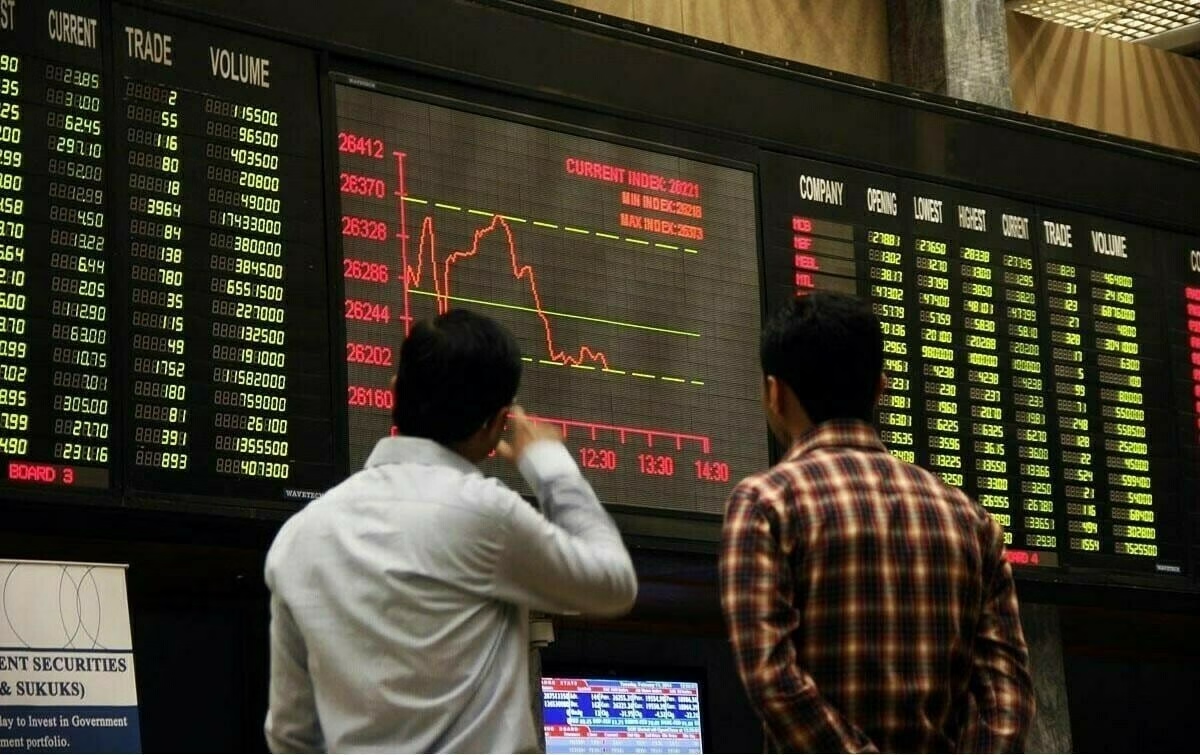
The Pakistan UAE $2 billion return has emerged as a significant financial development, highlighting shifting economic dynamics and external funding pressures. According to the State Bank of Pakistan, the government has officially returned $2 billion to the United Arab Emirates, marking an important moment for Pakistan’s foreign exchange management.
This Pakistan UAE $2 billion return comes at a time when global financial conditions remain uncertain, and countries are reassessing their external commitments. The funds were previously held as a safe deposit in Pakistan’s central bank account, often rolled over annually as part of financial cooperation between the two nations.
Why the Funds Were Returned
According to officials, the UAE requested the early return of the deposit due to evolving international financial conditions. In response, Pakistan decided to repay the amount rather than seek an extension. The Pakistan UAE $2 billion return reflects not only bilateral understanding but also the changing priorities of lending countries in a volatile global economy.
Previously, the UAE had been rolling over the deposit on a yearly basis, providing Pakistan with stability in its foreign reserves. However, recent changes in rollover terms signaled a shift. In December 2025, the duration was first reduced to one month and later extended by two months, indicating growing uncertainty around the arrangement.
Financial Cost and Economic Pressure
One important aspect of the Pakistan UAE $2 billion return is the cost associated with maintaining such deposits. Officials from the Ministry of Finance revealed that Pakistan was paying approximately 6 percent interest on the amount. This interest burden added pressure on the country’s already strained financial resources.
By returning the funds, Pakistan may reduce its interest obligations, but it also faces the challenge of managing foreign reserves without this financial cushion. The Pakistan UAE $2 billion return therefore presents both relief and risk—lower costs on one hand and reduced liquidity on the other.
Support from Saudi Arabia
Amid this development, Pakistan has received financial support from Saudi Arabia, helping to offset the impact of the returned funds. The central bank confirmed that $2 billion was received from the kingdom with a value date of April 15, 2026.
This inflow has helped stabilize the situation following the Pakistan UAE $2 billion return, ensuring that Pakistan’s external account remains manageable. Such support highlights the importance of strong diplomatic and economic ties with regional allies.
Extension of Additional Deposits
In addition to the fresh inflow, Pakistan has also secured an extension on another major deposit. An agreement has been signed with the Saudi Fund for Development to extend the maturity of a separate $3 billion deposit held with the State Bank.
This extension provides further stability to Pakistan’s financial position. In the context of the Pakistan UAE $2 billion return, it acts as a buffer, allowing the country to maintain confidence in its reserve levels while navigating short-term challenges.
Broader Economic Implications
The Pakistan UAE $2 billion return underscores the delicate balance Pakistan must maintain in managing its external finances. Foreign deposits play a critical role in supporting reserves, stabilizing the currency, and meeting international obligations.
However, reliance on such deposits also comes with risks, especially when terms change unexpectedly. The recent developments highlight the need for Pakistan to strengthen its internal economic foundations, including exports, tax collection, and investment inflows.
A Shift Toward Financial Stability
While the return of funds may seem like a setback, it also presents an opportunity for Pakistan to reassess its financial strategy. Reducing dependence on short-term external deposits could lead to more sustainable economic planning in the long run.
The Pakistan UAE $2 billion return serves as a reminder that global financial relationships are constantly evolving. Countries must adapt to changing conditions while ensuring that their economic policies remain resilient and forward-looking.
The Pakistan UAE $2 billion return is a significant financial event with wide-ranging implications. It reflects shifting global dynamics, highlights the importance of strategic partnerships, and emphasizes the need for economic resilience.
With continued support from allies like Saudi Arabia and careful financial management, Pakistan can navigate this transition effectively. The coming months will be crucial in determining how the country balances external obligations with long-term economic stability.