The Balochistan government is strengthening Balochistan security measures after Chief Minister Sarfraz Bugti warned owners of vineyards and other private properties in Mastung that they could be treated as facilitators if militants use their land to attack security forces or government officials. The warning reflects growing government concern over the use of civilian-owned properties for militant activity.
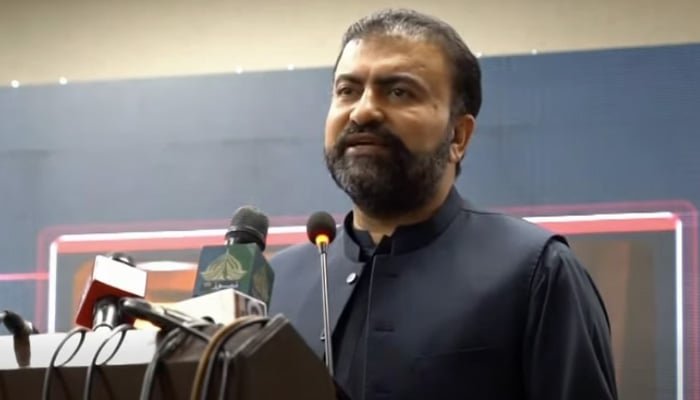
Speaking at the Central Police Office after inaugurating several digital initiatives, Bugti said the government did not want to take action that would unnecessarily affect ordinary citizens. However, he stressed that property owners could not ignore militant activity taking place on their land.
Warning to Property Owners
Bugti said vineyard owners had been repeatedly warned about the risks of allowing their properties to become launching points for attacks.
He explained that if a security convoy or senior government official came under attack from a vineyard, the owner could not simply claim they were unaware of militants operating there. Anyone whose private property was knowingly used for terrorism, he warned, could be regarded as a facilitator.
The chief minister said authorities could eventually be forced to consider major measures if the situation continued. These could include relocating residents from affected areas or removing vineyards that were repeatedly used for terrorist activities.
Such statements underline the seriousness with which the provincial government is approaching the issue. At the same time, Bugti emphasized that authorities wanted to avoid measures that would harm innocent citizens.
Protecting Security Personnel
Bugti described the lives of Pakistan Army, Frontier Corps and police personnel as extremely valuable. He said it was unacceptable for security personnel to lose their lives while private properties were being used to facilitate attacks.
The government intends to strengthen Balochistan security measures while also improving the capabilities of law-enforcement agencies. The aim is to make police more effective against terrorism and other forms of serious crime.
Balochistan faces complex security challenges because of its size, difficult terrain and the presence of militant groups in some areas. Authorities therefore increasingly rely on intelligence, technology and coordination between different law-enforcement institutions.
Police Digitalisation Accelerates
Alongside security concerns, the chief minister highlighted major efforts to modernize Balochistan Police through digital technology.
According to the provincial government, eight existing police applications have been upgraded and eight new applications introduced. The systems are designed to help citizens access criminal justice services and submit complaints more easily.
A major part of the initiative is the IGP Police Complaint Portal. Bugti said complaints submitted through the system immediately appear at the IGP Control Centre. Relevant officers are assigned cases, deadlines are established and progress can be monitored digitally.
The digital system is intended to improve accountability while making police services more accessible to citizens.
Women’s Safety Application
A women’s safety application has also been introduced as part of the digitalization program.
The application allows women to issue an emergency alert with a single click, notifying their parents and police. Bugti said the government would launch an awareness campaign to explain the system, particularly to female students, working women and people who travel regularly.
The initiative represents another aspect of Balochistan security measures, extending the use of technology beyond traditional policing and counterterrorism operations.
Rs50 Million for Police Digitalisation
Bugti announced Rs50 million for further police digitalisation during the current year. He also announced a Rs5 million cash reward for officers and personnel who contributed to developing the new digital systems.
He thanked the Punjab government and Punjab Police for assisting Balochistan with digitalization efforts, saying the province was willing to learn from successful initiatives elsewhere in Pakistan.
The government is also working to strengthen police welfare. Bugti said salaries were being improved in response to inflation, while pay increases had already been provided to personnel serving in the Fighting Force, Anti-Terrorist Force, Counter Terrorism Department and Special Operations Wing.
Safe City Technology
Technology is also playing an increasing role in investigations.
Bugti said CCTV and Safe City cameras had helped authorities trace suspects in several high-profile cases and had contributed to arrests following major terrorist attacks.
The provincial government has established a Safe City Authority and completed the relevant legislation. The authority is expected to coordinate surveillance infrastructure with law-enforcement agencies.
These systems could become an important part of Balochistan security measures, particularly in urban areas where surveillance cameras can help investigators identify suspects, track movements and reconstruct incidents.
Focus on Merit in Recruitment
Bugti also addressed concerns surrounding recruitment and emphasized that his government would not compromise on merit.
He said an internal error had been discovered in the recruitment process for tehsildars. A committee was formed in coordination with the Public Service Commission to investigate the matter, with a report expected within seven to 10 days.
The chief minister also cited recruitment to the Balochistan Revenue Authority as an example of merit-based hiring. He said several applicants from his constituency had applied but none had been selected.
According to Bugti, the example demonstrated that political influence would not be used to secure government jobs.
A Broader Security Strategy
The government’s approach combines stronger policing, digital technology, surveillance, public complaint systems and efforts to improve police welfare.
At the same time, the warning to property owners shows that officials intend to take a harder position against the use of civilian spaces for militant activity.
The success of these Balochistan security measures will depend on how effectively authorities can balance security requirements with the rights and livelihoods of ordinary citizens.
For Balochistan Police, the next three to four years could be particularly important. Bugti has expressed confidence that the force can become one of Pakistan’s strongest police services by adopting modern technology, improving accountability and strengthening its ability to respond to terrorism and crime.