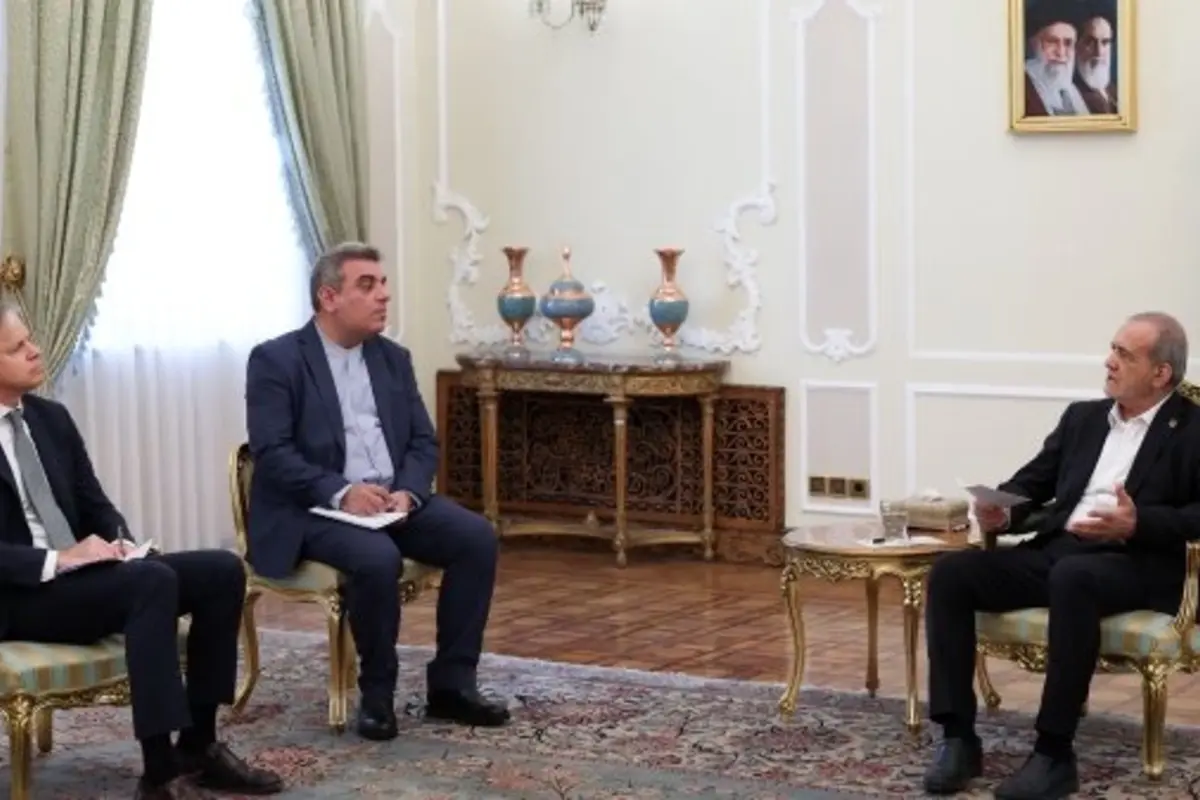
Iran Diplomatic Relations were at the center of President Masoud Pezeshkian’s recent meetings with the newly appointed ambassadors of Sri Lanka and Germany. During separate discussions in Tehran, the Iranian president reaffirmed his government’s commitment to expanding international cooperation through dialogue, economic engagement, and mutual respect. While emphasizing stronger ties with friendly nations, he also expressed hope that political differences with European countries could be addressed through diplomacy and constructive communication.
Iran Focuses on Expanding International Cooperation
President Pezeshkian highlighted that diplomacy remains one of Iran’s key foreign policy priorities. He stated that Tehran is prepared to deepen cooperation with countries that seek balanced and respectful relationships based on shared interests.
The Iran Diplomatic Relations strategy, according to the president, is centered on practical collaboration in areas such as trade, investment, technology, agriculture, and energy. Rather than focusing solely on political discussions, Iran hopes to build long-term partnerships that deliver economic benefits for all participating countries.
The meetings with the ambassadors reflected Tehran’s broader effort to strengthen bilateral engagement despite ongoing regional and international challenges.
Stronger Partnership with Sri Lanka
One of the main discussions focused on Iran’s relationship with Sri Lanka.
During his meeting with Sri Lankan Ambassador P. M. Amza, President Pezeshkian described the relationship between the two nations as one built on decades of mutual respect and shared interests. He noted that both countries have maintained friendly diplomatic ties and expressed confidence that cooperation could be expanded further.
The Iran Diplomatic Relations agenda with Sri Lanka includes strengthening collaboration in:
- Trade and investment
- Energy cooperation
- Agricultural development
- Technology exchange
- Economic partnerships
The Iranian president also called for activating the Joint Economic Commission to accelerate the implementation of bilateral agreements and identify new areas for cooperation.
Appreciation for Humanitarian Assistance
President Pezeshkian also thanked Sri Lanka for its humanitarian support following an incident involving Iranian nationals.
According to Iranian officials, Sri Lanka assisted in repatriating the remains of Iranians who were killed after what Tehran described as an illegal U.S. attack on an Iranian naval vessel. The president characterized the humanitarian gesture as a symbol of the longstanding friendship between the two countries.
Ambassador P. M. Amza acknowledged the historical partnership between Tehran and Colombo, noting that 2027 will mark the 66th anniversary of diplomatic relations. He also praised Iran’s support for Sri Lanka in international forums and expressed optimism about expanding cooperation in the years ahead.
Dialogue with Germany
President Pezeshkian also met with Germany’s new ambassador, Markus Potzel Dittmann, to discuss the future of bilateral relations.
While acknowledging the long history of cooperation between Iran and Germany, the Iranian president said relations had weakened in recent years due to several political disagreements.
Among the issues mentioned were:
- The closure of the Islamic Center of Hamburg
- Restrictions affecting Iranian consular missions
- Sanctions imposed on Iranian banks
- Germany’s position regarding recent military developments involving Iran
Despite these concerns, the Iran Diplomatic Relations policy continues to prioritize dialogue over confrontation.
Commitment to Diplomacy
Throughout the meeting, President Pezeshkian emphasized that Iran remains committed to resolving disagreements through peaceful negotiations.
He stated that diplomatic engagement within the framework of international law remains the preferred approach for addressing disputes with European countries and the broader international community.
The Iranian president stressed that open communication, mutual respect, and political dialogue provide the best path toward improving bilateral relationships and reducing tensions.
Germany’s Ambassador Markus Potzel Dittmann responded by expressing his intention to promote honest and responsible communication during his diplomatic mission in Tehran.
According to the ambassador, maintaining constructive dialogue could help create opportunities for rebuilding trust and improving cooperation between both countries.
Economic Cooperation Remains a Priority
Economic development remains one of Iran’s primary diplomatic objectives.
The government believes expanding trade partnerships can help strengthen economic growth while creating opportunities in key sectors including manufacturing, infrastructure, renewable energy, agriculture, transportation, and technology.
The Iran Diplomatic Relations strategy reflects Tehran’s interest in working with countries across Asia, Europe, and other regions through practical economic initiatives rather than limiting discussions to political matters.
Officials believe stronger commercial ties can contribute to regional stability while supporting long-term development goals.
Challenges Ahead
Although Iran continues pursuing diplomatic engagement, several challenges remain.
International sanctions, geopolitical tensions, and differing political positions continue to influence Iran’s relationships with many countries. At the same time, global economic uncertainty has made international cooperation increasingly important for many governments.
Despite these obstacles, Iran appears determined to maintain dialogue with both regional partners and European nations.
Diplomatic observers note that continued communication may help reduce misunderstandings and create opportunities for future cooperation, even when disagreements persist.
The recent meetings held by President Masoud Pezeshkian demonstrate Iran’s continued focus on expanding international engagement through diplomacy and economic cooperation. The Iran Diplomatic Relations agenda emphasizes stronger partnerships with friendly countries like Sri Lanka while also expressing a willingness to improve communication with European nations such as Germany.
By prioritizing dialogue, trade, and mutual respect, Tehran hopes to strengthen bilateral ties despite ongoing regional and international challenges. Whether these diplomatic efforts lead to broader cooperation will depend on future negotiations, political developments, and the willingness of all parties to maintain open channels of communication. As global diplomacy continues to evolve, Iran’s engagement with both Asian and European partners is expected to remain an important aspect of its foreign policy strategy.