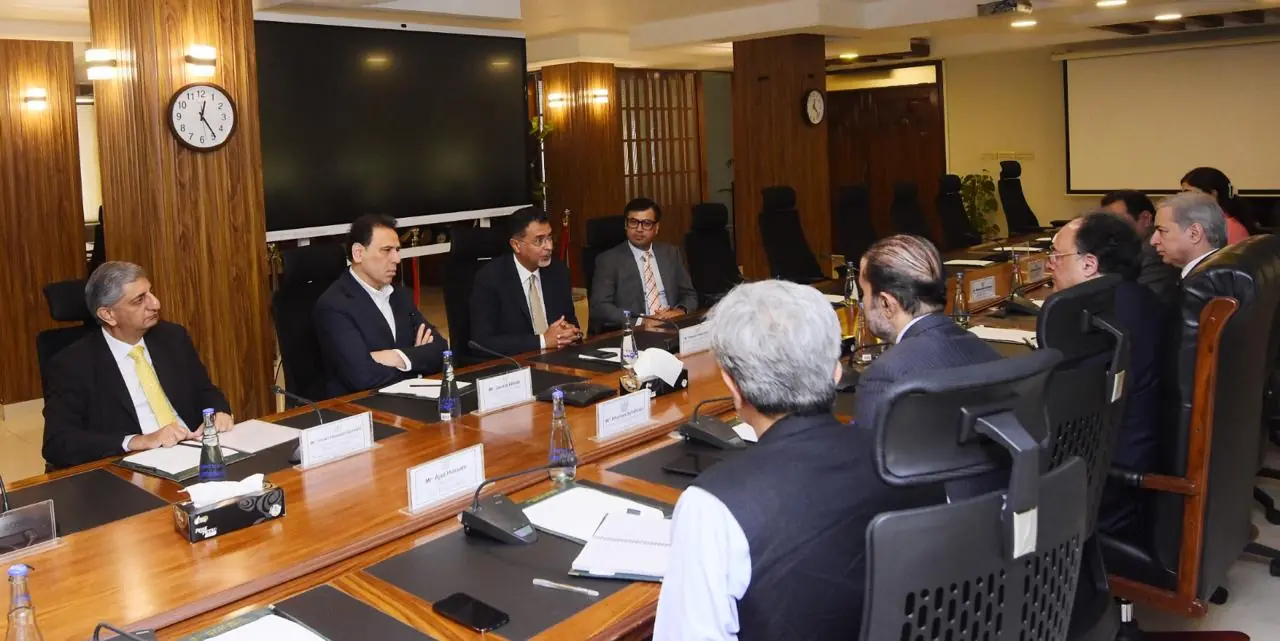
Saudi Arabia’s Asyad Group has shown interest in Pakistan’s upcoming airport privatisation process, potentially bringing Saudi and international investors into one of the country’s major infrastructure opportunities. The development emerged during a meeting between Finance Minister Muhammad Aurangzeb and Asyad Group CEO Ghassan Ahmed Amodi, where both sides discussed the company’s existing investments and plans for further expansion in Pakistan.
Asyad Group Plans to Join Airport Bids
During the meeting, Ghassan Ahmed Amodi briefed the finance minister on the group’s interest in participating in the airport privatisation programme. He said Asyad Group was working to bring together Saudi and international partners with the technical experience needed to potentially compete for the airport operations.
The interest reflects the group’s growing involvement in Pakistan and its broader international experience in airport management. Asyad Group also reaffirmed its commitment to Pakistan as a long-term investment destination, describing the country as an important part of its investment portfolio outside Saudi Arabia.
For Pakistan, the participation of an experienced international investor could bring additional competition and technical expertise to the privatisation process.
Three Major Airports Included
The Pakistani government has started a process to outsource operations and land assets associated with three major airports: Jinnah International Airport Karachi, Islamabad International Airport and Allama Iqbal International Airport Lahore.
The objective is not simply to transfer operational responsibilities. Authorities are seeking private-sector participation to improve passenger services, modernise airport facilities, increase revenue generation and attract foreign investment.
The airport privatisation initiative is being pursued through a public-private partnership approach, potentially allowing experienced operators to bring international standards, technology and management expertise into Pakistan’s aviation sector.
For passengers, successful implementation could eventually mean improved facilities, smoother services and better overall airport experiences.
Saudi Investment Interest Growing
Asyad Group’s interest comes against the backdrop of increasing economic engagement between Pakistan and Saudi Arabia. Saudi companies have shown interest in several Pakistani sectors, while Islamabad has been seeking greater foreign investment to support economic growth.
Amodi said Asyad Group was satisfied with its experience in Pakistan and intended to expand its presence. The company is already active in the country through Wafi Energy Pakistan Limited, with investments involving its retail network and energy infrastructure.
The group is also considering opportunities in other sectors, including the financial industry. This suggests that its interest extends beyond the airport privatisation process and forms part of a broader strategy to increase its Pakistani footprint.
Wafi Energy Expansion Discussed
The meeting also covered Wafi Energy Pakistan Limited’s ongoing expansion plans. Company representatives briefed the finance minister about investments in Khyber Pakhtunkhwa and other areas.
The company is expanding its retail network and storage infrastructure while also investing in digitalisation. These projects demonstrate the wider commercial relationship between Asyad Group and Pakistan.
The group also expressed interest in connecting additional Saudi and Pakistani investors with potential projects. Such partnerships could help expand private-sector investment while creating opportunities for businesses in both countries.
Government Welcomes International Investors
Finance Minister Muhammad Aurangzeb welcomed continued interest from Saudi investors and stressed the importance of attracting credible, long-term investment partners.
He said the government was opening new opportunities through its ongoing privatisation programme and would continue facilitating commercially viable investments.
The minister also highlighted Pakistan’s progress toward macroeconomic stability, pointing to improvements in important economic indicators and the country’s sovereign credit profile.
For the government, attracting strategic investors is particularly important because privatisation is intended to generate more than immediate financial returns. Successful private-sector participation can also introduce stronger management practices, modern technology and greater operational efficiency.
Pakistan’s Strategic Location
Another factor highlighted during the meeting was Pakistan’s geographical position. The country sits at the crossroads of South Asia, Central Asia and the Middle East, giving its airports potential importance for regional connectivity.
An effective airport privatisation programme could therefore make airports more attractive as commercial and transportation hubs. Better infrastructure and efficient operations could support tourism, trade and business travel while strengthening Pakistan’s links with international markets.
The government hopes that experienced international operators can help unlock this potential while reducing pressure on public resources.
A Potential New Phase for Aviation
Asyad Group’s participation could become an important development in Pakistan’s aviation sector if the company ultimately submits a bid alongside its proposed partners.
However, interest alone does not guarantee participation or a successful transaction. The final outcome will depend on the bidding process, technical proposals, financial commitments and the government’s evaluation of competing offers.
Still, the development highlights the increasing role of foreign investors in Pakistan’s privatisation plans.
The airport privatisation programme could become a major test of Pakistan’s ability to attract credible international partners and convert investment interest into long-term economic activity.
With Asyad Group reaffirming its commitment to Pakistan and exploring opportunities across multiple sectors, the latest development also points to a potentially deeper Saudi-Pakistani commercial relationship. If managed transparently and effectively, the airport initiative could help modernise major aviation facilities while creating new opportunities for investment, trade and regional connectivity.