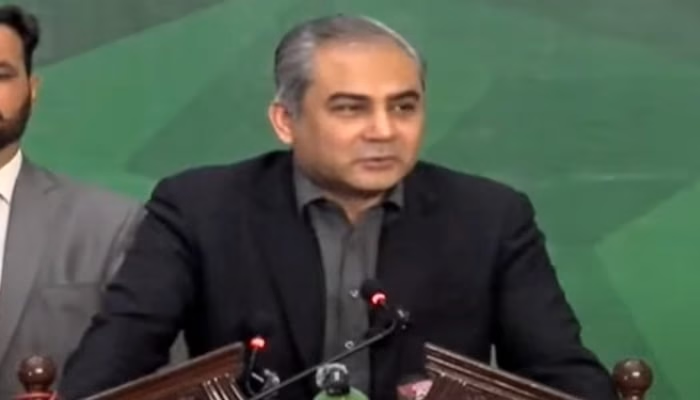

Prime Minister’s Adviser Rana Sanaullah has dismissed concerns over Pakistan’s ranking in the Pakistan Global Hunger Index, urging the public not to believe what he described as propaganda surrounding international reports. His remarks came after Pakistan ranked 106th among 122 countries in the Global Hunger Index (GHI) 2026, placing it behind India, which ranked 100th.
Speaking to Geo News in Islamabad, Sanaullah was asked who should be held responsible for Pakistan’s position on the index. In response, he highlighted what he described as the generosity of Pakistani people and their willingness to help those facing hardship.
Sanaullah questioned whether people in Pakistan could be seen sleeping hungry or living on footpaths in the same way he claimed was visible in other countries. Referring to India, he argued that conditions in some cities demonstrated why international rankings should not automatically be accepted as an accurate reflection of everyday life.
He maintained that, in his observation, people in Pakistan generally did not go to sleep hungry and criticised the use of such reports to create a negative impression of the country.
However, the debate has also drawn attention to the data behind Pakistan’s hunger ranking and the continuing challenges of food insecurity and child malnutrition.
What Does Pakistan’s Hunger Index Ranking Show?
According to the supplied Global Hunger Index 2026 report, Pakistan received a score of 25.5 and was classified as having a serious level of hunger.
The country ranked 106th out of 122 countries assessed. The report also indicated that Pakistan’s hunger situation was worse than it had been in 2018, raising concerns about progress in addressing food insecurity.
Within South Asia, Pakistan recorded the region’s second-worst hunger level, with only Afghanistan ranking lower, according to the reported figures.
These findings place renewed attention on the challenges faced by low-income households, particularly those struggling with food prices, limited earnings and access to nutritious meals.
A country’s position on an international index does not necessarily describe every household’s circumstances. However, it can provide an overview of broader nutritional conditions and help identify areas where further attention may be needed.
Child Malnutrition Remains a Major Concern
The figures cited in the Global Hunger Index report highlight the scale of Pakistan’s nutritional challenges.
According to the supplied data, approximately 16.1% of Pakistan’s population is undernourished. This means a significant share of the population does not receive sufficient dietary energy to maintain a healthy and active life.
The report also places child malnutrition among the country’s major concerns. Around 33.6% of children under five are stunted, meaning their growth has been impaired, often because of prolonged nutritional deficiencies and other health-related factors.
Meanwhile, 9.8% of children under five are classified as wasted, a condition associated with low weight for height and acute malnutrition.
These indicators matter because childhood nutrition can influence physical development, learning ability and long-term health. Children who experience persistent nutritional deficiencies may face difficulties that continue into adulthood.
Addressing these problems generally requires more than providing food alone. Access to clean drinking water, healthcare, sanitation, maternal nutrition and affordable, balanced diets can all influence nutritional outcomes.
Why International Hunger Reports Matter
The disagreement over Pakistan’s Global Hunger Index ranking highlights a wider question about how international assessments should be interpreted.
The Global Hunger Index combines several indicators to measure hunger and undernutrition. Its methodology considers undernourishment, child stunting, child wasting and child mortality.
These measures are intended to capture different dimensions of hunger rather than relying solely on visible poverty or whether people appear to have access to meals in public spaces.
Consequently, the absence of widespread visible hunger in streets or public places would not, by itself, establish that a country has no serious food insecurity.
At the same time, rankings and scores need to be understood in context. They do not tell the complete story of every community, and comparisons between countries should consider differences in population, economic conditions, data availability and social support systems.
Data Limitations and the Way Forward
The supplied report notes that the data underpinning the 2026 index largely do not cover the year 2026 itself or the effects of the conflict in the Middle East. This limitation is important when interpreting the figures, particularly during periods of changing economic and food-supply conditions.
Nevertheless, the reported statistics provide a reason to examine Pakistan’s long-term nutritional challenges rather than dismissing the issue solely as political criticism.
Improving food security requires sustained efforts to support vulnerable households, strengthen agricultural productivity, improve nutrition programmes and make healthy food more affordable.
Government policies, community support networks and charitable organisations can all contribute to these efforts, but their effectiveness should be assessed through reliable evidence.
Rana Sanaullah’s comments have brought Pakistan’s hunger situation into the political spotlight. While he has questioned the interpretation of international rankings, the reported Global Hunger Index figures point to continuing concerns about undernourishment and child malnutrition.
The debate should ultimately focus on understanding the data, recognising its limitations and identifying practical ways to improve nutritional conditions. Pakistan’s progress will depend not simply on its position in an international ranking, but on whether more families can consistently access sufficient, safe and nutritious food.