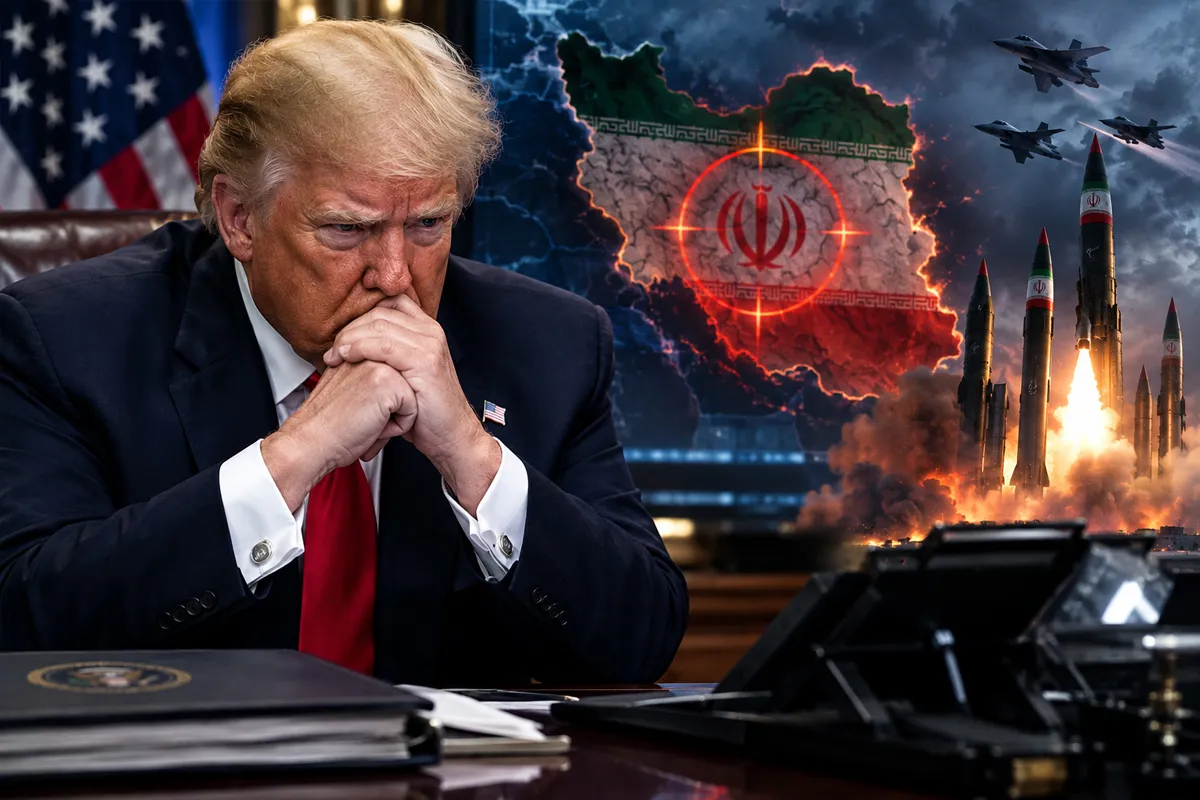
US President Donald Trump has said the United States could take control of Iran if it decided to do so, while claiming Washington is already achieving its objectives in dealing with Tehran. His remarks highlight the administration’s hard-line position amid continuing uncertainty over the conflict and its potential consequences for the Middle East.
In his latest comments, Trump described Iran as a devastated country and argued that its ability to act had been significantly weakened. He maintained that the United States was getting what it wanted through its current approach, although he did not provide a detailed explanation of those objectives.
The president also suggested that Washington could seize Iran’s oil resources or take control of the country as a whole if it chose to pursue that option. However, his remarks do not establish that the US government has formally decided to occupy Iran or take control of its energy assets.
The statements have raised questions about Washington’s long-term intentions and whether the administration intends to maintain pressure on Tehran or pursue a different course.
Trump Raises Possibility of Taking Iran’s Oil
One of the most striking aspects of the Trump Iran statement was the suggestion that the United States could take control of Iran’s oil resources.
Iran possesses substantial oil and natural gas reserves, making its energy sector strategically important. Any attempt to seize these resources would carry significant political, military and economic implications.
Such a move could also intensify opposition from Tehran and increase tensions with other countries concerned about regional stability. Control over energy resources in a conflict zone would present major challenges involving security, infrastructure, international law and the potential response from regional and global powers.
Trump did not outline how the United States might pursue such an objective or indicate that a specific plan had been approved.
His comments should therefore be understood as a statement of what he says Washington could do, rather than confirmation of an established policy to occupy the country or take over its oil industry.
Strait of Hormuz Remains a Strategic Concern
Trump also claimed that the Strait of Hormuz was completely under American control, reinforcing his assertion that Washington holds a strategic advantage over Iran.
The Strait of Hormuz is one of the world’s most important maritime chokepoints. It connects the Persian Gulf with the Gulf of Oman and the Arabian Sea, providing a vital route for international energy shipments.
Any disruption to shipping through the waterway could affect oil and gas supplies, increase transportation costs and create uncertainty in global energy markets.
For countries that depend heavily on imported energy, the security of the strait is particularly important. Higher oil prices can increase fuel costs, transportation expenses and inflationary pressures across several economies.
Although Trump asserted that the United States controlled the waterway, his remarks alone do not independently establish the operational situation or guarantee uninterrupted commercial shipping.
The future security of the Strait of Hormuz will remain an important factor in assessing the wider economic consequences of tensions between Washington and Tehran.
Trump Says War Could End Quickly
The US president also suggested that the war with Iran could be brought to an end quickly. At the same time, he raised the question of whether Washington should conclude the conflict or allow Iran to become further weakened.
His comments leave uncertainty about the administration’s preferred endgame. While Trump portrayed the United States as achieving its objectives, he did not explain what conditions would be required to end the conflict.
The distinction is important because military pressure does not automatically translate into a lasting political settlement. Any durable resolution would depend on the positions of the parties involved, the security situation and the terms they might be willing to accept.
Further military action, meanwhile, could carry additional risks for regional security, civilian populations and international trade.
The available statements do not confirm that another military operation has been authorised or that a final decision has been made about the next phase of the conflict.
Regional Stability and Global Economic Risks
The latest Trump Iran statement comes amid broader concerns about the future of US-Iran relations and the stability of the Middle East.
An escalation could affect regional diplomatic efforts, maritime security and energy markets. Countries across Asia, Europe and the Middle East could face economic pressure if oil supplies or shipping routes were seriously disrupted.
Financial markets may also react to uncertainty surrounding military developments, particularly when investors anticipate changes in energy prices or international trade.
For regional governments, preventing further escalation while protecting vital infrastructure and commercial routes remains a significant challenge.
Trump’s remarks underline the administration’s assertive approach towards Tehran, but important questions remain unanswered. Washington has not established through these comments that it intends to occupy Iran, seize its oil resources or launch another military operation.
The next phase will depend on political decisions, developments on the ground and the prospects for ending hostilities.
The president’s statements signal continued pressure on Iran while leaving uncertainty over how the conflict will conclude. The situation will remain closely watched because its outcome could influence regional security, global energy supplies and the broader international economy.