The Pakistan blue economy sports academies initiative is emerging as a new approach to combine youth development, sports promotion, and environmental awareness along the country’s coastal regions. Under this vision, Pakistan is planning to establish coastal sports academies and cricket training centres that connect maritime development with community engagement and sustainable growth.
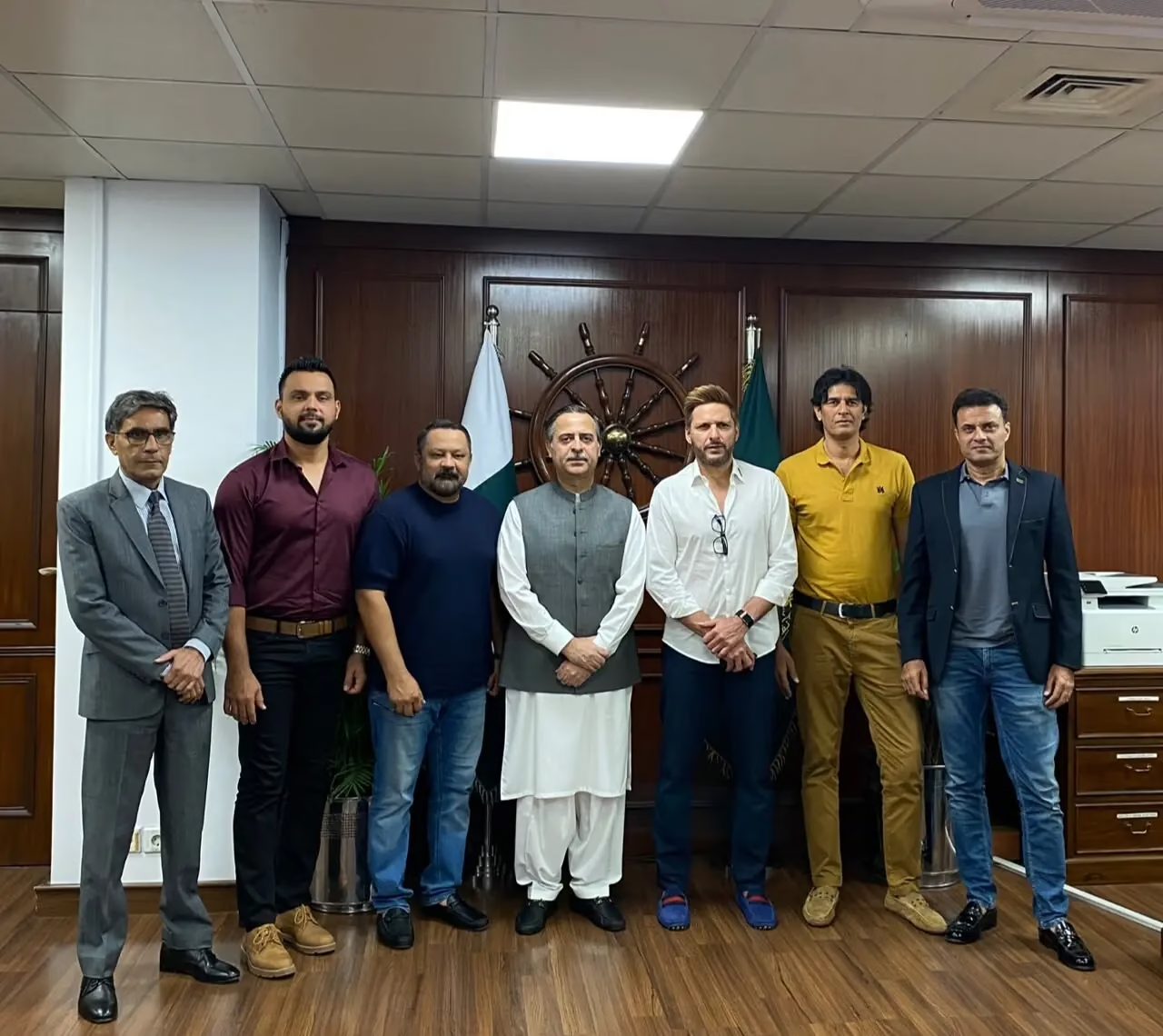
The proposal was recently discussed between Federal Minister for Maritime Affairs Muhammad Junaid Anwar Chaudhry and former Pakistan cricket captain Shahid Afridi, highlighting a new collaboration between the sports and maritime sectors.
Expanding the Role of the Blue Economy
Pakistan’s blue economy vision traditionally focuses on maritime trade, port development, fisheries, and coastal infrastructure. However, the introduction of Pakistan blue economy sports academies marks a shift toward a more inclusive development model that also prioritizes human capital and youth engagement.
Officials believe that coastal regions can serve as hubs not only for economic activity but also for education, recreation, and sports training. By integrating sports infrastructure into maritime zones, the government aims to create opportunities for young people while strengthening awareness about environmental conservation.
The initiative reflects a broader understanding that sustainable development must include social and cultural dimensions alongside economic growth.
Coastal Sports Academies and Cricket Development
One of the key components of the plan is the establishment of coastal sports academies and cricket training centres. These facilities will be developed in partnership with public and private stakeholders under the Pakistan blue economy sports academies framework.
Cricket, being the most popular sport in the country, is expected to play a central role in engaging youth in coastal communities. Training centres will provide structured coaching, skill development programs, and opportunities for young athletes to progress into professional sports.
Shahid Afridi, who has been actively involved in youth and social development initiatives, welcomed the proposal and emphasized the potential of sports tourism and grassroots cricket development in coastal areas.
Linking Sports with Environmental Awareness
A unique aspect of the Pakistan blue economy sports academies initiative is its focus on environmental education. The program aims to connect sports activities with awareness campaigns on marine conservation, climate change, and sustainable use of ocean resources.
Coastal cricket tournaments and sports events are expected to include educational sessions on issues such as marine pollution, declining fish stocks, and the protection of mangrove ecosystems.
This integrated approach seeks to use the popularity of sports as a platform for spreading environmental awareness among young people, particularly in coastal cities like Karachi, Gwadar, and other port regions.
Government Support and Institutional Role
The Ministry of Maritime Affairs has expressed strong support for the initiative, stating that ports and coastal zones are evolving into multi-dimensional development areas. According to the ministry, these regions can simultaneously support trade, education, sports, and environmental sustainability.
Federal Minister Muhammad Junaid Anwar Chaudhry highlighted that under the blue economy vision, sports development can be advanced through public-private partnerships. This includes building infrastructure, training programs, and community outreach initiatives under the Pakistan blue economy sports academies model.
He emphasized that integrating youth engagement into maritime development will help create a more balanced and socially inclusive growth strategy.
Public-Private Partnerships for Youth Engagement
The success of the initiative will depend heavily on collaboration between government institutions, sports organizations, and private sector partners. Maritime authorities are expected to provide infrastructure and land access, while sports bodies will manage training programs and talent development.
Private sector involvement will also play a crucial role in funding, organizing events, and creating sustainable sports tourism opportunities.
The Pakistan blue economy sports academies framework aims to ensure that young people in coastal regions have access to quality sports facilities and structured development pathways.
Sports Tourism and Economic Opportunities
Beyond youth development, the initiative also holds potential for sports tourism. Coastal sports academies could attract domestic and international visitors for tournaments, training camps, and recreational events.
This could generate economic activity in coastal regions while promoting Pakistan’s image as a destination for sports and eco-tourism.
By combining sports infrastructure with coastal development, the Pakistan blue economy sports academies project aims to create new economic opportunities for local communities.
Building a Sustainable Coastal Future
The broader vision behind this initiative is to promote sustainable coastal development that balances economic growth with environmental protection and social inclusion. By involving young people in sports and environmental awareness programs, the government hopes to build a generation that is more conscious of marine ecosystems and sustainable practices.
Both sides have agreed to develop a comprehensive roadmap to implement the plan, ensuring coordination between maritime institutions and sports organizations.
If successfully executed, the Pakistan blue economy sports academies initiative could become a model for integrating sports, education, and environmental sustainability into national development planning.