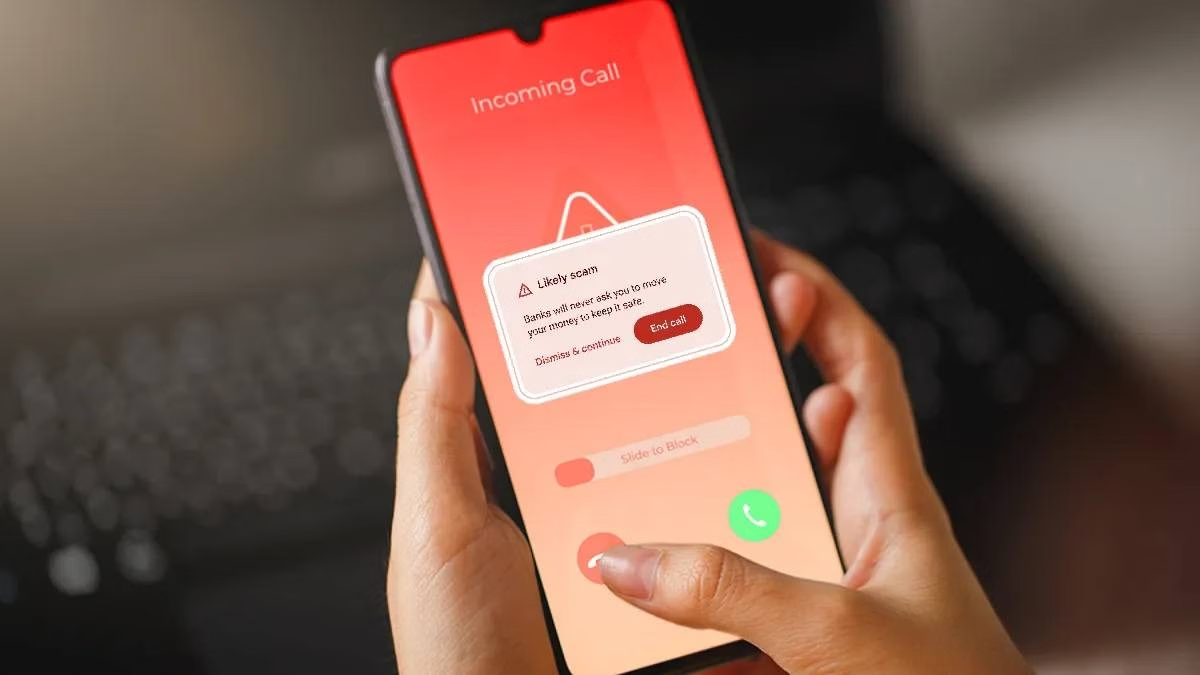
The new Google fake call detection feature is being introduced as a major upgrade to protect Android users from increasingly advanced scam tactics, including number spoofing and AI-generated voice impersonation. As fraudsters become more sophisticated, this Google fake call detection feature aims to help users identify suspicious calls in real time and avoid falling victim to impersonation scams.
The Google fake call detection feature is part of the Phone by Google app and focuses on one of the fastest-growing threats in digital communication: fake calls that appear to come from trusted contacts. These scams often rely on manipulated caller IDs and realistic voice deepfakes, making them extremely difficult for users to detect without technological assistance.
How fake call scams work
Modern phone scams typically rely on two powerful techniques. The first is number spoofing, where attackers disguise their phone number to make it look like a family member, colleague, or official institution is calling. The second is AI-generated voice cloning, where scammers replicate a person’s voice to increase trust and pressure victims into quick decisions.
With the rise of artificial intelligence tools, these scams have become more convincing than ever. Many users are unable to distinguish between a real voice and a deepfake recording, especially during urgent or emotional conversations.
The Google fake call detection feature directly targets these threats by verifying whether a call is truly coming from the expected device, rather than just relying on caller ID information.
How Google’s detection system works
The system is designed to function when both callers are using the Phone by Google app. During a call, both devices silently exchange a verification signal using encrypted communication. This process confirms that the call is actually happening between legitimate devices associated with the contact.
If a scammer attempts to spoof a number or route a call through external software, the verification signal will not be present. In such cases, the Google fake call detection feature triggers a warning on the user’s screen, alerting them that the call may not be genuine.
Importantly, this verification process uses end-to-end encrypted RCS technology, ensuring that the communication remains private and secure. Users do not need to take any extra steps during the call, as the detection runs automatically in the background.
Protection against deepfake voice scams
One of the biggest concerns in modern fraud is the use of AI voice cloning. Scammers can now replicate the voice of a loved one or authority figure with alarming accuracy. These voice deepfakes are often used to create panic or urgency, convincing victims to send money or share sensitive information.
The Google fake call detection feature does not analyze voice content directly but instead focuses on verifying whether the call is truly authenticated at the device level. This approach adds an important layer of protection, especially when combined with user awareness and caution.
By warning users before they trust a suspicious call, the system helps reduce the risk of financial fraud and identity theft.
Limitations of the feature
While the Google fake call detection feature is a significant step forward, it does have some limitations. It only works fully when both users are using the Phone by Google app. If the recipient uses a different dialer app, the verification system may not function as intended.
Additionally, the feature depends on modern Android versions, meaning it is available on Android 12 and newer devices. This ensures compatibility with updated security and encryption standards but excludes older smartphones.
Despite these limitations, Google has positioned the tool as a strong baseline defense against modern phone scams.
Rollout and availability
The feature is being rolled out globally and will initially arrive on Pixel devices before expanding to other Android smartphones. Once available, it will be enabled by default, meaning users will automatically benefit from added protection without manual setup.
However, users who prefer not to use it can disable the Google fake call detection feature through the app settings. Google also allows users of other dialer apps to install Phone by Google from the Play Store and set it as their default calling application.
Why this update matters
As digital scams continue to evolve, traditional warning signs are no longer enough. Fraudsters now use AI tools, social engineering, and technical spoofing to bypass user suspicion. In this environment, system-level protection like the Google fake call detection feature becomes increasingly important.
Experts believe that combining device verification, encryption, and user awareness is the most effective way to reduce scam success rates. While no system can completely eliminate fraud, this feature significantly raises the barrier for attackers.
The introduction of the Google fake call detection feature reflects a broader shift in cybersecurity, where companies are moving from reactive warnings to proactive verification systems. As deepfake technology becomes more widespread, such tools are likely to become standard across communication platforms.
The key takeaway is simple: even if a call looks and sounds familiar, new verification systems can help confirm whether it is truly legitimate before any action is taken.