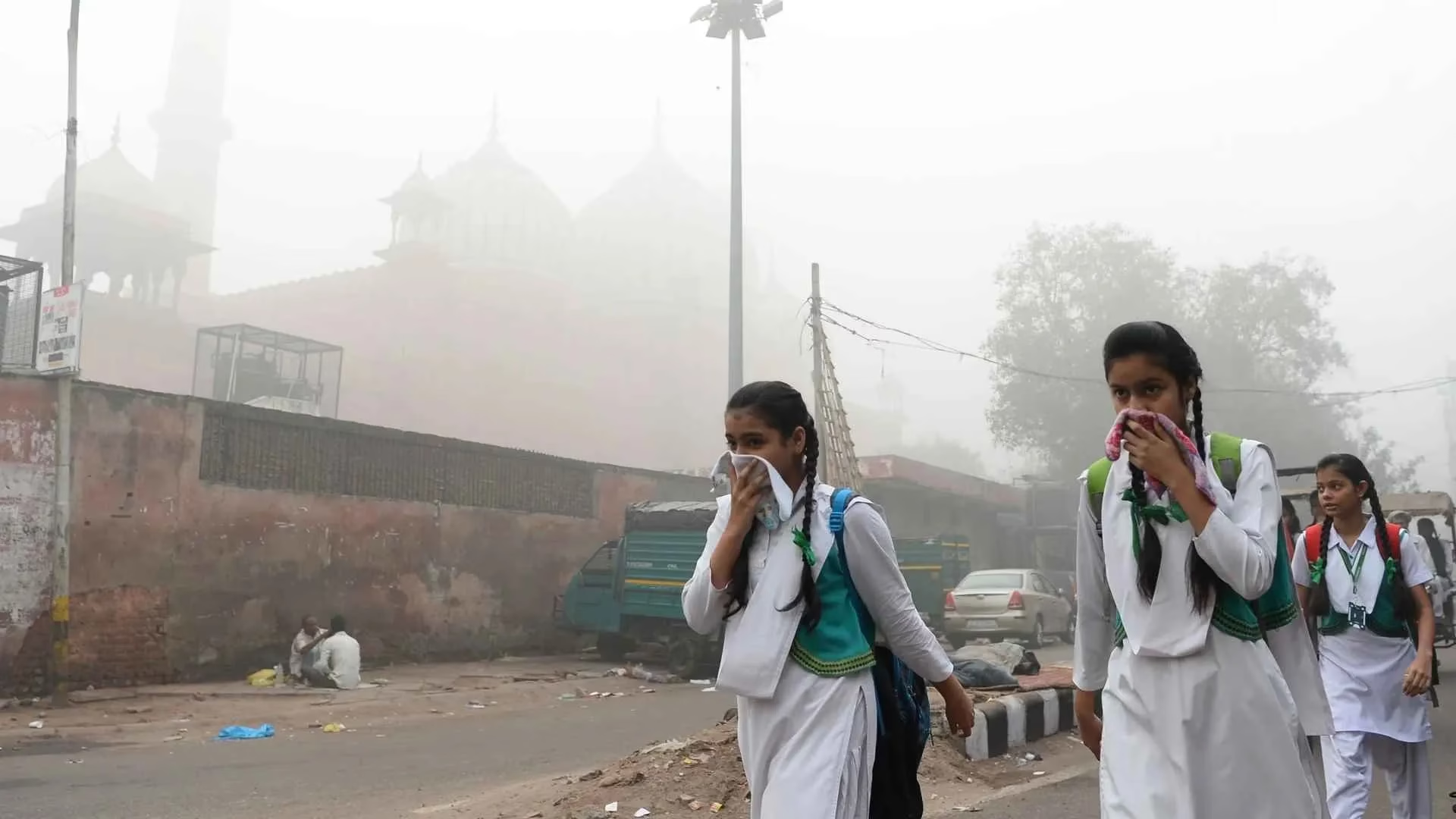
Mental Health in Pakistan is becoming an increasingly urgent public health concern as inflation, unemployment, and financial uncertainty continue to affect millions of people across the country. Mental health experts warn that prolonged economic stress is contributing to a sharp rise in anxiety, depression, insomnia, and other psychological disorders. As families struggle with rising living costs and limited job opportunities, the emotional and physical consequences are becoming more visible, highlighting the need for stronger mental health support and accessible treatment services.
Economic Challenges Are Affecting Mental Well-Being
Pakistan has faced persistent economic difficulties in recent years, with inflation increasing the cost of essential goods while unemployment continues to create financial insecurity for many households. These challenges are not only reducing purchasing power but are also placing immense psychological pressure on individuals and families.
Experts say that when people constantly worry about paying bills, supporting their families, or finding stable employment, stress levels increase significantly. Over time, this chronic stress can develop into serious mental health conditions that affect both personal and professional life.
The emotional burden of financial instability often extends beyond individuals, impacting entire families and communities.
Rising Cases of Anxiety and Depression
Mental health professionals report a noticeable increase in anxiety, depression, irritability, and sleep disorders among people facing economic hardship.
Clinical psychologists explain that when income fails to meet daily expenses, individuals may experience continuous emotional stress. Feelings of uncertainty about the future, mounting debts, and the inability to meet family responsibilities can eventually lead to depression, fear, frustration, and emotional exhaustion.
Without timely psychological support, these conditions may worsen and contribute to long-term physical health problems as well.
Poverty and Mental Illness Are Closely Connected
One of the most concerning aspects of Mental Health in Pakistan is the strong relationship between poverty and psychological disorders.
Mental health experts believe that financial hardship often triggers emotional distress, while untreated mental illness can also make it more difficult for individuals to maintain stable employment or improve their financial situation.
This creates a cycle where poverty increases the risk of mental illness, and mental illness further deepens financial struggles.
Families with limited resources frequently face additional challenges in accessing medical care, counseling, and prescribed medications, making recovery even more difficult.
Mental Health Statistics Highlight a Growing Crisis
Recent national surveys indicate that mental health disorders affect a significant portion of Pakistan’s population.
According to available data, nearly one-third of adults experience some form of mental illness, while an even larger percentage report experiencing psychological disorders at some point in their lives.
Anxiety, depression, and stress remain among the most common conditions.
Women, individuals from low-income households, and urban populations appear to be particularly vulnerable due to social pressures, financial responsibilities, and limited access to mental healthcare services.
These findings emphasize that mental health is no longer an isolated issue but a major public health challenge.
Shortage of Mental Health Professionals
Despite the increasing demand for psychological care, Pakistan continues to face a severe shortage of trained mental health professionals.
The number of psychiatrists, psychologists, psychiatric social workers, and rehabilitation specialists remains far below what is required to meet the country’s growing needs.
With millions of people requiring mental health support, limited access to specialists creates long waiting times and leaves many patients without proper treatment.
Healthcare experts continue to call for greater investment in training, recruitment, and mental health infrastructure across the country.
Young People Face Increasing Challenges
Mental health concerns are particularly significant among Pakistan’s younger population.
Experts estimate that many young adults and children experience various emotional or psychological difficulties, often influenced by academic pressure, unemployment, financial uncertainty, and social challenges.
Substance abuse also remains a serious concern, with addiction affecting a considerable number of individuals and further complicating mental health treatment.
Early intervention, counseling services, and mental health education can play an important role in helping young people manage emotional stress before it develops into more severe conditions.
Expanding Mental Health Services
Recognizing the growing demand for treatment, provincial authorities have begun investing in mental healthcare facilities.
The Punjab Institute of Mental Health (PIMH) in Lahore is undergoing modernization to improve psychiatric treatment, emergency care, rehabilitation services, addiction treatment, and professional training.
Plans are also underway to expand mental health services to district and tehsil-level hospitals, allowing more people to receive care closer to their homes.
Improving accessibility is essential because many individuals living in remote areas face significant barriers to obtaining professional mental health support.
Breaking the Stigma Around Mental Health
While healthcare services remain important, public awareness is equally critical.
Many people still hesitate to seek professional help due to social stigma, misconceptions, or fear of being judged.
Mental health experts encourage open discussions about emotional well-being, emphasizing that anxiety, depression, and stress are medical conditions that deserve proper care just like physical illnesses.
Greater awareness can encourage more individuals to seek treatment early, improving recovery outcomes and reducing long-term complications.
The growing concerns surrounding Mental Health in Pakistan reflect the broader impact of economic hardship on society. Inflation, unemployment, rising living costs, and financial uncertainty are placing tremendous pressure on millions of families, contributing to higher rates of anxiety, depression, and other mental health disorders.
Addressing this challenge requires a combination of stronger healthcare infrastructure, increased access to qualified professionals, expanded treatment facilities, and greater public awareness. As Pakistan continues to face economic pressures, prioritizing mental health will be essential for improving individual well-being, strengthening families, and building a healthier and more resilient society.