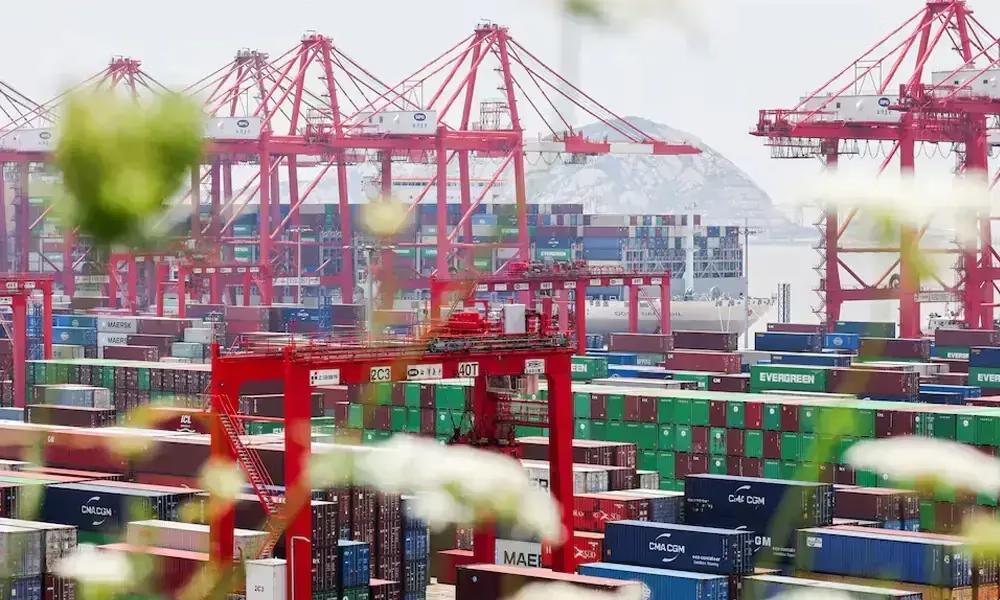
China surprised global markets with stronger-than-expected trade figures as the latest data revealed a major rise in overseas shipments. The recent China export growth highlights the country’s resilience despite global economic uncertainty, rising geopolitical tensions, and ongoing disruptions in international trade routes caused by conflict in the Middle East.
According to official customs data, China’s exports increased by 14.1 percent in April compared to the same period last year. The figure exceeded analysts’ expectations and marked a sharp improvement from March, when exports grew by only 2.5 percent. Economists had predicted a much smaller increase, making the latest numbers an important signal of strength for the world’s second-largest economy.
The strong China export growth comes at a crucial time for Beijing. In recent years, exports have become one of the country’s most reliable economic drivers as domestic demand remains weaker than expected. China continues to face challenges linked to slow consumer spending and a prolonged crisis in the property sector, both of which have placed pressure on economic recovery.
Manufacturing remains central to China’s economy, and the latest trade figures suggest global demand for Chinese goods is still strong despite economic instability in many parts of the world. Chinese factories continue to supply electronics, machinery, textiles, and industrial products to international markets at competitive prices, helping sustain growth even during uncertain times.
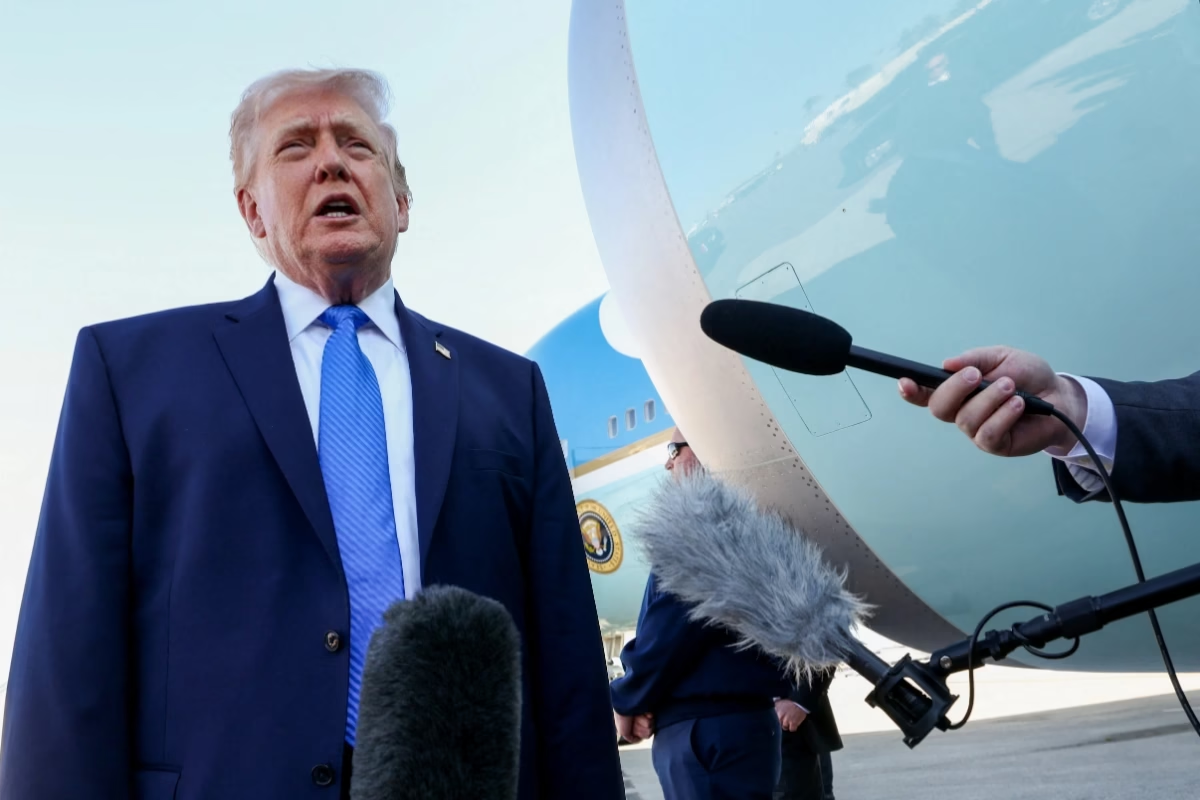
Another important development was the rebound in exports to the United States. Official figures showed that Chinese exports to the US rose by 11.3 percent year-on-year in April after suffering a steep decline in March. The improvement comes ahead of a highly anticipated meeting between Chinese President Xi Jinping and former US President Donald Trump, where trade relations are expected to be a major focus.
Trade tensions between China and the United States have remained a sensitive issue for years. Washington has repeatedly criticized Beijing over its large trade surplus and manufacturing dominance. At the same time, China views stable trade relations with the US as essential for maintaining export momentum and investor confidence.
The latest China export growth figures may strengthen Beijing’s position ahead of future negotiations. Strong export performance gives Chinese policymakers greater confidence as they attempt to manage both domestic economic concerns and international political pressure. However, experts warn that global risks still remain high.
One major concern is the instability in the Middle East. The ongoing conflict involving Iran, Israel, and the United States has disrupted shipping through the Strait of Hormuz, one of the world’s most important energy trade routes. Rising oil prices and delays in global shipping have increased uncertainty for businesses worldwide. Despite these disruptions, China has managed to maintain strong trade performance, reflecting the adaptability of its export sector.
Imports into China also recorded impressive growth. Official data showed imports rising by 25.3 percent compared to the previous year. Although slightly lower than March’s growth rate, the figure still exceeded market expectations. Rising imports are often viewed as a positive sign because they suggest stronger domestic demand and increased industrial activity.
The increase in imports may indicate that Chinese consumers and businesses are gradually regaining confidence after a difficult economic period. Analysts have repeatedly argued that China should reduce its dependence on exports and infrastructure spending while focusing more on household consumption to achieve balanced long-term growth.
The strong China export growth also highlights the country’s ability to adjust quickly to changing global conditions. Chinese companies have expanded trade partnerships across Asia, Africa, the Middle East, and Latin America, reducing reliance on any single market. This diversification strategy has helped China remain competitive even during periods of geopolitical tension and slowing global demand.
At the same time, economists caution that challenges remain. Weakness in the property market, youth unemployment, and concerns over debt continue to affect investor sentiment. In addition, prolonged trade disputes with Western countries could eventually impact manufacturing activity if restrictions or tariffs increase further.
Still, the latest trade data provides a much-needed boost for Beijing at a time when the government is trying to stabilize economic growth. The better-than-expected numbers suggest that China’s manufacturing and export sectors remain highly influential in the global economy.
The recent China export growth demonstrates the country’s economic resilience despite rising international tensions and domestic challenges. With exports and imports both performing strongly, China appears determined to maintain its position as a global trade powerhouse. The coming months, especially upcoming discussions between Chinese and US leaders, could play an important role in shaping the future direction of global trade and economic stability.