The PSX Market Crash has once again become a major concern for investors as the Pakistan Stock Exchange faced a sharp decline, reflecting growing uncertainty in both local and global markets. With heavy selling pressure across key sectors, the latest downturn highlights how sensitive the market is to economic signals and geopolitical developments.
On Thursday, the benchmark KSE-100 Index dropped significantly by 2,829 points, closing at 162,994. This decline followed an already weak session a day earlier, confirming that the PSX Market Crash is not just a one-day event but part of a broader downward trend. Investors are increasingly cautious, and the market sentiment appears fragile.
One of the biggest reasons behind this slump is widespread selling across major sectors. Industries such as automobile assemblers, cement, banking, oil and gas exploration, and power generation all faced losses. Key stocks like HUBCO, OGDC, MCB, and UBL ended the day in the red, signaling that the PSX Market Crash is affecting nearly every corner of the market.
Another important factor contributing to the decline is weak corporate earnings. When companies fail to meet expectations, investors tend to pull back, leading to a drop in stock prices. In this case, disappointing financial results from major firms added fuel to the already negative sentiment. This has further deepened the impact of the PSX Market Crash, making recovery more difficult in the short term.
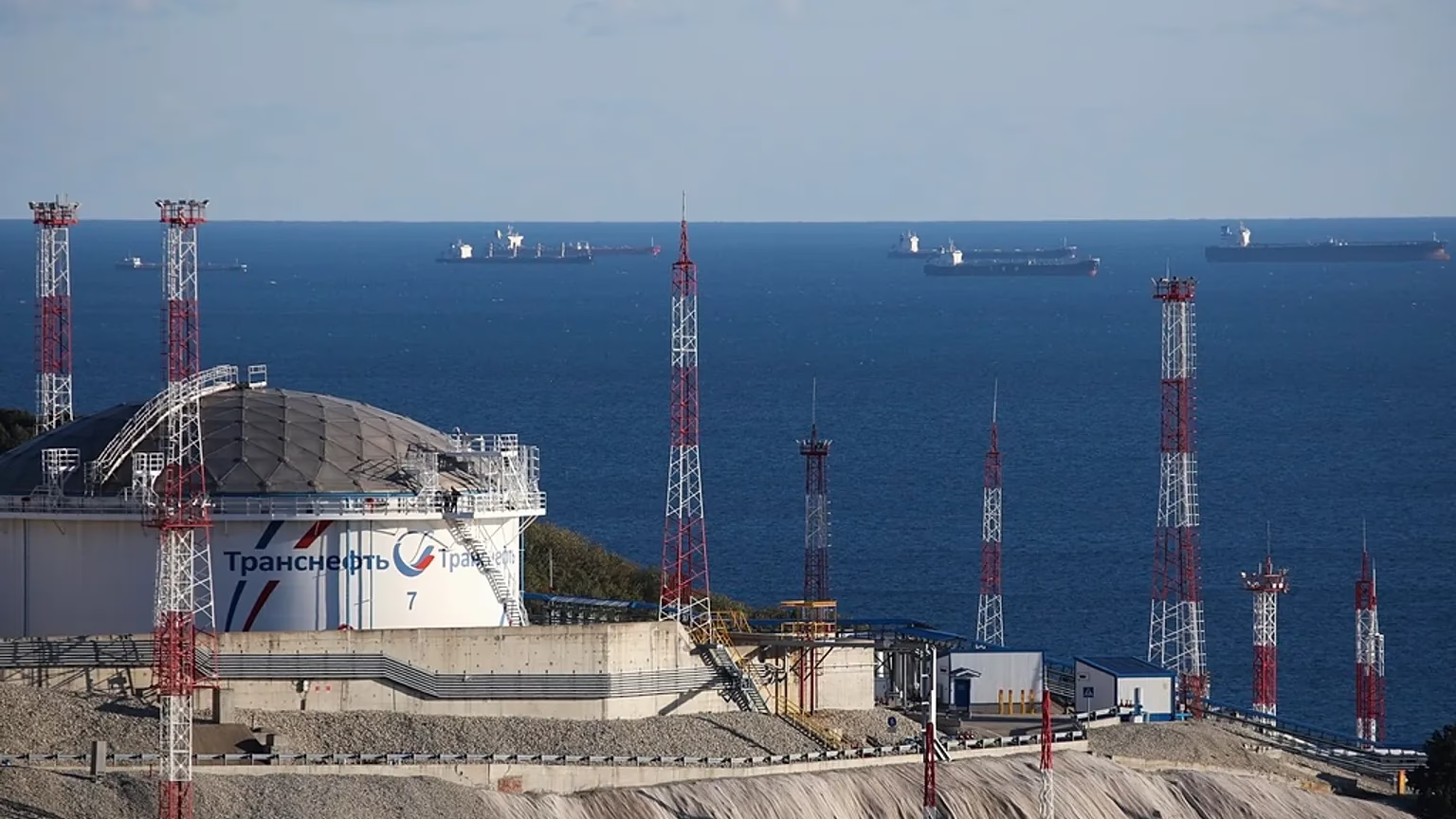
Global factors are also playing a major role. Rising oil prices have created additional pressure on investor confidence. Brent crude recently surged to a four-year high, crossing $120 per barrel. This increase is largely driven by tensions between the United States and Iran, raising fears of supply disruptions in the Middle East. As Pakistan heavily depends on oil imports, higher global prices directly affect the economy and, in turn, the stock market.
The connection between global events and the PSX Market Crash cannot be ignored. When international markets become unstable, emerging economies like Pakistan often feel the impact more strongly. Investors prefer safer options during uncertain times, which leads to capital outflows from stock markets like PSX.
Another reason behind the downturn is cautious investor behavior. In times of uncertainty, investors tend to avoid risks and hold onto their cash or shift to safer assets like gold or foreign currencies. This reduced participation leads to lower trading volumes and falling stock prices, further intensifying the PSX Market Crash.
It is also important to consider the psychological aspect of the market. Once a downward trend begins, it often triggers panic selling. Investors fear further losses and rush to sell their holdings, which accelerates the decline. This chain reaction has clearly been visible in the recent sessions, where continuous selling pressure pushed the index lower.
Despite the current situation, some analysts believe that the market may stabilize in the coming weeks if certain conditions improve. For example, easing geopolitical tensions or a drop in global oil prices could help restore investor confidence. Additionally, strong policy measures by the government to support economic stability could also play a key role in reversing the PSX Market Crash.
Long-term investors, however, may view this situation differently. Market downturns often create buying opportunities for those willing to take calculated risks. If fundamentally strong companies are trading at lower prices, investors might consider entering the market at a discount. Still, such decisions require careful analysis and a clear understanding of market trends.
The role of government and regulatory authorities is also crucial during such times. Transparent policies, economic stability, and investor-friendly measures can help rebuild trust in the market. Without these efforts, the impact of the PSX Market Crash could last longer and affect overall economic growth.
The recent decline in the Pakistan Stock Exchange reflects a combination of local challenges and global uncertainties. The PSX Market Crash serves as a reminder of how interconnected financial markets are and how quickly sentiment can change. While the situation remains uncertain, future stability will depend on both domestic economic policies and global developments. Investors are advised to stay informed, remain cautious, and make decisions based on thorough research rather than market panic.