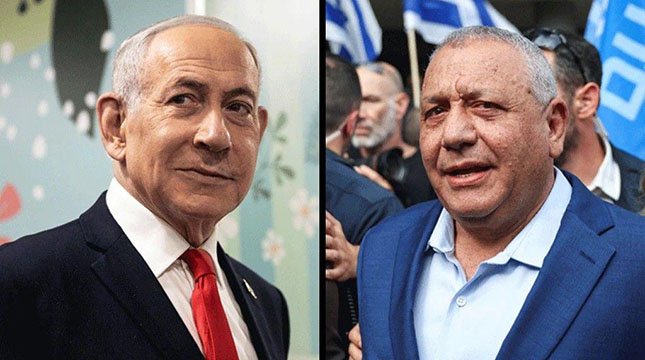
The latest Israel election results suggest that neither Prime Minister Benjamin Netanyahu’s political bloc nor the opposition alliance led by Gadi Eisenkot is on track to secure a parliamentary majority. With around 60% of votes counted, Netanyahu’s Likud party appeared positioned to become the largest single party, but the overall numbers indicated that forming a stable government could remain difficult.
The results highlight Israel’s fragmented political landscape, where parties often need to negotiate coalition agreements to govern. With all 120 seats in the Knesset at stake, smaller parties could play a decisive role in determining who becomes the next prime minister.
Netanyahu Seeks a Strong Right-Wing Government
Benjamin Netanyahu has called for a “strong” right-wing government, signalling his intention to build a governing coalition despite the initial election figures.
His Likud party appeared likely to emerge as the largest individual party, according to the results reported while counting was underway. However, winning the most seats does not automatically guarantee control of parliament.
Under Israel’s parliamentary system, a government needs the support of a majority of the 120-member Knesset, meaning at least 61 seats. Parties therefore frequently negotiate with potential partners to secure enough parliamentary backing to form a government.
The Israel election results suggest that Netanyahu could face difficult negotiations if his political allies fail to secure enough seats collectively. Even if Likud finishes ahead of individual rivals, its ability to govern will depend on the strength and reliability of its coalition partners.
The final outcome will become clearer once vote counting is completed and the distribution of seats is established.
Gadi Eisenkot Leads the Opposition’s Change Bloc
Gadi Eisenkot, leader of the newly formed Yashar party, has emerged as a central figure in the opposition’s efforts to challenge Netanyahu.
Eisenkot is associated with the “change bloc”, a grouping of political parties seeking an alternative to the current prime minister’s leadership. Following the early results, he argued that Israeli voters had chosen to bring Netanyahu’s term in office to an end.
However, the figures available during counting suggested that Eisenkot’s bloc was also falling short of a parliamentary majority.
This creates a complicated situation for the opposition. Even if parties opposed to Netanyahu collectively secure substantial support, they must still find common ground on policy and agree on a workable coalition arrangement.
The Israel election results therefore present a challenge for both major political camps. Each must look beyond its own leading party and consider which smaller groups could provide the additional seats needed to govern.
Arab-Led Parties Could Hold the Balance of Power
One of the most significant developments in the emerging results is the potential influence of parties representing Israel’s Arab minority.
According to BBC correspondent Yolande Knell, Arab-led parties could emerge as kingmakers if neither major bloc can secure a majority independently.
In a closely divided parliament, smaller parties can gain considerable negotiating power because their support may determine whether a coalition reaches the required 61 seats.
However, their eventual role will depend on the final seat distribution and whether the larger political blocs are willing and able to work with them.
Coalition negotiations can involve discussions over government priorities, ministerial positions and policy commitments. Differences between political parties may complicate these negotiations, particularly when they have competing views on security, domestic policy and the country’s future direction.
For this reason, the Israel election results should be viewed as the beginning of a potential period of political bargaining rather than a definitive answer about who will govern.
Why Israel Often Relies on Coalition Governments
Israel’s electoral system uses proportional representation, meaning parliamentary seats are allocated according to parties’ shares of the vote, subject to the applicable electoral threshold.
This system allows a range of political groups to gain representation but often makes it difficult for a single party to win an outright majority.
As a result, governments are generally formed through agreements between multiple parties. These arrangements can provide representation to different political constituencies, but they can also create challenges when coalition partners disagree.
A party with relatively few seats may become influential if its support is necessary for a government to survive parliamentary votes.
The current Israel election results reflect this broader political reality. The largest party may have an advantage in coalition talks, but the ability to assemble a majority remains the key factor in determining who can form a government.
What Happens After Vote Counting?
Once the final results are confirmed, political leaders will assess their potential coalition partners and begin negotiations. The process will depend on the number of seats secured by each bloc, the demands of smaller parties and the willingness of political leaders to compromise.
If neither Netanyahu’s allies nor the opposition can assemble a viable majority, Israel could face an extended period of uncertainty as parties attempt to reach an agreement.
For now, the results point to a closely contested political landscape in which neither main camp has secured a clear path to power.
The final Israel election results will determine whether Netanyahu can retain office through coalition negotiations or whether Eisenkot and other opposition leaders can assemble an alternative government. Until the seat count is final and coalition agreements take shape, the country’s political future remains uncertain.