Pakistan has rejected a request from the United Kingdom to take back Shabir Ahmed, a convicted child rapist and former ringleader of the Rochdale grooming gang. The Shabir Ahmed case has become a sensitive issue in Pakistan-UK relations, with Islamabad arguing that there is currently no legal framework or bilateral agreement that would allow the convicted offender to be transferred to Pakistan.
Why Pakistan Refused the Request
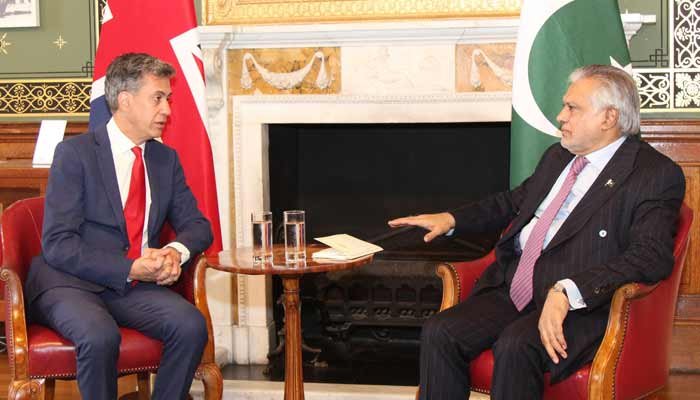
The issue was reportedly raised during talks in London between Pakistan’s Deputy Prime Minister and Foreign Minister Ishaq Dar and UK Foreign Secretary Ed Miliband.
British officials are seeking Ahmed’s removal from the UK after he was released from prison last month. Ahmed, 73, served 14 years of a 22-year sentence after being convicted of 30 child rape offences.
Pakistan told British officials that it does not currently have legislation or a formal mechanism allowing the country to accept individuals such as Ahmed for deportation or transfer. Officials also stressed that there is no treaty between the two countries specifically covering the extradition or exchange of convicted sex offenders.
The Shabir Ahmed case is particularly complicated because of his citizenship status and long-term residence in Britain.
Citizenship and Deportation Dispute
Ahmed was born in Pakistan but spent virtually his entire life in the United Kingdom. He was also stripped of his British citizenship.
The British government is therefore seeking a way to remove him from the country, while Pakistan maintains that his circumstances do not automatically make Islamabad responsible for accepting him.
Pakistani officials have pointed to the fact that Ahmed has renounced Pakistani citizenship and has longstanding ties to Britain. From Islamabad’s perspective, these factors make the question of his deportation considerably more complicated than a routine removal of a foreign national.
The UK government, meanwhile, has emphasized the importance of preventing a convicted child rapist from remaining in Britain.
UK Seeks Changes to Immigration Rules
The dispute comes as UK Home Secretary Shabana Mahmood has announced plans to change immigration rules dating back decades.
The proposed changes are intended to close a legal loophole that has prevented the British authorities from deporting Ahmed, despite his criminal convictions and the removal of his British citizenship.
The government has faced domestic pressure over the case, particularly because Ahmed was convicted of serious sexual offences involving children.
The Shabir Ahmed case has therefore developed into both an immigration issue and a wider political debate about how Britain deals with foreign nationals convicted of serious crimes.
Pakistan Points to Lack of Legal Mechanism
During the discussions, Pakistan reportedly acknowledged Britain’s concerns but maintained that existing arrangements between the two countries do not provide a legal route for accepting Ahmed.
Pakistani officials also emphasized that Islamabad has historically cooperated with Britain on immigration, deportation and criminal matters.
However, they consider Ahmed’s situation different because of his criminal status, citizenship history and long-term residence in Britain.
Pakistan has reportedly agreed to consider the British request, but officials have asked London to take Islamabad’s concerns into account before pursuing further action.
This leaves the two governments searching for a possible solution without an established bilateral mechanism specifically designed for such cases.
Wider Political Tensions
The dispute is taking place against a broader backdrop of Pakistan-UK relations.
Pakistan has previously indicated that it could reconsider cooperation on accepting illegal migrants if Britain attempted to pressure Islamabad into taking Ahmed.
Pakistani officials have also reportedly been unhappy with suggestions that Britain could introduce measures such as visa restrictions against Pakistani nationals or reduce certain forms of financial assistance if Pakistan continues refusing to accept him.
These threats, whether formally adopted or not, could make an already sensitive diplomatic issue more difficult to resolve.
The Shabir Ahmed case has consequently moved beyond a simple deportation question and become connected to wider discussions about migration, criminal justice and bilateral cooperation.
Pakistan’s Position on a Possible Deal
Sources have indicated that Pakistan has previously raised the possibility of Britain handing over Pakistani dissidents living in the UK in return for accepting Ahmed.
However, such an arrangement would be politically and legally difficult for Britain to accept. The UK has its own legal protections and procedures concerning individuals living within its jurisdiction, making any direct exchange highly complicated.
There has been no indication of a formal agreement along these lines.
For now, Islamabad appears willing to keep discussions open while maintaining that any solution must comply with the law and existing bilateral arrangements.
Formal Talks to Continue
Interestingly, the official statement issued after the London meeting did not specifically mention Ahmed.
Instead, it said Pakistan and Britain had reviewed the full range of bilateral relations and agreed to establish a structured mechanism for regular discussions between their foreign ministries.
Such a mechanism could provide a platform for addressing difficult issues, including migration, criminal matters and consular cooperation.
Whether it can produce a solution to the Shabir Ahmed case remains uncertain.
The dispute highlights a difficult question facing both countries: how should a convicted foreign national be dealt with when the country of birth is unwilling or legally unable to accept him?
Britain wants Ahmed removed from the country, while Pakistan says there is currently no legal mechanism requiring it to take him back.
For Pakistan, accepting Ahmed without a clear legal framework could create a precedent for future cases. For Britain, allowing him to remain could generate further political and public pressure.
The Shabir Ahmed case is therefore likely to remain a sensitive point in Pakistan-UK relations while both governments explore whether a lawful and mutually acceptable solution can be found.