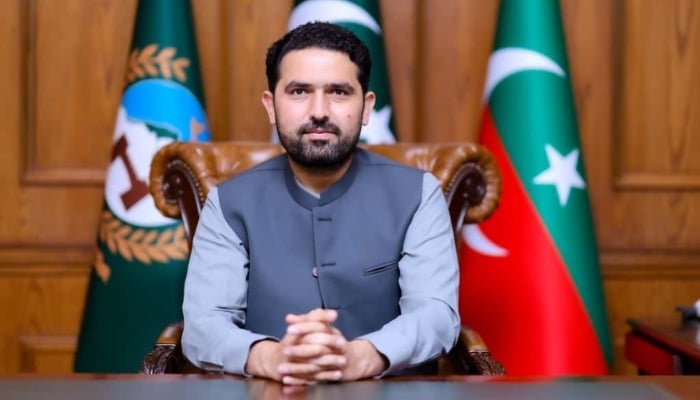
The Khyber Pakhtunkhwa government has rejected a proposed Rs6.4 billion deduction from its federal financial transfers, arguing that the move was neither approved nor agreed upon by the province. Chief Minister Sohail Afridi said the dispute concerns the province’s constitutional and financial rights and vowed to pursue legal and constitutional options to protect its share.
KP Opposes Proposed Deduction
According to Chief Minister Afridi, the federal Ministry of Finance proposed on August 5 that Rs6.4 billion owed to Khyber Pakhtunkhwa be deducted directly from the province’s financial transfers.
The provincial government, however, maintains that it never approved the deduction. The KP Finance Department formally communicated its opposition through a letter dated August 13.
Afridi said the provincial administration had also instructed relevant officials to prevent the deduction from being implemented without the province’s explicit consent.
The chief minister described the matter as more than a political disagreement, arguing that it involves the financial and constitutional rights of Khyber Pakhtunkhwa.
Dispute Over Additional Federal Funds
The disagreement is linked to an earlier arrangement involving additional financial support for the province.
Afridi said the federal government had sought an additional amount from KP before the 2026-27 budget. According to his account, releasing the proposed funds was linked to a meeting between the chief minister and PTI founder Imran Khan.
Afridi said he was not allowed to meet Khan and therefore the provincial government did not sign a memorandum of understanding regarding the additional amount.
The chief minister also said the province had placed conditions concerning the financial rights of the newly merged districts. He claimed that the federal government had accepted the condition that these districts should receive their rightful share under the 11th National Finance Commission.
FBR Target and KP’s Share
Afridi also referred to the Federal Board of Revenue’s tax collection target while discussing the province’s financial position.
He said that if the FBR achieved its Rs15,260 billion revenue target, the province’s share would amount to approximately Rs175 billion.
The figures highlight the importance of federal transfers for provincial finances. Provinces rely heavily on their constitutional share of federally collected revenues to fund public services, development projects and administrative responsibilities.
For Khyber Pakhtunkhwa, maintaining predictable and constitutionally determined transfers is particularly important as the provincial government manages significant development and security-related needs.
Federal Government’s Position
The federal government has previously explained that the provinces agreed to provide a grant to the Centre for defence requirements and to create a financial buffer against possible economic effects of the Gulf region conflict.
Finance Minister Muhammad Aurangzeb said in June that the arrangement would remain in place for three years.
He also emphasized that the arrangement was separate from the National Finance Commission framework.
This distinction is significant because the current dispute involves KP’s broader argument about its constitutional financial entitlements, while the federal government has presented the provincial contribution as a separate fiscal arrangement.
KP Raises Constitutional Concerns
Afridi has strongly challenged the legality of any unilateral deduction.
He referred to Article 164 of the Constitution, arguing that it does not provide the federal government with authority to deduct money owed to the province without an appropriate constitutional or legal basis.
The KP government has therefore directed its financial officials to ensure that no disputed transaction is recorded or implemented without provincial approval.
Afridi said the Accountant General Khyber Pakhtunkhwa had been instructed accordingly, while the Accountant General Pakistan Revenues was also told not to process the transaction without the province’s explicit consent.
The provincial government believes that these steps are necessary to protect its financial position while the dispute is addressed through legal channels.
Legal Battle Over NFC Rights
The Khyber Pakhtunkhwa government has already taken the matter to court. Afridi said the provincial administration filed a petition before the Federal Constitutional Court to protect its constitutional rights under the NFC system.
He said the government would use every available legal and constitutional avenue to defend the province’s financial share.
The National Finance Commission framework plays a central role in determining how federally collected revenues are distributed between the Centre and provinces. Disagreements over these transfers can therefore have significant implications for provincial budgets.
For KP, the issue is also connected to the financial treatment of its merged districts and the commitments made during earlier negotiations.
The proposed Rs6.4 billion deduction is now likely to become the subject of further discussions and legal proceedings.
The Khyber Pakhtunkhwa government has made its position clear: it does not accept the deduction and will not compromise on what it considers its constitutional NFC rights.
The federal government, meanwhile, will have to address the province’s objections and clarify the legal basis for the proposed adjustment.
With the dispute now moving into the legal and constitutional arena, the final outcome could have wider implications for federal-provincial financial relations. It may also influence future discussions over revenue-sharing arrangements, provincial autonomy and the financial rights of Pakistan’s provinces.