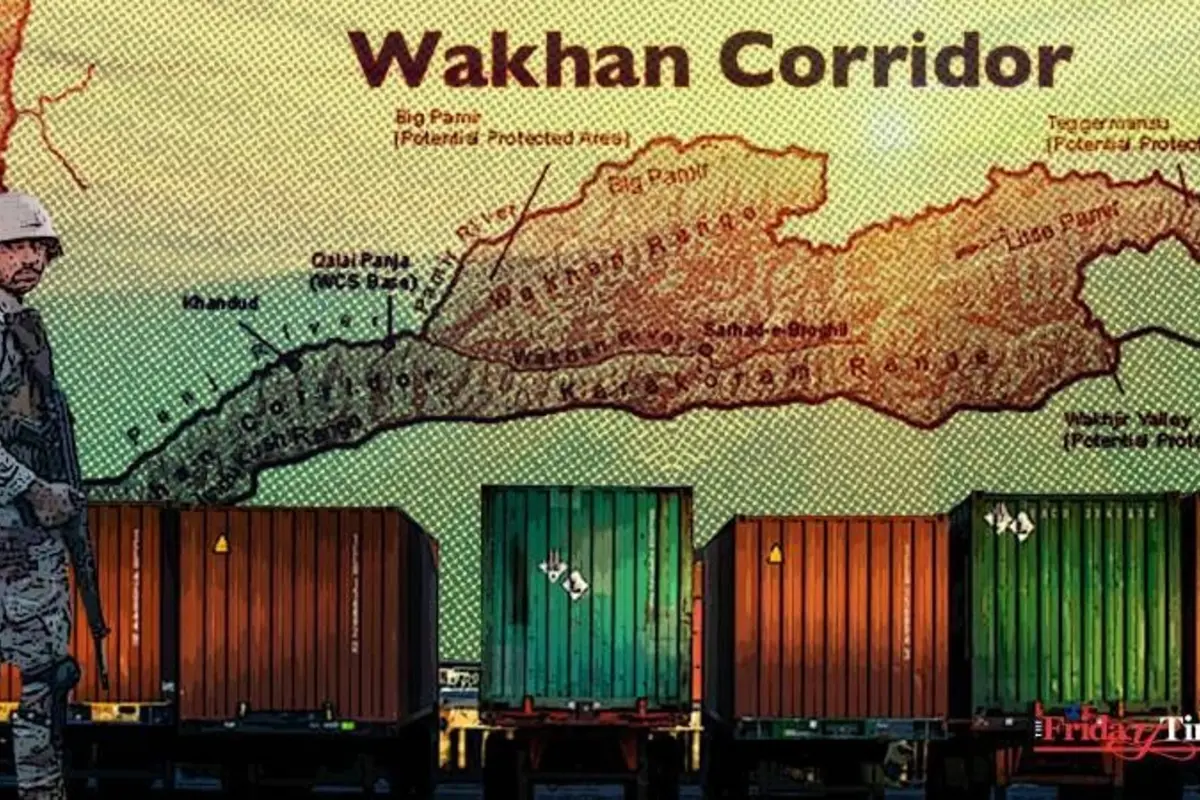
The Wakhan Corridor project launched by Afghanistan’s Taliban administration has been described by Radio Free Europe (RFE) as largely symbolic, with significant doubts surrounding its commercial viability and prospects for regular cross-border trade with China. The assessment points to difficult terrain, a short seasonal window for road travel, limited economic opportunities, and continuing security concerns as major obstacles to the initiative.
According to the analysis, the Taliban administration inaugurated a road in the Wakhan region on October 4. However, Chinese experts reportedly see little chance of the border opening for regular commercial traffic in the near future.
The project is intended to improve connectivity through Afghanistan’s remote northeastern corridor, which extends toward China. Yet building a road does not necessarily guarantee that it can support consistent trade or become a commercially useful transport route.
Harsh Mountain Conditions Limit Road Access
One of the most significant challenges facing the Wakhan Corridor project is its extreme geography. The route crosses a mountain pass at an altitude of approximately 4,800 metres, where severe weather and difficult terrain can restrict movement.
According to the RFE analysis, the pass remains usable by vehicles for only around three months each year. Such a limited operating period would make it difficult to maintain predictable transport schedules and dependable commercial links.
Regular international trade requires more than a physical road. Businesses need reliable access, manageable transport costs, border facilities, and the ability to move goods throughout the year. Seasonal closures could increase logistical expenses and discourage companies from depending on the route.
The region’s remoteness also creates practical questions about road maintenance, supporting infrastructure, and the resources needed to keep vehicles moving safely through mountainous terrain.
These limitations could reduce the corridor’s usefulness as a major trade connection, even if construction work continues.
China’s Economic Incentives Remain Limited
The analysis also questions whether the route offers sufficient economic benefits to attract substantial Chinese commercial interest.
Afghanistan faces considerable economic challenges, which may limit the volume of goods available for trade and the purchasing power of domestic consumers. From China’s perspective, developing a regular trade route would require a commercial rationale alongside the physical infrastructure.
Companies considering the route would need to weigh transport costs, seasonal accessibility, border procedures, and security risks against potential savings or new market opportunities.
Without dependable demand and reliable access, the road could struggle to attract enough commercial traffic to justify the costs associated with regular operations.
The Taliban administration may view the project as an opportunity to improve connectivity and demonstrate infrastructure development. However, the RFE assessment suggests that these ambitions may not translate into significant trade unless practical barriers are addressed.
Public Welfare Concerns in Wakhan
The report also raises questions about the priorities of the Taliban administration, particularly in relation to basic services in the remote Wakhan region.
The analysis cites claims that newborn mortality rates in the area reach 30 percent, highlighting serious concerns about access to healthcare and the welfare of local communities. This figure is a reported claim in the analysis and should not be treated as independently verified without further evidence about its source, methodology, and geographical coverage.
Nevertheless, the broader issue of access to essential services remains important when evaluating development priorities in isolated communities.
Residents in remote mountainous areas can face substantial difficulties reaching healthcare facilities, obtaining supplies, and accessing other public services. Critics argue that infrastructure initiatives should be assessed not only by their visibility but also by their contribution to local living conditions.
Improved roads could potentially support access to services, but the benefits would depend on where they lead, how reliably they operate, and whether they meet the needs of nearby communities.
Security Concerns Complicate China-Afghanistan Links
Security is another major obstacle to the Wakhan Corridor project. The RFE analysis refers to a 2026 United Nations report that reportedly identified activities by the East Turkestan Islamic Movement (ETIM) in Afghanistan’s Badakhshan province.
Chinese media have also described the 76-kilometre border adjoining Afghanistan as an important area for counterterrorism efforts.
Beijing’s central concern, according to the analysis, is whether the Taliban administration will take concrete and verifiable action against militant groups operating on Afghan soil. It alleges that Taliban authorities have repeatedly failed to meet Chinese demands for action against ETIM.
These allegations are central to the debate over whether China would consider opening the border for regular trade. From Beijing’s perspective, a new transport connection could create additional security risks if cross-border infiltration and militant activity are not adequately addressed.
The Taliban administration would therefore need to provide credible assurances that security threats were being managed before the route could develop into a dependable commercial link.
The Wakhan Corridor project reflects Afghanistan’s ambitions to improve regional connectivity, but major challenges remain. Extreme mountain conditions, limited seasonal access, uncertain commercial demand, concerns about public welfare, and security risks all complicate its prospects.
According to RFE’s analysis, China is unlikely to support regular trade across the route without credible security assurances. Until the practical and security-related obstacles are addressed, the road’s role may remain limited despite its strategic significance.