Pakistan has stepped up its diplomatic efforts to promote regional stability as Interior Minister Mohsin Naqvi visits Iran for discussions on security, bilateral relations and the ongoing tensions surrounding US-Iran negotiations. His visit comes at a sensitive time, with Pakistan seeking to encourage dialogue and prevent developments that could further destabilise the Middle East.
Naqvi Meets Iranian Leadership
During his visit, Mohsin Naqvi held separate meetings with Iranian President Masoud Pezeshkian, Foreign Minister Abbas Araghchi and other senior officials. According to Pakistani officials, he also conveyed a special message from Prime Minister Shehbaz Sharif and Chief of Defence Forces and Chief of Army Staff Field Marshal Asim Munir to the Iranian president.
The discussions focused on bilateral relations, regional security and ways to encourage constructive engagement among countries involved in the current tensions.
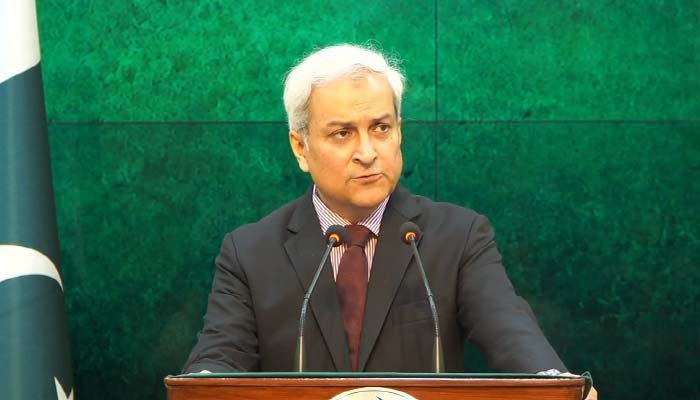
Foreign Office spokesperson Tahir Andrabi said Pakistan remained committed to supporting diplomatic efforts aimed at resolving outstanding issues. Islamabad also wants to help prevent groups or developments that could undermine negotiations between Washington and Tehran.
The Mohsin Naqvi visit to Iran therefore carries significance beyond bilateral relations, as Pakistan attempts to position itself as a constructive regional partner.
Pakistan Pushes for US-Iran Dialogue
Pakistan has been working to encourage the United States and Iran to return to the negotiating table. Officials have referred to the Islamabad memorandum of understanding as part of broader diplomatic efforts aimed at creating space for dialogue.
The Foreign Office has said Pakistan will continue using both direct and indirect diplomatic channels to “offset spoilers” and support constructive engagement.
The objective is to prevent further escalation and create conditions in which outstanding disputes can be addressed through negotiations rather than military confrontation.
Pakistan’s diplomatic role has become increasingly important as regional tensions have affected security, shipping and energy markets. Islamabad has maintained that dialogue remains the most effective way to achieve lasting stability.
Rising Concerns Around the Strait of Hormuz
The diplomatic efforts come amid heightened concerns over the Strait of Hormuz, one of the world’s most important maritime routes for energy supplies.
Iran has maintained that the strait would remain closed unless Washington accepts its conditions. At the same time, attacks involving shipping routes near the Gulf of Oman and the Red Sea have added uncertainty to international trade.
The Strait of Hormuz connects the Persian Gulf with the Gulf of Oman and is critical for the transportation of oil and other energy products. Any prolonged disruption could therefore have consequences far beyond the Middle East.
Pakistan has a direct interest in preventing further instability because regional disruptions can affect energy prices, trade routes and economic conditions.
Signs of Possible Progress
Despite the difficult situation, Pakistani Defence Minister Khawaja Asif recently indicated that the United States and Iran could be moving closer to an agreement.
He said recent signals suggested that the two sides were approaching “some sort of an arrangement” and that developments appeared to be moving in the direction of a possible peace agreement.
Qatar, another country involved in mediation efforts, has also indicated progress regarding discussions related to the Strait of Hormuz.
These developments provide a diplomatic backdrop to Mohsin Naqvi’s Iran visit, with Pakistan seeking to support efforts that could reduce tensions and encourage negotiations.
Pakistan Condemns Houthi Attack
Separately, Pakistan strongly condemned a Houthi attack on a commercial vessel in the Red Sea that resulted in the deaths of at least three Pakistani nationals. Another Pakistani national was reportedly injured.
Deputy Prime Minister and Foreign Minister Ishaq Dar described attacks on non-combatant commercial vessels as a serious threat to maritime security and freedom of navigation.
The Pakistani government said it was coordinating with Saudi authorities and Yemen’s internationally recognised government to determine further details about the incident.
Pakistan’s embassy in Riyadh was also directed to coordinate with relevant authorities regarding the deceased nationals and provide assistance to the injured Pakistani citizen.
The incident highlights the wider risks created by instability across important Middle Eastern shipping routes.
A Broader Diplomatic Mission
The Mohsin Naqvi visit to Iran reflects Pakistan’s broader effort to maintain constructive relations with neighbouring countries while encouraging peaceful solutions to regional disputes.
For Islamabad, stability in the Middle East is closely connected to its own economic and security interests. Escalating conflict could affect energy supplies, trade, expatriate communities and maritime transportation.
By maintaining communication with Tehran and other regional stakeholders, Pakistan hopes to contribute to de-escalation and keep diplomatic channels open.
The Mohsin Naqvi visit also demonstrates Islamabad’s preference for engagement at a time when military confrontation continues to threaten regional stability. While Pakistan cannot determine the outcome of US-Iran negotiations, its diplomatic efforts could help create an environment more favourable to dialogue.
The success of these efforts will depend on the willingness of the parties involved to compromise and return to sustained negotiations. For Pakistan, however, supporting diplomacy remains an important part of its strategy to protect regional peace, maritime security and its own national interests.