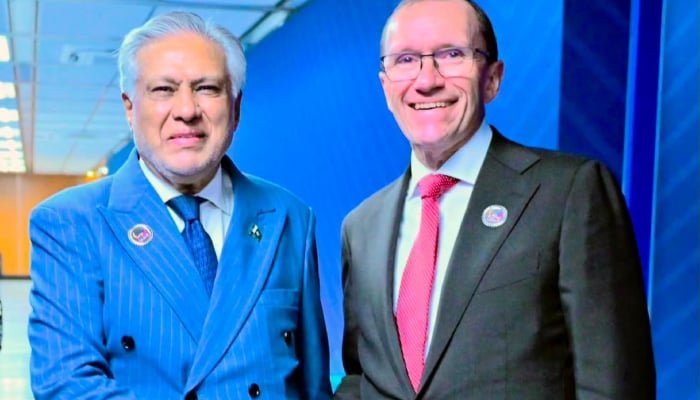
Norwegian Foreign Minister Espen Barth Eide is set to visit Pakistan on August 13-14, marking the first visit by a Norwegian foreign minister to the country in nearly a decade. The visit is expected to give Pakistan-Norway relations fresh momentum as both countries explore opportunities in trade, investment, renewable energy, climate change and education.
First Norwegian Foreign Minister Visit in a Decade
Eide is visiting Pakistan at the invitation of Deputy Prime Minister and Foreign Minister Senator Mohammad Ishaq Dar. His arrival represents an important diplomatic development and reflects continued engagement between Islamabad and Oslo.
During his two-day visit, Eide will hold delegation-level discussions with Dar. The talks are expected to cover the broad range of bilateral relations, with both sides looking for practical areas where cooperation can be expanded.
The visit comes at a time when Pakistan-Norway relations are increasingly focused on economic cooperation and shared international challenges. Climate change, clean energy and education are among the areas that offer significant potential for deeper collaboration.
Trade and Investment on the Agenda
Trade and investment are expected to be important subjects during the Norwegian foreign minister’s meetings in Islamabad. Pakistan is seeking to expand economic partnerships with European countries, while Norway has experience in several sectors that could support Pakistan’s development objectives.
Both countries can explore opportunities for greater private-sector engagement, investment partnerships and business-to-business contacts. Improved economic cooperation could help create new opportunities for businesses in both countries while strengthening the foundation of Pakistan-Norway relations.
Norway’s expertise in energy, technology and sustainable development could also provide opportunities for collaboration with Pakistani institutions and companies.
Renewable Energy and Climate Cooperation
Climate change and renewable energy are expected to feature prominently in the discussions. Pakistan remains vulnerable to the effects of climate change, including extreme weather events, water-related challenges and rising temperatures.
Norway has developed considerable expertise in renewable energy and environmental sustainability. Greater cooperation in these areas could help Pakistan explore new technologies, improve energy efficiency and develop cleaner sources of power.
The two countries may also discuss broader climate initiatives and ways to support sustainable development. Such cooperation could become an important component of Pakistan-Norway relations in the coming years.
Education and People-to-People Contacts
Education is another area where both sides see potential for stronger ties. Academic exchanges, scholarships, research partnerships and institutional cooperation can help connect universities and researchers in Pakistan and Norway.
People-to-people contacts can also contribute to a better understanding between the two societies. Student exchanges, cultural engagement and professional cooperation could provide long-term benefits beyond government-to-government relations.
For Pakistan, stronger educational links with Norway could provide students and researchers with opportunities to participate in international academic networks. At the same time, Norwegian institutions could benefit from greater engagement with Pakistan’s growing pool of young professionals and researchers.
Regional and Global Issues
The meetings will not be limited to bilateral matters. According to Pakistan’s Foreign Office, the two sides will also exchange views on important regional and international developments.
This part of the discussions could allow Islamabad and Oslo to compare perspectives on global security, economic challenges and other international issues. As both countries participate in multilateral organizations, diplomatic coordination can also contribute to cooperation on issues of common interest.
The Norwegian visit therefore comes with significance beyond individual economic projects. It provides an opportunity to strengthen political dialogue and develop a broader understanding of each country’s priorities.
Recent Diplomatic Engagement
The upcoming visit builds on sustained high-level contact between Pakistan and Norway. Dar and Eide held telephone conversations in March and April 2026, while Norwegian State Secretary Andreas Motzfeldt Kravik visited Islamabad in May.
These interactions demonstrate that Pakistan-Norway relations have remained active and provide a foundation for further diplomatic engagement.
Eide’s visit can build on this recent momentum by translating political discussions into concrete initiatives. Regular high-level contacts can also help both countries identify new areas for cooperation and address challenges affecting bilateral ties.
A New Opportunity for Bilateral Cooperation
The Norwegian foreign minister’s visit represents an opportunity for Pakistan and Norway to strengthen their longstanding relationship through practical cooperation. From trade and investment to renewable energy, climate action and education, several areas offer room for meaningful progress.
The focus on mutually beneficial projects could give Pakistan-Norway relations a stronger economic and social dimension. At the same time, continued diplomatic engagement can help both countries cooperate on regional and international issues.
As Eide begins his Pakistan visit, expectations will be centered on turning diplomatic goodwill into measurable outcomes. If the discussions lead to stronger partnerships and new initiatives, the visit could mark an important step in the next phase of Pakistan-Norway relations.