Russia and the Organization of Islamic Cooperation’s Standing Committee on Scientific and Technological Cooperation (COMSTECH) have discussed expanding cooperation in science, technology and higher education, with the latest meeting highlighting opportunities for stronger academic ties and joint research. The talks also underscored the growing potential for Russia-COMSTECH cooperation to contribute to broader Russia-Pakistan relations.
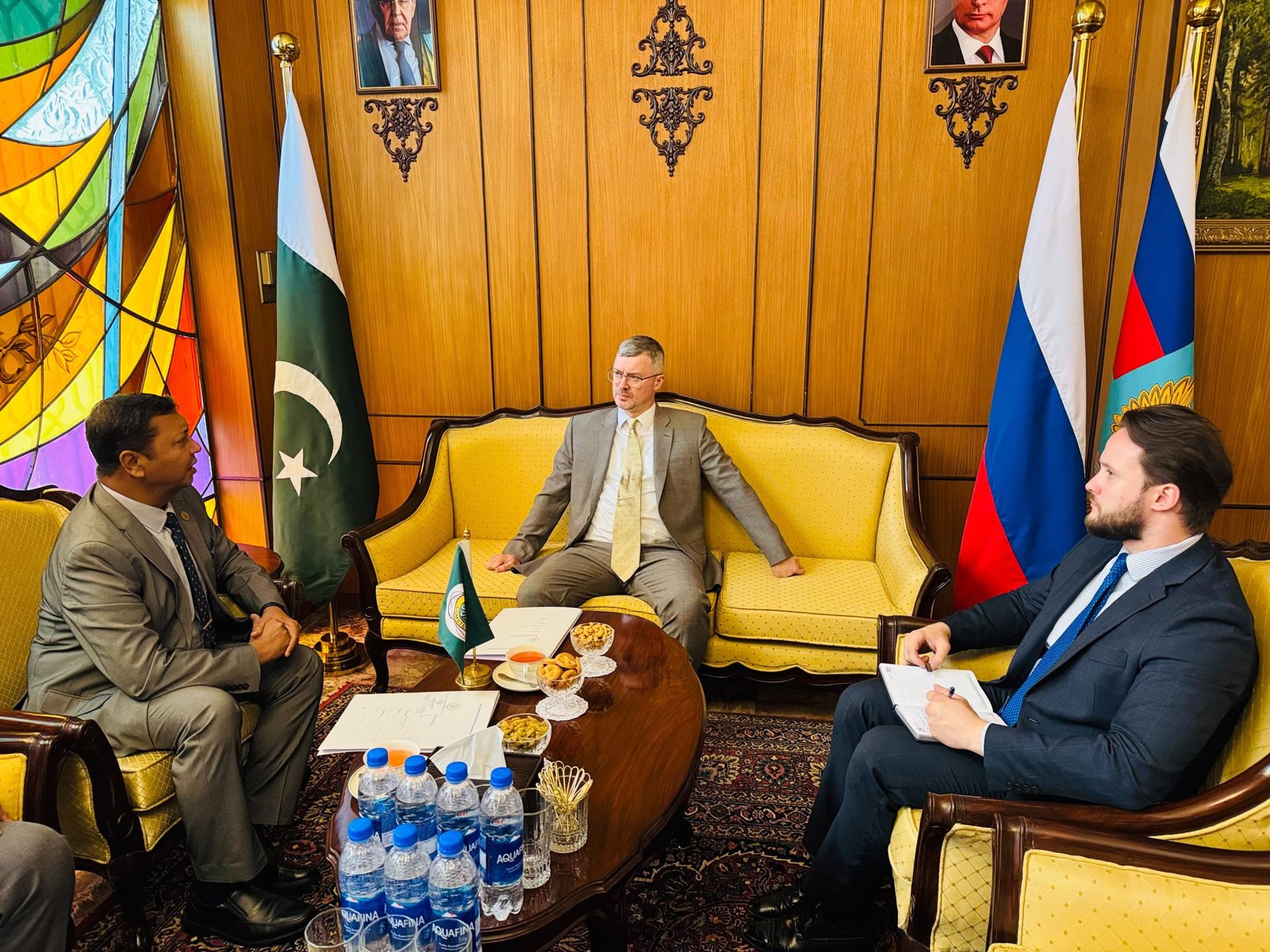
On August 12, Russian Ambassador Albert P. Khorev received a delegation from COMSTECH led by its Coordinator General, Prof. Dr. M. Iqbal Choudhary. The meeting focused on ways to deepen engagement between COMSTECH and Russia, which participates in the OIC framework as an observer state.
The discussions come at a time when international cooperation in science and technology is becoming increasingly important. Universities, research institutions and governments are seeking stronger partnerships to share expertise, develop new technologies and provide students with opportunities to gain international academic experience. In this context, Russia-COMSTECH cooperation could open new avenues for researchers and educational institutions across participating countries.
Expanding Academic Partnerships
During the meeting, Prof. Dr. Iqbal Choudhary highlighted existing cooperation between COMSTECH and Russian institutions. Among the examples discussed was collaboration with Kazan Federal University and the Russian Association of Earthquake Engineering and Protection against Natural and Man-Made Hazards.
Such partnerships demonstrate that cooperation is already extending beyond formal diplomatic engagement. Academic institutions can play a central role by connecting researchers, students and technical experts through joint projects and knowledge-sharing initiatives.
The two sides identified significant potential for expanding academic exchanges. This includes strengthening relationships between universities, increasing scholarship opportunities and promoting joint fundamental research in areas of mutual interest.
For students and researchers, expanded academic cooperation could provide access to international laboratories, research networks and specialized expertise. Universities could also benefit from joint research programmes that combine knowledge and resources from different institutions.
Focus on Science and Technology
Another important area discussed during the meeting was the implementation of initiatives agreed upon at the first meeting of the Working Group on Cooperation between COMSTECH and the Russian Federation.
That meeting was held on the sidelines of the International Economic Forum “Russia – Islamic World: KazanForum” in Kazan on May 13, 2026. The working group was established to advance cooperation in science, technology and higher education.
Both sides stressed the need to accelerate the implementation of the initiatives agreed upon through the working group. Turning agreements into practical projects will be important for ensuring that Russia-COMSTECH cooperation produces measurable benefits.
Joint research can potentially cover a wide range of scientific and technological fields. Collaborative programmes can also help develop technical skills, encourage innovation and strengthen connections between research communities.
Opportunities for Pakistan
The discussions also carry particular significance for Pakistan. COMSTECH is based in Islamabad and works to promote scientific and technological cooperation among OIC member states. Stronger engagement with Russian institutions could therefore create additional opportunities for Pakistani universities, scientists and students.
Ambassador Khorev reaffirmed Russia’s commitment to expanding dialogue with the OIC and Muslim countries, including Pakistan. The participants noted that cooperation with COMSTECH could also contribute to strengthening bilateral Russia-Pakistan relations.
For Pakistan, international academic partnerships can support research capacity and create opportunities for young researchers to participate in global scientific networks. Scholarship programmes and university-to-university cooperation could further strengthen educational links between Pakistan and Russia.
The emphasis on locally relevant research could also encourage cooperation in areas such as environmental protection, disaster management, engineering, information technology and other fields where scientific collaboration can provide practical benefits.
From Agreements to Practical Projects
One of the main challenges for international cooperation is ensuring that discussions and agreements eventually lead to concrete results. The decision to maintain regular contact and provide support for joint initiatives could help both sides move more quickly from planning to implementation.
The existing relationship with Kazan Federal University provides an example of how academic links can develop into meaningful cooperation. Expanding similar connections to other Russian universities and research institutions could significantly increase the reach of the partnership.
Russia-COMSTECH cooperation may also benefit from greater participation by universities, research centres and technical organisations. Broader institutional involvement can create a stronger foundation for long-term scientific collaboration.
A Growing Area of Bilateral Engagement
The latest meeting reflects a wider effort to strengthen ties between Russia and OIC member states through education, science and technology. For Pakistan, these developments could complement existing diplomatic and economic relations with Russia.
Scientific cooperation is often viewed as a long-term investment because its benefits extend beyond individual projects. Successful partnerships can create lasting research networks, improve academic capacity and encourage innovation among younger generations.
The August 12 meeting therefore represents more than a diplomatic exchange. It highlights the potential for Russia-COMSTECH cooperation to become a practical platform for academic exchanges, scholarships and joint research.
As both sides work to implement previously agreed initiatives, continued engagement and regular communication will be essential. If these plans translate into concrete programmes, the partnership could strengthen scientific connections between Russia, COMSTECH and Pakistan while contributing to wider cooperation across the OIC community.