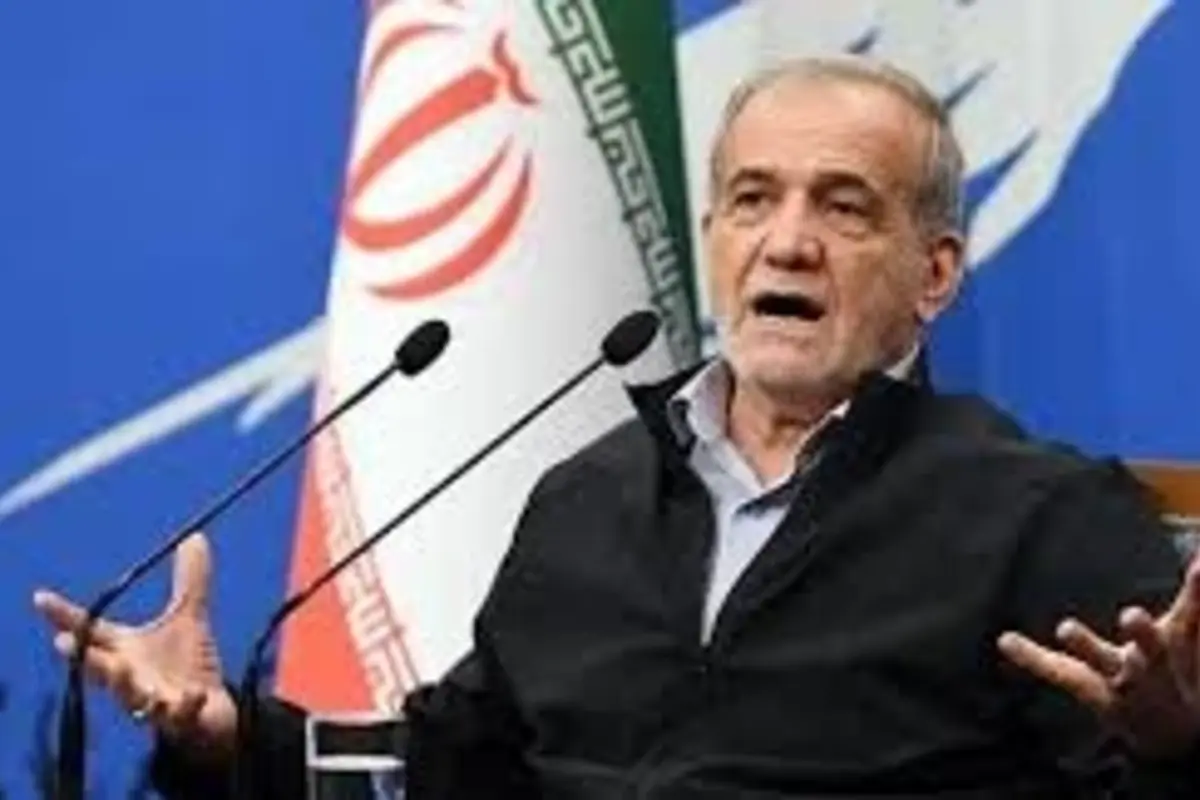
Iranian President Masoud Pezeshkian has said that regional stability remains a key priority for Tehran, arguing that recent military actions by the United States and Israel have undermined peace and security across West Asia. His comments came as tensions continue to shape political and security developments in the region.
Iran Rejects Claims of Seeking Instability
Pezeshkian stressed that Iran does not seek instability and has consistently attempted to maintain constructive relations with neighboring countries. According to the Iranian president, Tehran’s actions have remained within what it considers the framework of international law.
He accused the United States and Israel of carrying out aggressive actions that have damaged regional stability and resulted in civilian casualties and destruction of important infrastructure. Pezeshkian specifically referred to the deaths of civilians, including children at a school in Minab, as well as other casualties during the recent confrontation.
The Iranian president also said that Iran’s Supreme Leader was among those killed in the attacks, presenting the developments as evidence of the serious consequences of the escalating conflict.
Concerns Over Regional Security
Pezeshkian’s remarks come at a time when security concerns remain high across West Asia. Military confrontations and political disputes involving Iran, Israel and the United States have created wider uncertainty for neighboring countries.
The Iranian leadership has repeatedly argued that foreign military involvement contributes to insecurity in the region. Pezeshkian’s latest comments reflect Tehran’s broader position that regional countries should play a central role in determining their own security arrangements.
For Iran, maintaining regional stability is closely connected to cooperation with neighboring states. The president emphasized that Tehran has sought to improve relations with countries around it despite continuing international and regional pressure.
Warning Against Internal Divisions
Beyond external threats, Pezeshkian warned that Iran’s adversaries were attempting to create divisions within the country. He argued that efforts to increase political and social tensions could weaken the country from within and undermine the Islamic system.
The president described the current confrontation as more complicated than previous conflicts. In his view, the challenge is not limited to military pressure but also involves political, social and psychological dimensions.
This assessment places greater importance on maintaining unity among Iranian institutions and the public. Pezeshkian suggested that national cohesion would be essential if Iran is to manage the current challenges and preserve regional stability.
Focus on Clear Objectives
Pezeshkian called for a more focused approach to dealing with the current situation. He said government institutions should work according to clearly defined missions and specific objectives rather than allowing political disagreements to dominate decision-making.
His comments also highlighted the importance of maintaining public support. The Iranian president warned that creating distance between citizens and government institutions could have damaging consequences.
According to Pezeshkian, strengthening trust between the government and the public should therefore be treated as an important national priority. He urged state institutions to avoid partisan considerations and instead concentrate on issues that can strengthen national harmony.
Importance of Public Unity
Public confidence can play a significant role during periods of heightened security pressure. Governments facing external threats often depend on social cohesion to maintain stability and ensure that institutions can continue functioning effectively.
Pezeshkian’s emphasis on public support suggests that Tehran sees domestic unity as an important component of its response to the current crisis. His call for cooperation among institutions is also intended to reduce political disagreements that could make the situation more difficult.
For Iran, the challenge is therefore both domestic and international. While the government seeks to respond to external pressure, it must also maintain confidence among its population.
A Wider Regional Challenge
The developments surrounding Iran have consequences beyond its borders. Continued confrontation involving major regional and international powers can affect neighboring countries, trade routes, energy markets and broader diplomatic relations.
That makes regional stability an important concern not only for Iran but also for governments across West Asia. Diplomatic engagement, communication between neighboring states and efforts to prevent further escalation could become increasingly important as tensions persist.
Pezeshkian’s latest remarks underline Tehran’s desire to present itself as a country seeking stability rather than conflict. At the same time, his criticism of the United States and Israel shows that Iran remains firmly opposed to what it considers external aggression.
The future of regional stability will depend on whether competing governments can reduce tensions and find political channels for resolving disputes. Pezeshkian’s call for unity at home and stronger relations with neighboring countries reflects Iran’s stated approach to navigating an increasingly complex security environment.