AJK Elections 2026 entered a crucial stage as election campaigning concluded ahead of the second phase of voting scheduled for August 2. During the final day of campaigning, State Minister for Finance Bilal Azhar Kayani reaffirmed the Pakistan Muslim League-Nawaz’s (PML-N) commitment to protecting the democratic rights of Kashmiri refugees and ensuring their continued representation in the Azad Jammu and Kashmir (AJK) Legislative Assembly. His remarks highlighted the importance of refugee constituencies and reflected the growing political competition as parties make their final appeal to voters.
PML-N Highlights Commitment to Refugee Constituencies
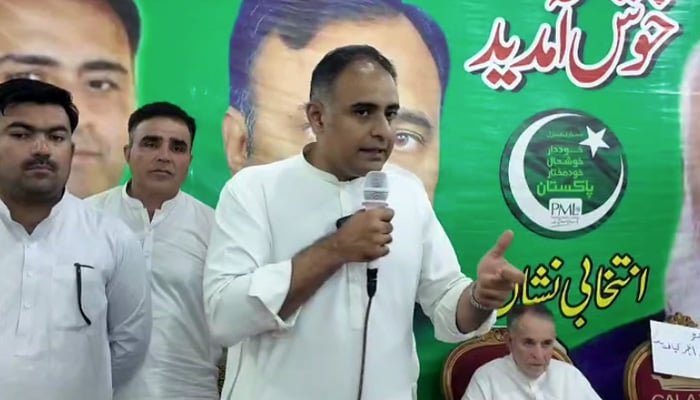
Speaking at several corner meetings in Dina, Dhanyala, Kashmir Colony, and Chotala, Bilal Azhar Kayani emphasized that the PML-N remains dedicated to safeguarding the constitutional rights of Kashmiri refugees.
He stated that refugee constituencies are an essential part of the democratic framework in Azad Jammu and Kashmir and pledged that the party would continue supporting voters represented through these seats.
Kayani also urged supporters to actively participate in the electoral process and exercise their democratic right to vote.
Campaigning Ends Ahead of Polling Day
With the conclusion of election campaigning at midnight on Friday, political parties completed weeks of public meetings, rallies, and voter outreach across Muzaffarabad Division and refugee constituencies.
The second phase of AJK Elections 2026 will take place on August 2, when voters across several constituencies head to polling stations to elect their representatives.
Election authorities have finalized preparations to ensure that voting takes place in an organized and secure environment.
Key Candidates in the Second Phase
During his campaign visits, Kayani expressed support for PML-N candidates Raja Siddique, contesting from LA-39 Jammu-VI, and Syed Shaukat Shah, contesting from LA-42 Valley-III.
Party leaders encouraged voters to support their candidates by highlighting the PML-N’s development agenda and commitment to democratic representation.
The campaign focused heavily on local issues, governance, infrastructure, and the political rights of refugees living outside Azad Kashmir.
Political Competition Intensifies
The political atmosphere has become increasingly competitive following the first phase of the elections.
According to unofficial results from the opening round, the PML-N secured a majority of seats in Mirpur Division, while the Pakistan Peoples Party (PPP) also managed to win several constituencies.
These results have intensified campaigning in the remaining districts as both major parties seek to strengthen their position before the final outcome of the elections.
Political leaders from both sides have continued presenting their visions for governance while criticizing each other’s performance.
Criticism of PPP Governance
During his speeches, Bilal Azhar Kayani also criticized the governance record of the Pakistan Peoples Party.
He referred to civic challenges in Karachi, including issues related to water supply, sewerage systems, and road infrastructure, arguing that citizens deserve improved public services and better administration.
Kayani maintained that effective governance remains one of the central issues influencing public opinion during the election campaign.
These remarks formed part of the broader political debate between the country’s major parties ahead of polling.
Large Voter Turnout Expected
Election officials expect significant public participation during the second phase of voting.
According to the Azad Jammu and Kashmir Election Commission, approximately 890,621 registered voters are eligible to cast their ballots across Muzaffarabad Division.
The voter list includes hundreds of thousands of both male and female voters, reflecting the importance of the upcoming electoral contest.
Authorities have encouraged citizens to participate peacefully and responsibly in the democratic process.
Polling Arrangements Completed
Extensive arrangements have been made to facilitate smooth voting.
Election authorities have established 1,483 polling stations across Muzaffarabad, Neelum, and Jhelum Valley districts.
Officials say polling staff, election materials, and security personnel have been deployed to ensure that voting is conducted efficiently.
Security agencies are also expected to remain on high alert throughout polling day to maintain law and order and protect voters.
Importance of Refugee Seats
One of the defining features of AJK Elections 2026 is the role of refugee constituencies.
These seats provide political representation to Kashmiris who migrated from Indian-administered Jammu and Kashmir and now reside in different parts of Pakistan.
The refugee constituencies hold constitutional significance within the Azad Jammu and Kashmir Legislative Assembly and often play an important role in determining the overall political balance.
As a result, political parties devote considerable attention to campaigning in these constituencies.
Democratic Process Takes Center Stage
The elections represent an important democratic exercise for the people of Azad Jammu and Kashmir.
Political parties have emphasized voter participation, constitutional rights, and peaceful polling throughout their campaigns.
Election officials have repeatedly stated that transparent and orderly elections remain their top priority, while candidates continue appealing to voters based on their policies and political agendas.
Observers will closely monitor voter turnout, polling procedures, and the final results once voting concludes.
The second phase of AJK Elections 2026 is set to play a significant role in shaping the political future of Azad Jammu and Kashmir. With campaigning now complete, attention shifts to polling day, where thousands of voters will decide the outcome in Muzaffarabad Division and the refugee constituencies.
Bilal Azhar Kayani’s reaffirmation of the PML-N’s support for refugee representation highlights the importance of these constituencies in the broader electoral landscape. As voters prepare to cast their ballots, all eyes remain on the democratic process and the results that will determine the composition of the next Azad Jammu and Kashmir Legislative Assembly.