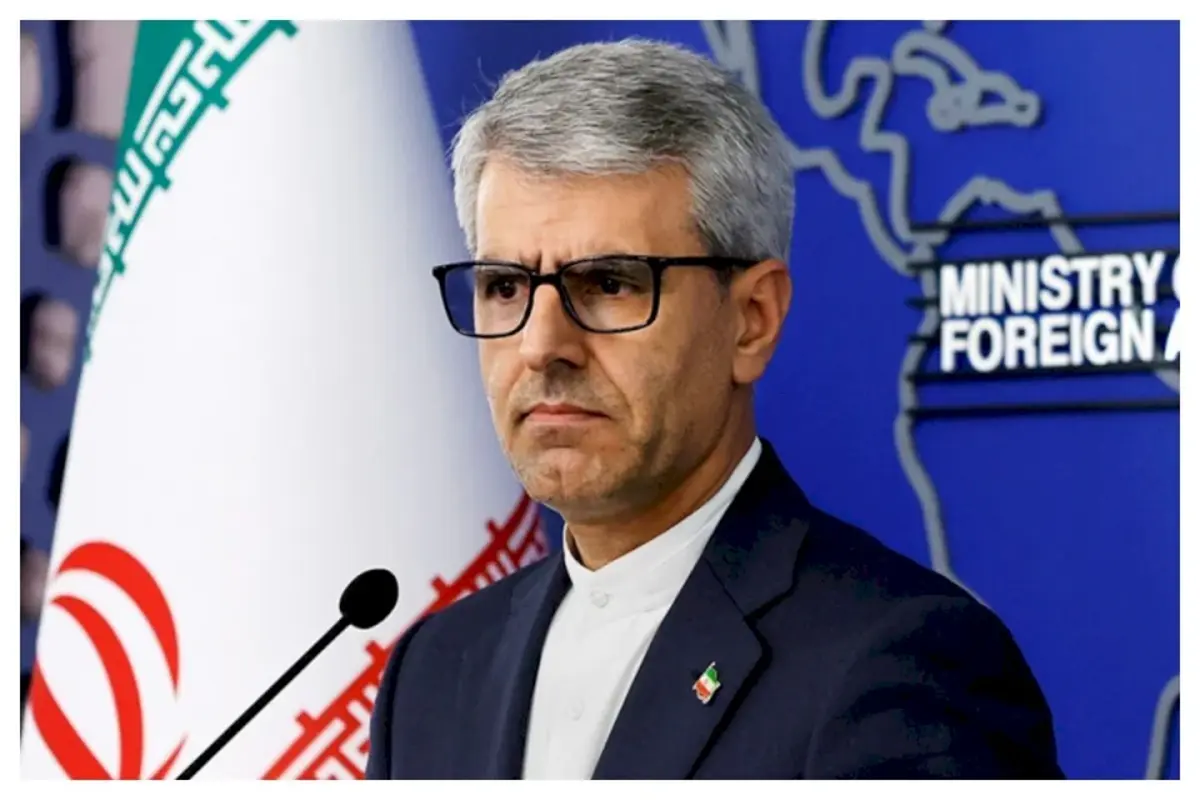
Iran War Crimes Warning has drawn international attention after Iranian Foreign Ministry spokesperson Esmaeil Baghaei accused the United States of undermining international humanitarian law. In a statement shared on social media, Baghaei argued that military personnel cannot escape legal responsibility by simply following unlawful orders. His remarks come amid heightened regional tensions and renewed debate over the application of international law during armed conflicts.
Iran Raises Concerns Over International Humanitarian Law
Esmaeil Baghaei used his statement to emphasize that international humanitarian law places legal obligations on both governments and individual military personnel. According to him, carrying out unlawful military orders does not exempt anyone from criminal responsibility.
The Iran War Crimes Warning stressed that attacks targeting civilian infrastructure, such as bridges, electricity networks, and public utilities, could amount to collective punishment. Under international humanitarian law, collective punishment and deliberate attacks on civilian objects are generally prohibited unless they meet strict legal criteria under the laws of armed conflict.
Baghaei argued that protecting civilians must remain a central principle during any military operation.
Civilian Infrastructure at the Center of Debate
One of the key points highlighted by the Iranian spokesperson was the protection of civilian infrastructure during armed conflict.
He claimed that any policy encouraging the destruction of essential public facilities could violate internationally recognized legal standards. Bridges, power plants, hospitals, water systems, and communication networks often serve civilian populations, making their protection an important aspect of humanitarian law.
The Iran War Crimes Warning emphasized that intentionally targeting civilian infrastructure could have severe humanitarian consequences by disrupting access to electricity, healthcare, transportation, and other essential services.
International legal experts have long debated how military necessity should be balanced against humanitarian protections in conflict zones.
Reference to U.S. Law
Baghaei also referred to provisions within U.S. law while presenting his argument.
He cited the U.S. War Crimes Act (18 U.S.C. § 2441), suggesting that serious violations of the laws of war may be prosecutable under American legislation as well as international legal frameworks.
In addition, he referenced the U.S. Uniform Code of Military Justice and the Department of Defense’s Law of War Manual, arguing that military personnel are expected to refuse orders that are clearly unlawful.
The Iran War Crimes Warning sought to highlight that legal responsibility extends beyond political leaders and applies to individuals participating in military operations.
No Time Limit for War Crimes
Another significant point raised in the statement concerned accountability.
Baghaei argued that war crimes do not expire with time and that there is generally no statute of limitations for prosecuting serious violations of international humanitarian law under many legal systems and international conventions.
According to his remarks, individuals accused of committing war crimes may face legal proceedings years after conflicts have ended if sufficient evidence is available.
This principle has been applied in several international tribunals established to investigate alleged violations committed during previous armed conflicts around the world.
Regional Tensions Continue
The Iran War Crimes Warning comes during a period of heightened geopolitical uncertainty in the Middle East.
Recent regional developments have increased diplomatic tensions involving Iran, the United States, and several neighboring countries. Military activity, security concerns, and ongoing disputes have prompted repeated calls from the international community for restraint and dialogue.
While political disagreements continue, many governments and international organizations have emphasized the importance of respecting international humanitarian law regardless of the nature of any conflict.
Diplomatic engagement remains one of the primary tools for reducing tensions and preventing further escalation.
Importance of International Humanitarian Law
International humanitarian law, often referred to as the law of armed conflict, establishes rules designed to limit the humanitarian impact of war.
Its primary objective is to protect civilians, medical personnel, humanitarian workers, and individuals who are no longer participating in hostilities. The legal framework also regulates the methods and means of warfare while placing restrictions on attacks against civilian populations and infrastructure.
The Geneva Conventions and their additional protocols form the foundation of these legal protections and have been adopted by most countries around the world.
Legal scholars generally agree that compliance with these principles remains essential for minimizing civilian suffering during armed conflicts.
Calls for Accountability
Baghaei concluded his remarks by stating that Iran would continue opposing actions it considers violations of international legal norms.
His statement emphasized accountability, arguing that individuals and governments should remain responsible for their actions under both domestic and international law.
The comments add another dimension to ongoing diplomatic discussions surrounding regional security, military operations, and the interpretation of international legal obligations.
As tensions continue, questions regarding compliance with humanitarian law are likely to remain an important topic in international forums and diplomatic negotiations.
The Iran War Crimes Warning reflects Iran’s strong criticism of what it describes as unlawful military conduct and the importance of respecting international humanitarian law. By referencing both international conventions and elements of U.S. law, Iranian officials sought to reinforce the principle that individuals may bear legal responsibility for carrying out unlawful military orders.
As regional tensions persist, debates over civilian protection, military accountability, and the enforcement of international humanitarian law are expected to remain central to global diplomatic discussions. Regardless of political differences, the protection of civilians and adherence to internationally recognized legal standards continue to be fundamental principles in addressing modern armed conflicts.