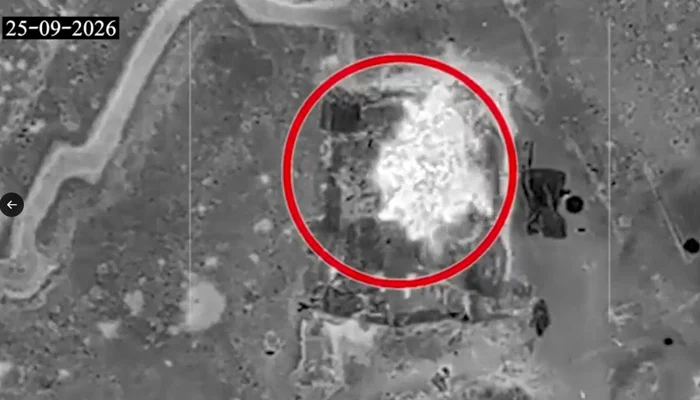
A Gulistan border clash between Pakistani security forces and Afghan Taliban personnel has added to rising tensions along the Pakistan-Afghanistan frontier. Pakistan’s Ministry of Information and Broadcasting said at least 13 Afghan Taliban personnel were killed after an attempted cross-border aggression was thwarted in the Gulistan sector during the night of September 24-25. The ministry said several others were also injured.
The latest confrontation comes after a series of incidents involving drones, border posts and alleged militant activity, increasing concerns about further instability between Islamabad and Kabul.
Pakistan Says Border Attempt Was Thwarted
According to Pakistan’s Ministry of Information and Broadcasting, Afghan Taliban personnel attempted to enter Pakistani territory in the Gulistan sector of Balochistan.
Pakistani security forces responded to the reported attempt, after which fighting continued intermittently in the border area. The ministry said the subsequent response resulted in at least 13 Taliban personnel being killed and several others injured.
State-run media and security sources also reported that Pakistani troops remained on high alert following the incident.
The ministry also rejected an Afghan claim that a Pakistani border post near Spin Boldak had been destroyed and that Afghan forces had suffered no casualties. Islamabad described that account as fabricated and said it had released visuals that it considered evidence of the border engagement.
The Afghan side’s account could not be independently verified in the available reporting.
Fighting Follows Drone Incursions
The Gulistan border clash followed another serious escalation involving unmanned aerial vehicles.
Pakistani officials said several drones entered the country’s airspace from Afghanistan earlier in the week. Security sources reported that eight drones were intercepted and shot down, including four near Torkham and four in mountainous areas around Kohat.
Information Minister Attaullah Tarar subsequently said Pakistan had conducted precision aerial and drone strikes against 10 locations in Afghanistan. According to his account, the targets were linked to the launching or storage of drones used in the alleged attacks on Pakistan.
Pakistan described those strikes as a response carried out under its claimed right of self-defence.
The developments have created another cycle of accusations and military responses between the two neighbours.
Broader Security Tensions
The latest Gulistan border clash is part of a wider deterioration in Pakistan-Afghanistan relations over security issues.
Islamabad has repeatedly accused militant groups operating from Afghan territory of carrying out attacks inside Pakistan. Pakistani officials have particularly raised concerns about the Tehreek-i-Taliban Pakistan and other armed groups.
At an OIC Contact Group meeting on Afghanistan on September 23, Deputy Prime Minister and Foreign Minister Ishaq Dar called for concrete and verifiable action to prevent Afghan territory from being used for terrorism against neighbouring countries, particularly Pakistan.
Afghan authorities have disputed Pakistan’s accusations and have repeatedly rejected claims that Kabul is responsible for attacks originating from its territory.
This disagreement remains one of the central sources of tension between the two countries.
Previous Airstrikes Raised Concerns
The latest confrontation comes only days after Pakistan reported carrying out airstrikes against suspected militant targets inside Afghanistan.
On September 21, Pakistan said its strikes against three targets in Afghanistan killed 28 people it described as militants and suicide bombers. Afghan authorities and the United Nations, however, reported that three civilians were killed and four injured in the strikes.
The competing accounts demonstrate the difficulty of independently verifying casualty figures during rapidly developing cross-border military operations.
The escalation has also prompted concerns about civilian safety and the potential for further confrontation along the frontier.
Intermittent Fire Continues
Following the Gulistan border clash, Pakistani security sources said intermittent exchanges of fire continued in the area. Troops were reportedly maintaining a heightened state of alert and preparing to respond to any further attempts to cross into Pakistani territory.
Reuters also reported that Pakistani security sources described the incident as an attempted Afghan attack but said details about the planned operation were not immediately available. The Afghan Taliban had not immediately commented on the Pakistani allegations at the time of the report.
The continuing exchange of fire raises concerns that a single border incident could develop into a broader confrontation if diplomatic channels fail to contain tensions.
Pakistan-Afghanistan Dispute Remains Unresolved
Relations between Pakistan and Afghanistan have faced repeated difficulties since the Afghan Taliban returned to power in 2021.
Islamabad has called on Kabul to prevent armed groups from using Afghan territory for attacks against Pakistan. Afghan authorities, meanwhile, have rejected accusations that they provide sanctuary for militants targeting Pakistan.
Previous border clashes and diplomatic talks have failed to fully resolve these disagreements.
The Gulistan border clash therefore comes at a sensitive moment, when both countries are already dealing with heightened security concerns and competing claims about cross-border attacks.
For now, Pakistan says its forces successfully repelled the reported incursion and inflicted casualties on Afghan Taliban personnel. The Afghan side’s response and the independently verified details of the fighting remain important factors in understanding what happened.
The immediate priority will be whether further exchanges can be prevented and whether Islamabad and Kabul can return to diplomatic engagement to address the security disputes driving repeated confrontations along their shared border.