As Pakistan-Iran Relations continue to evolve, Prime Minister Shehbaz Sharif has reaffirmed Pakistan’s commitment to promoting peace and stability in the region during a meeting with Iranian Interior Minister Eskandar Momeni. The high-level talks came at a time of rising tensions in the Gulf, particularly between Iran and the United States, highlighting Pakistan’s ongoing efforts to encourage dialogue, restraint, and diplomatic engagement. The meeting also reflected the importance both neighboring countries place on expanding bilateral cooperation while addressing shared regional challenges.
Pakistan Reaffirms Its Commitment to Peace
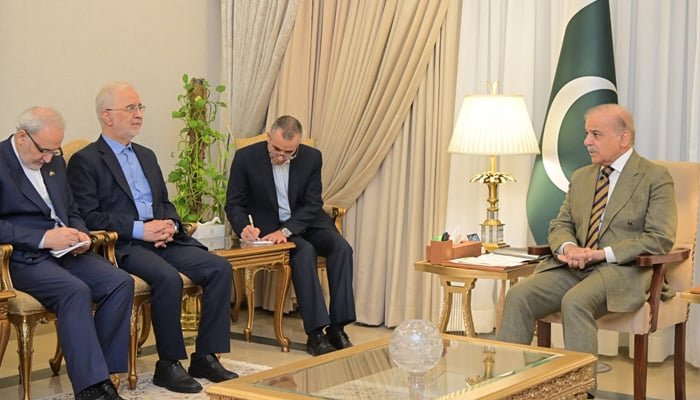
During the meeting at the Prime Minister’s House in Islamabad, Prime Minister Shehbaz Sharif expressed deep concern over the recent escalation in the Gulf region. He urged both Iran and the United States to exercise restraint and avoid actions that could further increase tensions.
The prime minister emphasized that Pakistan remains committed to regional peace and stability and is prepared to continue serving as an honest mediator whenever constructive dialogue is needed. Pakistan has consistently supported diplomatic solutions to regional disputes, believing that negotiations remain the best path toward long-term peace.
The meeting also demonstrated Islamabad’s willingness to maintain open communication with neighboring countries during periods of geopolitical uncertainty.
High-Level Delegation Strengthens Bilateral Ties
Iranian Interior Minister Eskandar Momeni arrived in Pakistan on an official visit accompanied by a senior delegation comprising officials from several important sectors.
The delegation included representatives responsible for border affairs, transportation, agriculture, energy, and provincial administration. Their participation reflected the broad scope of cooperation being discussed between the two neighboring nations.
Senior Pakistani officials attending the meeting included Deputy Prime Minister and Foreign Minister Ishaq Dar, Interior Minister Mohsin Naqvi, Information Minister Attaullah Tarar, Minister of State for Interior Talal Chaudhry, and other key government representatives.
The discussions focused on strengthening bilateral relations, improving coordination, and exploring opportunities for greater cooperation across multiple sectors.
Appreciation for Pakistan’s Diplomatic Role
One of the key highlights of the meeting was Iran’s recognition of Pakistan’s diplomatic efforts in promoting regional stability.
Minister Momeni thanked Pakistan’s leadership for its constructive role in encouraging dialogue during recent regional tensions. He specifically appreciated Prime Minister Shehbaz Sharif, Deputy Prime Minister Ishaq Dar, and Chief of Defence Forces Field Marshal Syed Asim Munir for their contributions toward facilitating diplomatic engagement between regional stakeholders.
The Iranian delegation acknowledged Pakistan’s balanced foreign policy approach and its willingness to support peaceful conflict resolution rather than military escalation.
Such recognition further strengthens Pakistan-Iran Relations by reinforcing mutual trust and diplomatic cooperation.
Focus on Regional Security
Regional security remained one of the central themes of the discussions.
Both countries recognize that peace in the Gulf and surrounding regions directly affects economic stability, trade routes, and energy security across South Asia and the Middle East.
The recent tensions involving Iran and the United States have increased concerns regarding maritime security and regional stability. Pakistan reiterated its belief that dialogue should replace confrontation and that all parties should avoid actions capable of worsening the situation.
By maintaining diplomatic engagement with all sides, Pakistan aims to contribute positively toward reducing regional tensions.
Meeting at General Headquarters
Apart from meeting Prime Minister Shehbaz Sharif, Interior Minister Eskandar Momeni also held detailed discussions with Chief of Defence Forces and Chief of Army Staff Field Marshal Syed Asim Munir at the General Headquarters in Rawalpindi.
The meeting focused on issues including regional security, bilateral defense cooperation, effective border management, and mutual interests.
Both sides discussed practical measures to improve coordination along the Pakistan-Iran border while addressing shared security concerns.
Border management remains an important aspect of bilateral cooperation as both countries continue working together to prevent illegal cross-border activities and improve regional stability.
The meeting concluded with a renewed commitment to maintaining close coordination between the two countries’ security institutions.
Expanding Cooperation Beyond Security
While regional security remains a priority, Pakistan-Iran Relations extend well beyond diplomatic and defense cooperation.
The two neighboring countries share strong historical, cultural, and religious ties that provide a solid foundation for broader collaboration.
Economic cooperation, cross-border trade, transportation connectivity, energy projects, and people-to-people exchanges continue to offer significant opportunities for mutual growth.
Improving border infrastructure, facilitating legal trade, and expanding commercial partnerships remain key objectives for both governments.
Officials believe stronger economic cooperation can further strengthen bilateral relations while contributing to regional prosperity.
Pakistan’s Role as a Regional Mediator
Pakistan has increasingly positioned itself as a country willing to facilitate dialogue during regional conflicts.
Rather than taking confrontational positions, Islamabad has consistently emphasized diplomacy, negotiation, and peaceful conflict resolution.
The government believes that maintaining balanced relationships with neighboring countries and global powers enables Pakistan to play a constructive role in promoting regional peace.
This approach has earned appreciation from several international partners and reflects Pakistan’s broader foreign policy objective of encouraging stability across the region.
The official visit by Iranian Interior Minister Eskandar Momeni marks another positive step in strengthening bilateral cooperation between Islamabad and Tehran.
As geopolitical tensions continue to affect the Middle East, both countries appear committed to maintaining regular dialogue and expanding cooperation in areas ranging from security and border management to trade and regional diplomacy.
Going forward, continued diplomatic engagement will remain essential for addressing shared challenges and identifying opportunities for closer collaboration.
The latest high-level meetings reaffirm that Pakistan-Iran Relations continue to develop through mutual respect, constructive dialogue, and a shared commitment to regional peace. By strengthening cooperation across multiple sectors and supporting diplomatic solutions to regional disputes, both nations aim to contribute to greater stability, economic development, and long-term prosperity for the wider region.