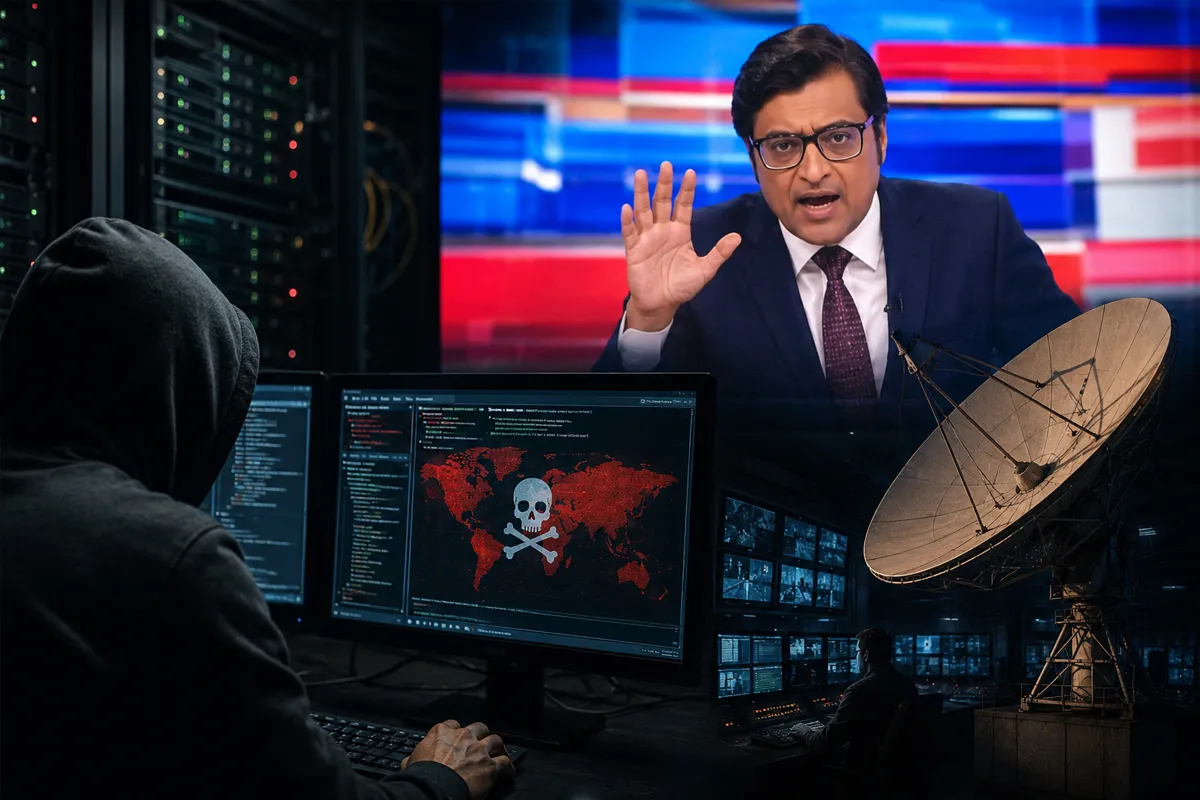
Indian TV cyberattacks have once again drawn attention to the growing cybersecurity challenges facing modern media organizations. A series of reported attacks on prominent Indian television networks has sparked debate about the security of digital broadcasting systems and the need for stronger protection against cyber threats. As broadcasters increasingly rely on digital infrastructure, any successful cyber intrusion can disrupt live programming, damage credibility, and expose sensitive systems to further risks.
Recent reports suggest that several Indian television channels have experienced cyber-related incidents affecting their broadcast operations. These developments have prompted cybersecurity experts to question whether existing security measures are sufficient to defend critical media infrastructure from increasingly sophisticated attacks.
Republic TV Reportedly Targeted
One of the most widely discussed incidents involved Republic TV, where unidentified hackers reportedly disrupted a live broadcast during a programme hosted by television anchor Arnab Goswami.
According to reports, the attackers allegedly gained unauthorized access to the broadcaster’s management system, temporarily interrupting the live transmission. During the disruption, unexpected banners and video content reportedly appeared on-screen before normal broadcasting resumed.
Although the disruption lasted only a short period, the incident quickly attracted attention across social media and cybersecurity circles, highlighting the potential risks associated with compromised broadcasting systems.
Multiple Broadcasters Reportedly Affected
The recent Indian TV cyberattacks were not limited to a single media organization. Reports indicate that several other television networks have also experienced unusual interference or suspected cyber incidents in recent months.
Among the broadcasters mentioned are Sun TV Network, TV9 Telugu, Freedom TV Live, Freedom TV Kannada, and ABP Live. While the exact nature of each reported incident varies, cybersecurity observers believe the repeated disruptions point toward a broader challenge affecting digital media organizations.
Each reported event has reinforced concerns about the resilience of broadcast networks against modern cyber threats.
Why Broadcasters Are Becoming Targets
Television networks have become attractive targets for cybercriminals because they operate highly connected digital environments.
Modern broadcasters depend on cloud-based production systems, satellite transmission networks, content management platforms, remote editing tools, and internet-connected control rooms. While these technologies improve efficiency, they also create multiple entry points for attackers.
Hackers may target broadcasters for several reasons, including:
- Interrupting live broadcasts
- Spreading unauthorized content
- Damaging public trust
- Gaining publicity
- Testing vulnerabilities in high-profile systems
Because television reaches millions of viewers simultaneously, even a brief disruption can receive widespread public attention.
Growing Need for Stronger Cybersecurity
The reported Indian TV cyberattacks demonstrate why cybersecurity has become a critical priority for media organizations worldwide.
Protecting broadcast infrastructure requires far more than traditional antivirus software. Networks must continuously monitor their systems, update security protocols, and train employees to recognize cyber threats.
Experts recommend several essential measures, including:
- Multi-factor authentication for critical systems
- Continuous network monitoring
- Regular security audits
- Software updates and patch management
- Employee cybersecurity awareness training
- Backup systems for rapid recovery
Implementing these practices can significantly reduce the likelihood of successful attacks.
Broadcast Infrastructure Faces New Challenges
Digital transformation has changed the broadcasting industry dramatically over the past decade.
Television stations now manage enormous amounts of digital content across multiple platforms, including satellite television, streaming services, websites, and social media channels.
While these technologies offer greater flexibility and faster content delivery, they also increase the complexity of protecting sensitive systems.
Cybersecurity specialists note that broadcast infrastructure must now be treated as critical national infrastructure because disruptions can affect public communication and information delivery.
Importance of Incident Response
No cybersecurity system is completely immune to attacks. For this reason, having a well-prepared incident response plan is just as important as preventing attacks.
Media organizations should establish clear procedures for detecting security breaches, isolating affected systems, restoring operations, and communicating with the public.
Fast response times can minimize service interruptions and reduce reputational damage.
Organizations that regularly test their emergency response plans are generally better prepared to recover quickly after an incident.
Cybersecurity Is a Continuous Process
One important lesson from recent cybersecurity incidents is that digital security requires ongoing attention rather than one-time investments.
Cyber threats evolve rapidly as attackers develop new techniques to bypass traditional security controls.
Broadcast companies must therefore update their security strategies regularly, invest in new technologies, and collaborate with cybersecurity experts to stay ahead of emerging risks.
Regular penetration testing, vulnerability assessments, and security awareness programs all play important roles in maintaining resilient systems.
Looking Ahead
The reported Indian TV cyberattacks serve as another reminder that digital media organizations operate in an increasingly challenging cybersecurity environment.
As television broadcasting becomes more dependent on interconnected technologies, protecting critical systems will remain a top priority for media companies around the world.
Whether the objective is preventing broadcast disruptions, protecting sensitive data, or maintaining public confidence, strong cybersecurity practices have become essential for every modern broadcaster.
The recent Indian TV cyberattacks have highlighted the importance of securing broadcast infrastructure against evolving cyber threats. While investigations into individual incidents continue, the broader message is clear: media organizations must continuously strengthen their digital defenses to protect live broadcasts, operational systems, and audience trust.
As cyber risks continue to grow, investing in modern security technologies, employee training, and proactive monitoring will be vital for ensuring the reliability and resilience of television broadcasting in the digital age.