The Iran IRGC warning has once again drawn global attention to the growing tensions in the Middle East. Iran’s Islamic Revolution Guards Corps (IRGC) recently declared that the country’s armed forces are fully prepared to deliver what it described as a devastating and hellish response if any new aggression is launched against the nation. The statement came during the anniversary of the liberation of Khorramshahr, one of the most symbolic moments in Iran’s modern military history.
The strong remarks reflect Iran’s continued emphasis on military readiness, regional deterrence, and national defense at a time when geopolitical uncertainty remains high across the Middle East. Political analysts believe the latest comments are not only aimed at Iran’s rivals but also intended to reassure the Iranian public about the country’s security capabilities.
Why the IRGC Issued This Warning
The IRGC released its statement while commemorating the recapture of Khorramshahr on May 24, 1982, during the Iran-Iraq war. The city’s liberation remains a major symbol of Iranian resistance and national unity. By connecting the historical event with today’s regional environment, the Iranian military leadership attempted to reinforce the message that Iran remains prepared to defend itself against external threats.
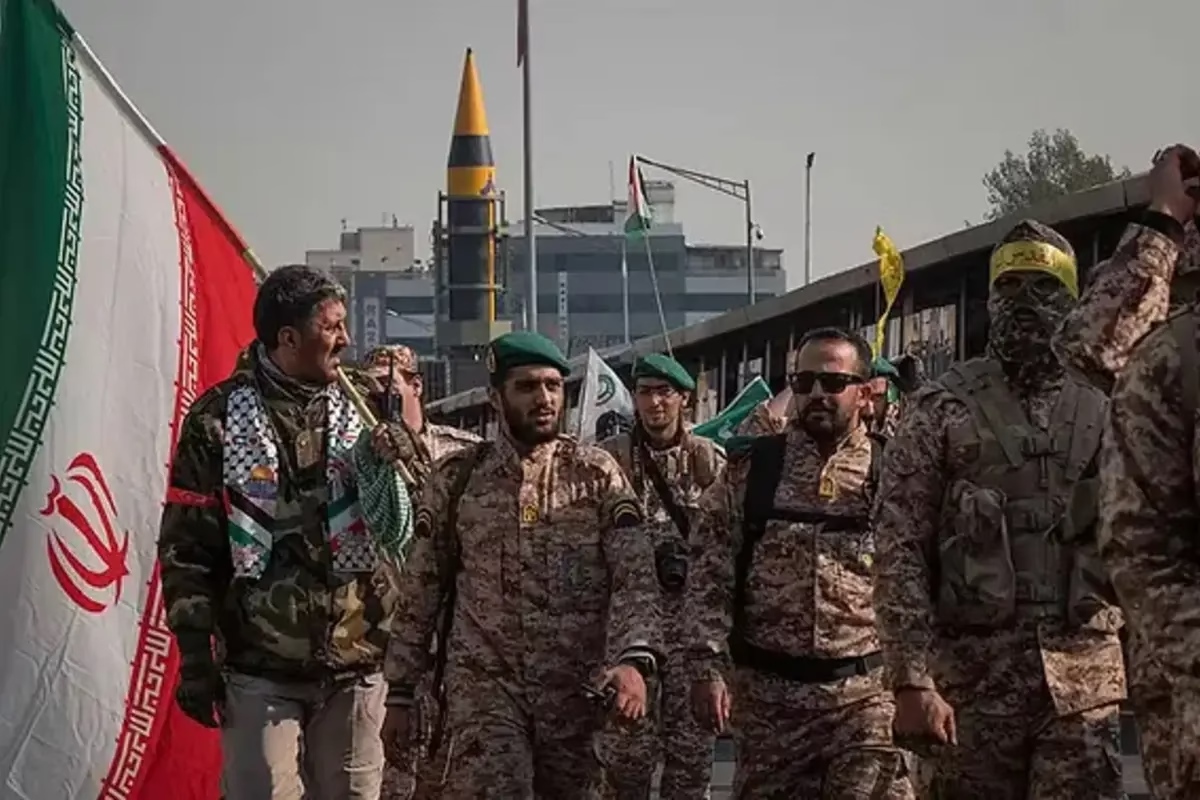
According to the statement, Iran’s armed forces are currently operating at their highest level of readiness across multiple domains including missile systems, cyber defense, naval operations, air defense, and space technology. The Iran IRGC warning also suggested that any future military conflict could expand beyond local borders and affect wider regional stability.
Military observers say such statements are often used as strategic messaging. Iran wants to demonstrate that it possesses enough deterrence capability to discourage any potential military action from foreign powers.
Rising Tensions in the Middle East
The Middle East has experienced repeated instability over the last several years. Conflicts involving regional powers, proxy groups, and international actors have continued to shape the political landscape. Iran remains deeply involved in several regional developments, making its security statements highly significant.
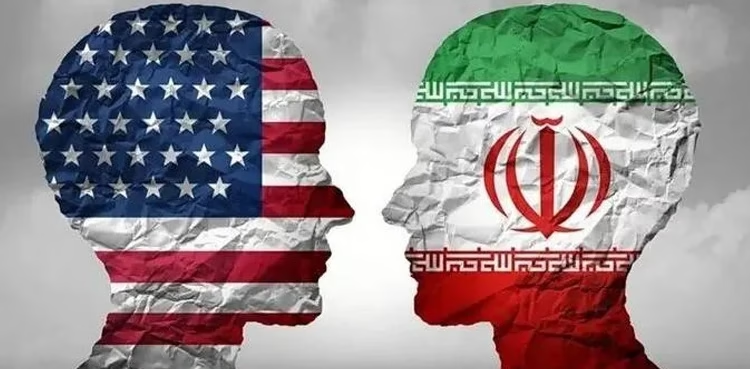
The latest Iran IRGC warning comes after months of increasing rhetoric between Tehran and Western allies. Analysts believe the region remains vulnerable to sudden escalations because of unresolved disputes related to sanctions, military alliances, maritime security, and nuclear negotiations.
At the same time, Iran continues to strengthen ties with regional partners while expanding its military technology. Iranian officials often argue that their defense strategy is based on deterrence rather than aggression. However, critics in the West and neighboring countries remain concerned about Tehran’s growing missile and drone capabilities.
Iran’s Focus on Military Preparedness
One major point highlighted in the IRGC statement was Iran’s military preparedness in multiple dimensions. The country has invested heavily in missile development, cyber defense systems, and naval capabilities over the past decade.
Iranian authorities claim these advancements are necessary because of ongoing security threats and foreign pressure. The country has repeatedly faced sanctions, military threats, and diplomatic isolation from some Western nations. As a result, Iran has focused on developing self-reliant defense systems.
The Iran IRGC warning also emphasized “active deterrence,” suggesting that Iran believes its military strength can prevent conflicts before they occur. This approach has become central to Tehran’s national security policy.
Experts note that Iran’s military strategy increasingly relies on asymmetric warfare capabilities. Instead of competing directly with larger military powers, Tehran focuses on missile accuracy, drone technology, cyber operations, and regional alliances.
Global Reactions and Concerns
Statements from the IRGC are closely monitored by governments and international organizations worldwide. Strong military rhetoric often raises concerns about the possibility of further escalation in an already fragile region.
Several analysts believe the latest Iran IRGC warning is partly directed toward regional rivals and global powers that maintain military presence near Iranian territory. Others view it as a political message aimed at strengthening domestic unity during uncertain times.
Global energy markets also react nervously whenever tensions rise in the Gulf region. Any conflict involving Iran could potentially affect important shipping routes and oil supplies, creating economic uncertainty worldwide.
Diplomatic observers continue to stress the importance of dialogue and de-escalation. Many countries have called for peaceful negotiations to avoid any confrontation that could destabilize the broader Middle East.
The Symbolism of Khorramshahr
The timing of the statement is equally important. Khorramshahr holds deep emotional and historical value in Iran. The city’s liberation during the Iran-Iraq war is remembered as a turning point that strengthened Iranian national identity.
By linking today’s military posture with the memory of Khorramshahr, Iranian leaders are attempting to project resilience and determination. The message suggests that Iran views itself as capable of resisting external pressure just as it did during previous conflicts.
For many Iranians, the anniversary serves as both a reminder of sacrifice and a symbol of national survival. The Iran IRGC warning therefore carries both strategic and emotional significance.
The recent statements from Iran’s Revolutionary Guards highlight the continuing tensions shaping the Middle East. While the Iran IRGC warning reflects Tehran’s confidence in its military readiness, it also underlines the fragile security environment facing the region.
As geopolitical rivalries continue and diplomatic negotiations remain uncertain, international attention will likely stay focused on Iran’s military posture and regional influence. Whether the latest warning leads to further escalation or encourages renewed diplomatic engagement remains to be seen, but it clearly demonstrates that regional stability remains a major global concern.