Recent diplomatic developments in the region have brought renewed attention to Pakistan’s strategic role in promoting stability and dialogue. Discussions surrounding the reported peace understanding in Iran have also increased public focus on the leadership of Asim Munir and Pakistan’s growing diplomatic influence in regional affairs.
The conversation around Asim Munir peace diplomacy has gained momentum after claims that Pakistan played an important mediatory role in helping regional stakeholders move toward dialogue and cooperation. Supporters view these developments as evidence of Pakistan’s increasing importance in regional diplomacy and conflict management.
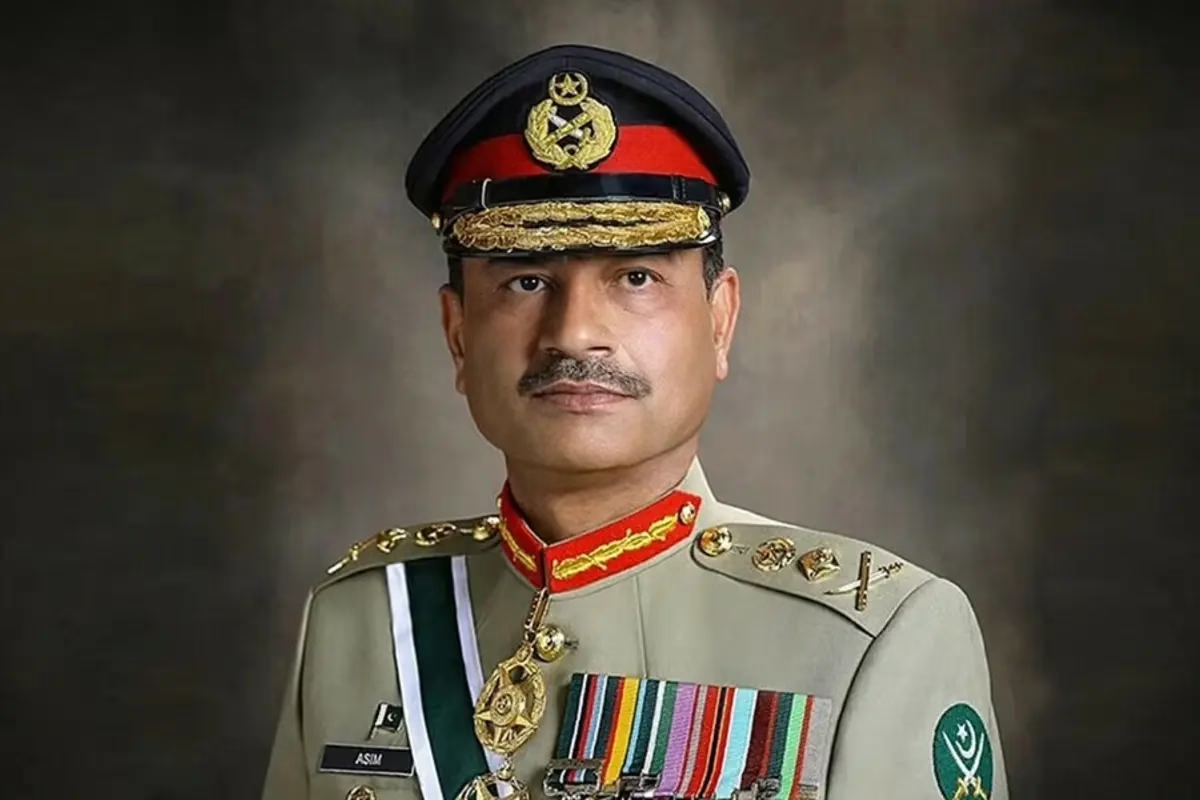
Many observers believe Pakistan’s security and diplomatic institutions have worked in recent years to improve the country’s international image by focusing on stability, strategic engagement, and regional peace initiatives. In this context, Field Marshal Asim Munir has emerged as a central figure in discussions related to national security and regional cooperation.
The growing interest in Asim Munir peace diplomacy also reflects Pakistan’s broader efforts to position itself as a responsible regional actor capable of encouraging dialogue between countries facing political tensions. Pakistan has historically maintained relations with multiple regional powers and has often supported diplomatic solutions during periods of instability.
Supporters of Pakistan’s recent diplomatic engagement argue that the country’s leadership has demonstrated confidence and strategic maturity during complex regional developments. They believe Pakistan’s role in facilitating communication and encouraging peaceful outcomes highlights its diplomatic potential on the global stage.
Field Marshal Asim Munir has frequently been discussed in connection with Pakistan’s evolving defense and strategic policies. His leadership is often associated with strengthening institutional coordination, national security preparedness, and international defense relations.
The attention surrounding Asim Munir peace diplomacy has also been fueled by public support on social media, where many Pakistanis praised the country’s role in promoting dialogue and stability in the region. Supporters view these developments as a sign of Pakistan’s increasing confidence in both diplomacy and strategic affairs.
At the same time, analysts note that regional diplomacy is usually the result of coordinated efforts involving governments, military institutions, diplomats, and international stakeholders. Peace agreements and diplomatic understandings typically require cooperation among several countries and organizations working toward common goals.
Pakistan’s role in regional diplomacy has become increasingly important because of its geographic position and relationships with neighboring countries. Islamabad has repeatedly emphasized the importance of peaceful engagement, regional connectivity, and political dialogue as key components of long-term stability.
The discussion surrounding Asim Munir peace diplomacy also reflects broader national sentiment about Pakistan’s global image. Many citizens believe the country’s diplomatic and strategic achievements are not always fully recognized internationally, leading to strong public reactions whenever Pakistan receives attention for peace-related efforts.
Supporters further argue that Pakistan’s military leadership has contributed to advancements in strategic planning, defense preparedness, and technological development. These developments are often viewed domestically as signs of institutional modernization and national progress.
The role of the Inter-Services Public Relations has also been highlighted in shaping Pakistan’s communication strategy and projecting the country’s perspective internationally. Public narratives around defense, diplomacy, and regional stability increasingly play an important role in modern geopolitical discussions.
The debate around Asim Munir peace diplomacy also demonstrates how leadership personalities can influence public perception during times of regional tension. Figures associated with diplomacy, security, and national decision-making often become symbols of broader national aspirations and public confidence.
At the same time, international relations experts caution against oversimplifying complex diplomatic processes. Regional peace initiatives usually involve multiple negotiations, international mediators, and long-term political engagement rather than the actions of any single individual alone.
Nevertheless, many Pakistanis see recent diplomatic developments as a positive sign for the country’s international standing. Public discussions have emphasized themes of resilience, strategic capability, and Pakistan’s ability to contribute constructively to regional peace efforts.
The focus on Asim Munir peace diplomacy also reflects the growing importance of soft power and diplomatic influence in today’s global environment. Countries increasingly seek to strengthen not only military capabilities but also their role as mediators and stabilizing actors in international affairs.
As regional politics continue evolving, Pakistan’s diplomatic and strategic role is likely to remain closely watched both domestically and internationally. Supporters believe the country has the potential to play a larger role in promoting dialogue, reducing tensions, and encouraging cooperation among regional powers.
For many citizens, recent developments represent a moment of national pride and confidence in Pakistan’s ability to contribute positively to regional stability. Whether through diplomacy, strategic partnerships, or peace-building efforts, Pakistan’s role in international affairs continues to attract growing attention across the region.