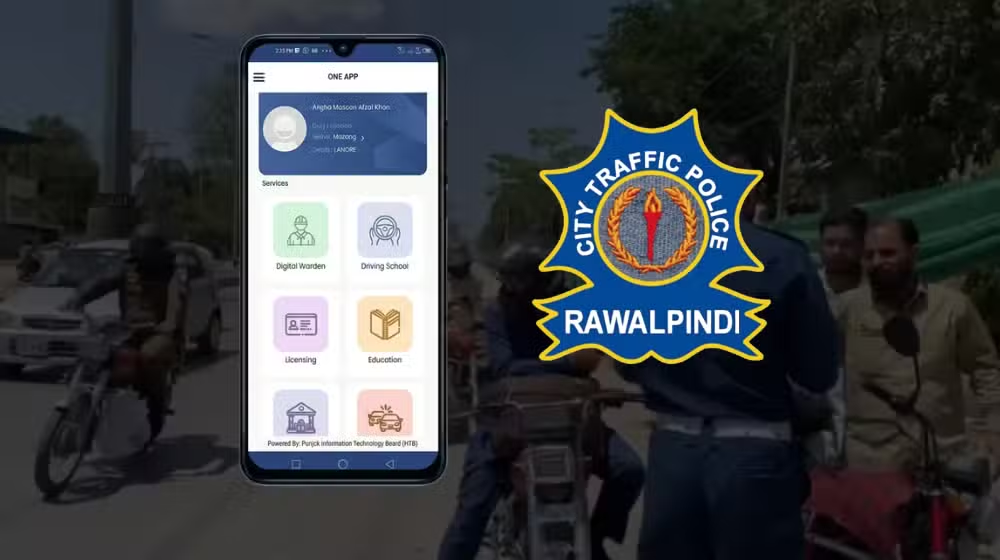
Rawalpindi’s digital traffic challan system One App is changing how traffic violations are recorded and enforced in the city. The new platform introduces evidence-based policing, aiming to reduce disputes, improve transparency, and modernize the entire traffic management process through real-time digital verification.
A Shift Toward Evidence-Based Enforcement
The introduction of the Rawalpindi digital traffic challan system One App marks a clear shift from traditional manual ticketing to a more structured digital framework. Instead of relying solely on officer observations, violations are now recorded with video evidence and securely stored within the system. This ensures that every challan issued has verifiable proof attached, reducing chances of confusion or unfair penalties.
For citizens, this approach adds an important layer of trust. Drivers can now expect that any fine issued through the digital traffic challan system One App is backed by recorded evidence rather than subjective judgment alone. This is especially significant in a city where traffic congestion and enforcement disputes have long been common issues.
One Platform, Multiple Functions
What makes the Rawalpindi digital traffic challan system One App more than just a ticketing tool is its integration of multiple enforcement functions into a single platform. Traffic officers can now verify a driver’s CNIC and driving license instantly, either manually or through QR code scanning. This speeds up roadside checks and reduces delays during inspections.
The system also allows instant vehicle verification. Officers can access ownership records, fitness certificates, route permits, and excise data within seconds. In addition, the digital traffic challan system One App can flag stolen vehicles, making it useful not only for traffic violations but also for broader law enforcement purposes.
Integration With Government Databases
One of the most powerful features of the Rawalpindi digital traffic challan system One App is its integration with multiple government databases. Instead of operating in isolation, the platform is connected to records such as license data, FIR status, vehicle ownership history, and violation records.
This interconnected system ensures that enforcement officers have a complete digital profile of vehicles and drivers during checks. It reduces reliance on paper records and manual verification, which often slow down enforcement and create room for errors.
By combining these systems, the digital traffic challan system One App improves coordination between departments and strengthens overall governance in traffic management.
Expanding Beyond Traffic Tickets
Unlike traditional challan systems that focus only on fines, the Rawalpindi digital traffic challan system One App is designed as a broader enforcement ecosystem. Officials have confirmed that the platform includes modules related to licensing, driving education, accident reporting, encroachments, environmental monitoring, and congestion management.
This expansion means that traffic management is no longer treated as an isolated issue. Instead, it becomes part of a wider urban governance system. The digital traffic challan system One App helps authorities identify patterns in violations, monitor high-risk areas, and improve long-term planning for road safety.
Benefits for Citizens and Authorities
For citizens, one of the most important advantages of the Rawalpindi digital traffic challan system One App is transparency. Every violation is traceable through QR codes, allowing drivers to view details of their challans and understand the basis of enforcement actions.
For authorities, the system improves efficiency and accountability. Officers can complete checks faster, access accurate data instantly, and ensure that enforcement decisions are properly documented. This reduces administrative burden while improving operational accuracy.
The system also helps reduce corruption risks by minimizing manual intervention in the challan process. Since evidence is digitally recorded and stored, there is less room for manipulation or dispute.
A Step Toward Smart City Governance
The launch of the Rawalpindi digital traffic challan system One App reflects a broader move toward smart city infrastructure. By combining enforcement, data integration, and digital verification, the city is building a more connected and responsive governance model.
As urban populations grow and traffic pressure increases, systems like this become essential for maintaining order and efficiency. The digital traffic challan system One App is not just a policing tool—it is part of a long-term effort to modernize how cities manage mobility, safety, and public accountability.
The introduction of the Rawalpindi digital traffic challan system One App represents a significant upgrade in traffic enforcement technology. With evidence-based challans, real-time verification, and deep database integration, the system brings greater transparency and efficiency to road policing.
If implemented effectively, the digital traffic challan system One App could serve as a model for other cities looking to modernize their traffic systems and move toward smarter, more accountable urban governance.