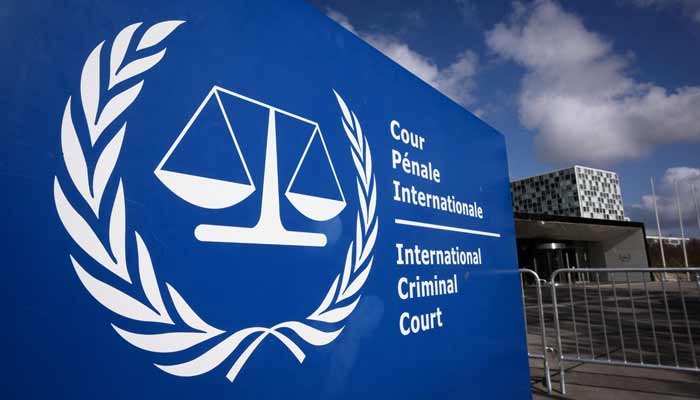
The ICC Sakharov Prize has placed the International Criminal Court (ICC) at the centre of an international debate over judicial independence, human rights and political pressure. The European Parliament announced on Thursday that the court would receive the European Union’s top human rights award, signalling strong support as it faces sanctions from US President Donald Trump’s administration.
European Parliament President Roberta Metsola said the award recognised the court’s important work in upholding international law and justice. She emphasised that respect for multilateralism and international institutions remained a fundamental principle of the European Union.
The decision could further strain relations between Washington and Brussels, as the Trump administration has strongly opposed the ICC’s actions involving Israeli Prime Minister Benjamin Netanyahu.
ICC Faces US Sanctions
The award comes as the United States prepares measures targeting the International Criminal Court and its officials. The Trump administration has announced sanctions intended to restrict the court’s operations, escalating its dispute with the institution over investigations and arrest warrants.
Washington’s opposition intensified after ICC judges issued an arrest warrant for Israeli Prime Minister Benjamin Netanyahu over alleged crimes in Gaza. The allegations are part of proceedings before the court, and the warrant reflects the ICC’s role in investigating and prosecuting individuals accused of serious international crimes.
The ICC handles cases involving war crimes, crimes against humanity and genocide. Its supporters argue that independent international courts are essential for holding individuals accountable when serious violations occur.
The US administration, however, has vowed to dismantle the institution, describing its actions as unacceptable. The dispute has raised questions about how international judicial bodies can continue their work when facing pressure from powerful countries.
European Union Reaffirms Support
The ICC Sakharov Prize represents a significant expression of European support at a time of growing uncertainty for the court.
ICC President Tomoko Akane thanked the European Parliament for the recognition, saying it carried particular importance because the court and its officials were facing unprecedented challenges. She stressed the value of independent judicial institutions and the people working to uphold international law.
European Commission President Ursula von der Leyen also defended the court’s independence, stating that it must be allowed to carry out its mission without pressure or intimidation.
The European Union has previously expressed its readiness to take necessary measures to ensure the ICC can continue operating despite the US sanctions.
According to the reported timeline, the sanctions are due to take effect in six months, giving European officials an opportunity to pursue diplomatic efforts aimed at persuading Washington to reconsider its position.
Brussels is also considering a possible blocking statute, a legal mechanism that could help protect European entities from the effects of certain foreign sanctions. Such a measure could become an important part of the EU’s response if diplomatic efforts fail.
Why the Sakharov Prize Matters
Named after Soviet dissident Andrei Sakharov, the Sakharov Prize for Freedom of Thought is awarded annually by the European Parliament to individuals or organisations recognised for their contributions to human rights and democracy.
The award highlights the EU’s commitment to fundamental freedoms and democratic values. By selecting the ICC, European lawmakers have drawn attention to the importance of accountability and the independence of international legal institutions.
The court was selected from three finalists. The other nominees were Tanzanian opposition leader Tundu Lissu and Iranian twin sisters Taraneh and Romina Rahimi, who represent people facing prosecution by the Iranian government.
Lissu, who leads Tanzania’s opposition Chadema party, was detained in April 2025. He faces a possible death sentence if convicted of treason over allegations that he encouraged the public to boycott elections.
The Rahimi sisters have also faced severe punishment in Iran following anti-government protests. Taraneh was sentenced to death, while Romina received a 36-year prison sentence.
The Sakharov Prize ceremony is scheduled for December, bringing further attention to the award’s selected recipient and the issues it represents.
A Wider Debate Over International Justice
The ICC Sakharov Prize arrives amid broader debates about the effectiveness of international institutions and their ability to operate independently of political influence.
Recent recipients of the award include Venezuelan opposition leader Maria Corina Machado, late Russian opposition figure Alexei Navalny and the people of Ukraine. Their recognition reflects the prize’s wider focus on democratic rights, political freedom and resistance to repression.
For the ICC, the award offers symbolic backing but does not automatically resolve the practical difficulties created by sanctions. Restrictions affecting officials, financial transactions or institutional operations could complicate the court’s ability to carry out its work, depending on how the measures are implemented.
The coming months will therefore be important for both the court and its European supporters. Diplomatic negotiations, possible legal protections and continued international backing may influence the extent to which the sanctions affect the institution.
What Happens Next?
The decision to honour the ICC underscores Europe’s support for international justice despite the risk of further tensions with the United States.
Whether the European Union can protect the court from the practical consequences of sanctions remains uncertain. Much will depend on Washington’s willingness to reconsider its approach and Brussels’ ability to develop effective legal and diplomatic responses.
For now, the ICC Sakharov Prize sends a clear political message: the European Parliament considers independent judicial institutions and accountability under international law worthy of strong support, even when that position creates diplomatic challenges.