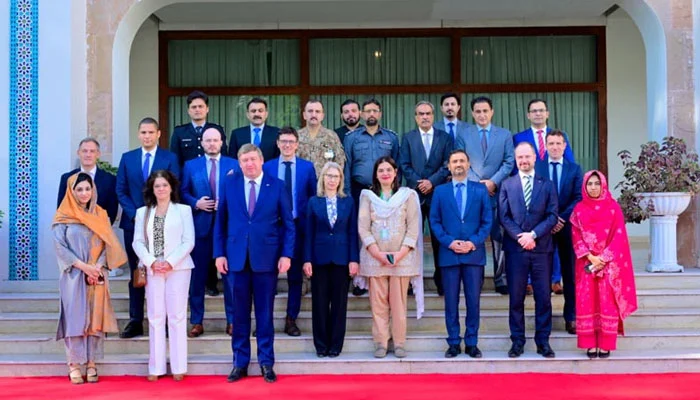
Pakistan-EU counterterrorism cooperation is set to expand following an agreement to strengthen joint efforts at international forums, including the United Nations (UN). The understanding was reached during the 10th round of the Pakistan-EU Bilateral Counterterrorism Dialogue in Islamabad, where both sides discussed emerging security threats and ways to improve coordination against terrorism.
The meeting reflects a shared commitment to addressing terrorism through international partnerships, information exchange and coordinated action. Both delegations condemned terrorism in all its forms and emphasised the importance of sustained cooperation to improve global security.
Officials Lead High-Level Security Discussions
The Pakistani delegation was led by Director General (Counterterrorism) Dr Fareha Bugti, while the European Union delegation was headed by Anna Strzaska, Special Envoy for Counterterrorism at the European External Action Service.
During the discussions, officials reviewed recent regional and international developments affecting the terrorist threat landscape. They also reaffirmed their commitment to working together against extremist networks and other security challenges that cross national borders.
The EU condemned recent terrorist attacks in Pakistan and expressed solidarity with civilians affected by the violence. It also acknowledged Pakistan’s counterterrorism efforts, recognising the country’s role in addressing threats that affect regional and international stability.
The discussions highlighted the importance of maintaining regular communication between Pakistan and European institutions to identify shared priorities and develop practical responses to evolving security risks.
Afghanistan’s Security Situation Remains a Concern
The security situation in Afghanistan was another important subject during the dialogue. Pakistan and the EU expressed concern over its implications for regional security and acknowledged each other’s contributions to international counterterrorism efforts.
Instability in Afghanistan has remained a concern for neighbouring countries and international partners because security threats can extend beyond national borders. Cooperation among governments is therefore important for addressing militant activity, preventing cross-border threats and strengthening regional stability.
Through continued engagement, Pakistan and the European Union aim to improve their understanding of regional developments and identify areas where coordinated international action could prove effective.
However, addressing these challenges requires sustained diplomatic engagement, effective security measures and cooperation among relevant international stakeholders.
Emerging Threats in Cyberspace
A key area of discussion was the growing use of digital platforms and other critical resources by terrorist groups to advance their objectives.
Officials examined emerging threats involving cyberspace, information systems and energy resources. These areas have become increasingly important to security agencies as extremist groups explore new methods of communication, recruitment, propaganda and operational coordination.
The misuse of online platforms can allow extremist narratives to spread quickly, potentially exposing vulnerable individuals to radicalisation. Digital systems may also be exploited to support terrorist activities or facilitate communication between individuals and networks.
Pakistan-EU counterterrorism cooperation could help address these challenges through knowledge sharing, the exchange of effective practices and improved coordination on emerging security risks.
Both sides also discussed ways to prevent and counter violent extremism, terrorist financing and radicalisation, with particular attention to the misuse of cyberspace.
Combating these threats requires a comprehensive approach that combines law enforcement, financial monitoring, digital security and efforts to prevent individuals from becoming involved in violent extremist activities.
Tackling Terrorist Financing and Radicalisation
Terrorist financing remains a significant challenge for countries seeking to disrupt extremist networks. Preventing the movement of funds can limit the ability of terrorist organisations to recruit members, acquire resources and sustain their operations.
During the dialogue, Pakistan and the EU exchanged best practices for addressing terrorist financing and countering violent extremism. Their discussions focused on identifying areas where existing approaches could be strengthened through institutional cooperation and shared expertise.
Radicalisation was also an important part of the discussions. Preventive measures, public awareness and efforts to counter extremist messaging can complement security operations by addressing some of the factors that contribute to violent extremism.
The exchange of experience between Pakistani and European officials may help both sides refine their approaches while responding to the specific challenges facing their respective regions.
United Nations Cooperation and Future Engagement
Pakistan and the European Union reaffirmed the importance of effective multilateralism, agreeing that international cooperation is essential to building a lasting consensus on counterterrorism.
Their commitment to closer coordination at forums such as the United Nations provides an opportunity to support common positions on international security challenges. Multilateral engagement can also help countries share expertise, coordinate policy approaches and strengthen collective responses to threats that no single country can address independently.
The two sides identified priority areas for further cooperation and agreed to maintain regular, institutionalised engagement through their bilateral dialogue.
They also decided to hold the next round of discussions in Brussels next year on a mutually convenient date.
What the Agreement Means
The latest understanding marks another step in Pakistan-EU counterterrorism cooperation, bringing together shared concerns about terrorism, digital threats, radicalisation and regional instability.
While the dialogue establishes a framework for continued engagement, its effectiveness will depend on how both sides translate their commitments into practical cooperation. Information sharing, stronger institutional links and coordinated responses to emerging threats will remain important to achieving meaningful results.
As terrorism continues to evolve, sustained partnerships between Pakistan, the European Union and other international stakeholders could contribute to improved security and more effective prevention efforts. The next round of talks in Brussels will provide another opportunity to review progress and identify further areas for collaboration.